
Seven Days in Provence Aboard Anne-Marie
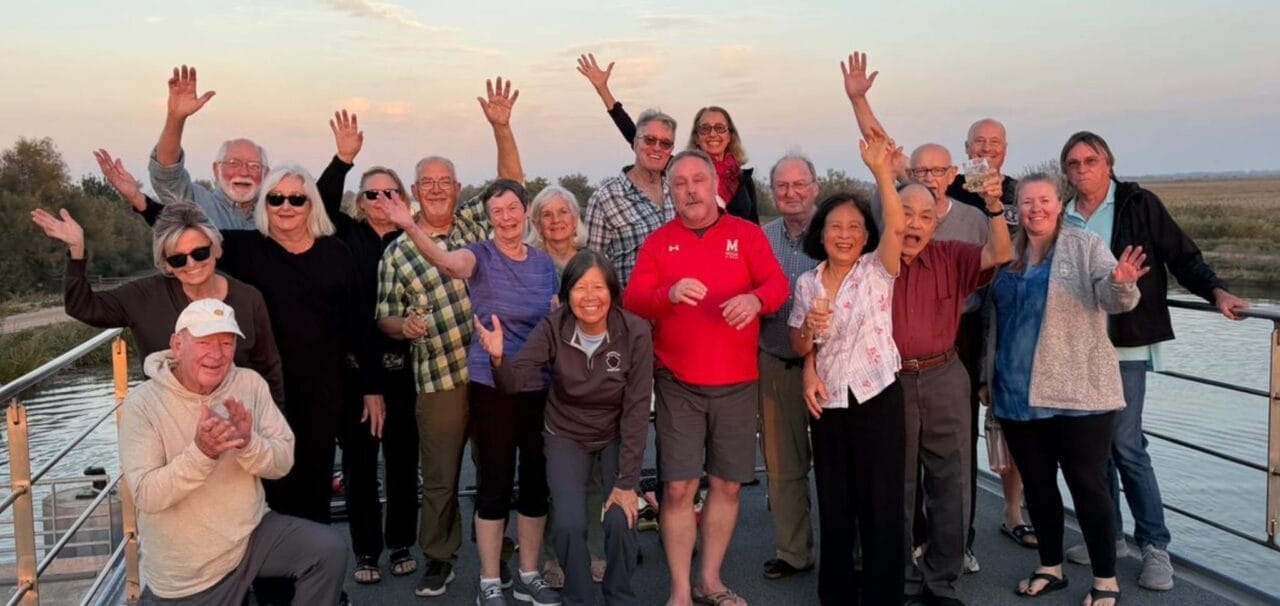
Day 1 — Boarding in Sète
Our weeklong journey through the Camargue region of southern France began on an October evening in Sète, a lively port town on the Mediterranean coast. Over the coming days, we would travel slowly by hotel barge from Sète to Arles on a scenic voyage through a region whose character has been shaped as much by nature as by human hands over hundreds of years.
The Camargue is a vast, low-lying delta where the Rhône River fans into wetlands before meeting the sea. Known for its wide salt flats, shimmering lagoons, wild white horses, black bulls and rich birdlife — especially flamingos — the Camargue offers a rare blend of natural beauty and traditional life. It’s a place where history, agriculture and ecology intertwine, and traveling through it by barge lets you experience it at the perfect pace: slowly, intimately and immersed in nature.
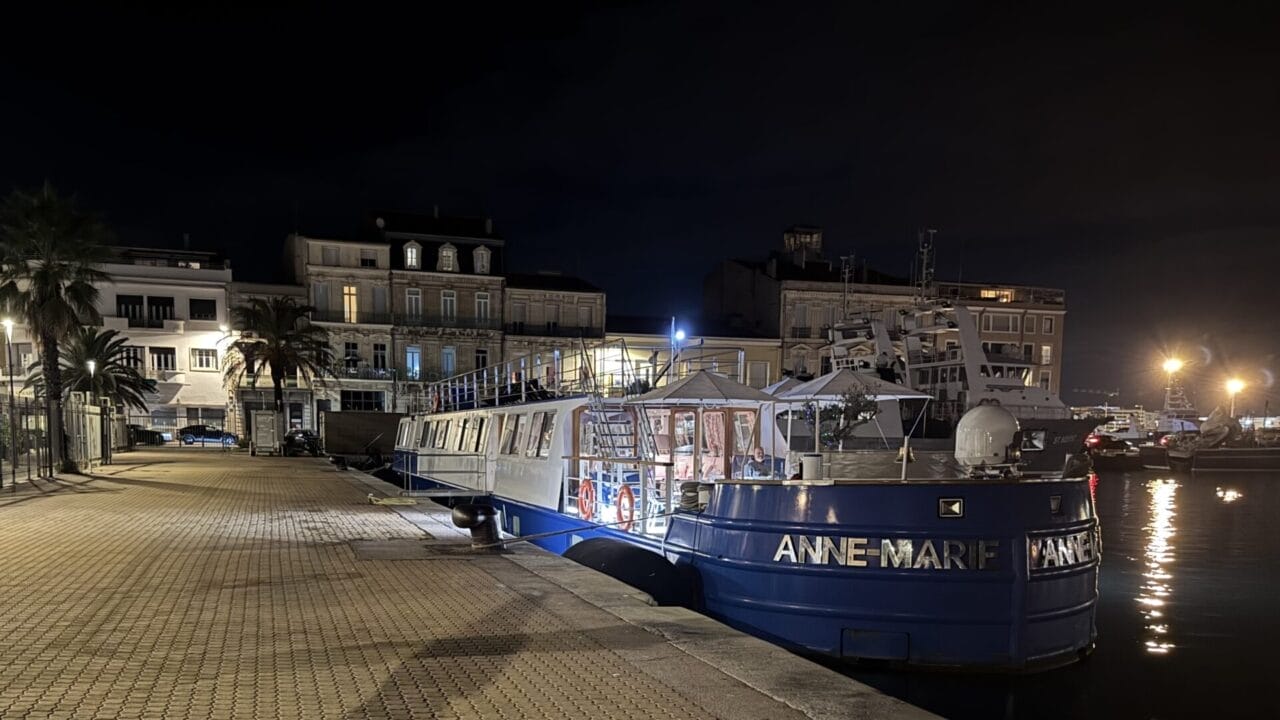
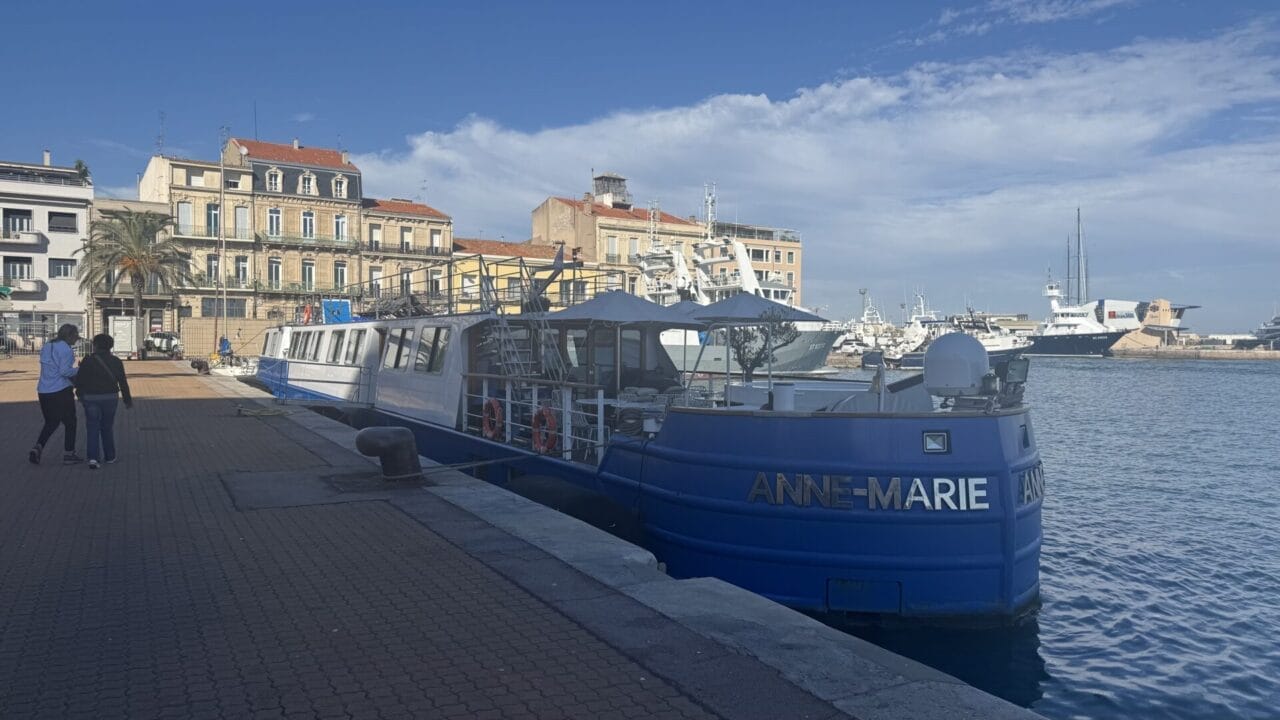
We traveled with 20 others, meaning that CroisiEurope’s Anne-Marie — our floating home for the week — was at full capacity. On that first evening, the air was warm, the light golden, and there was a palpable sense of anticipation for the days ahead. It felt good to be back aboard — back where it all began for me in 2015.
At the time, CroisiEurope, long established as a river cruise operator, had only just introduced its first barge, Anne-Marie, which became the prototype for five more to follow. After a week aboard, I fell in love with barge trips — for reasons I later outlined in 10 Reasons To Choose Barge Cruising.
For more than a decade now, I’ve hosted barge trips throughout France — and one in Belgium — and I’ve enjoyed repeating some itineraries just as much the second or third time as the first. You’ll find my 2026 barge trips listed at this link.
Day 2 — Sète: Lagoon & Saint-Guilhem-le-Désert
The morning began quietly. Marucia and I slipped out for a short walk to a nearby boulangerie, just steps from where Anne-Marie was moored along the quay. We met 40 years ago — two curious travelers backpacking through Southeast Asia. We fell in love, but life led us down different paths: she returned to Brazil, and I to the United States. Though distance and time separated us, neither of us forgot the other.
We both married, raised two children each, and built full lives — but destiny, it seems, had other plans. This past spring, both having ended our marriages several years ago, we reconnected — two kindred spirits who somehow found their way back to each other after four decades.
As we walked back toward the barge, the town around us began to stir. Sète, sometimes called the “Venice of Languedoc,” is crisscrossed by canals and has a strong maritime character. Founded in the 17th century as a commercial port, it remains a working town — not polished for tourists but authentic, lively and deeply tied to the sea.
Inside the boulangerie, we admired rows of croissants, amandines and pain au chocolat. A baker was feeding rolls of dough into the oven. Outside, the streets were just beginning to hum as patrons streamed in for their morning café au lait and pastries.
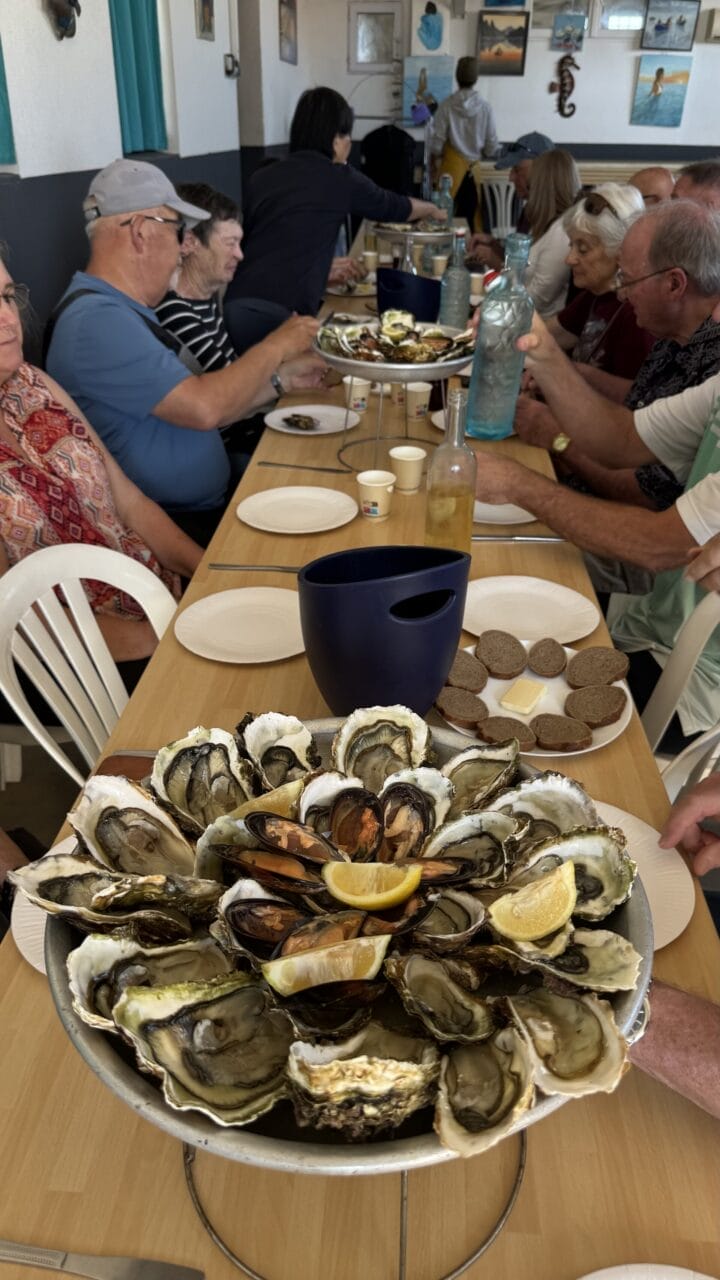
Shortly before 8:30 a.m., we returned to Anne-Marie to join the group for a morning excursion along the Thau Lagoon. At Le Musée de l’Étang de Thau, we learned how the shallow, sun-warmed waters create the perfect environment for shellfish farming. Unlike Normandy or Brittany, producers here use a suspended method — hanging oysters beneath wooden tables over the lagoon — producing the distinctive Huîtres de Bouzigues, plump, briny and beloved throughout France.
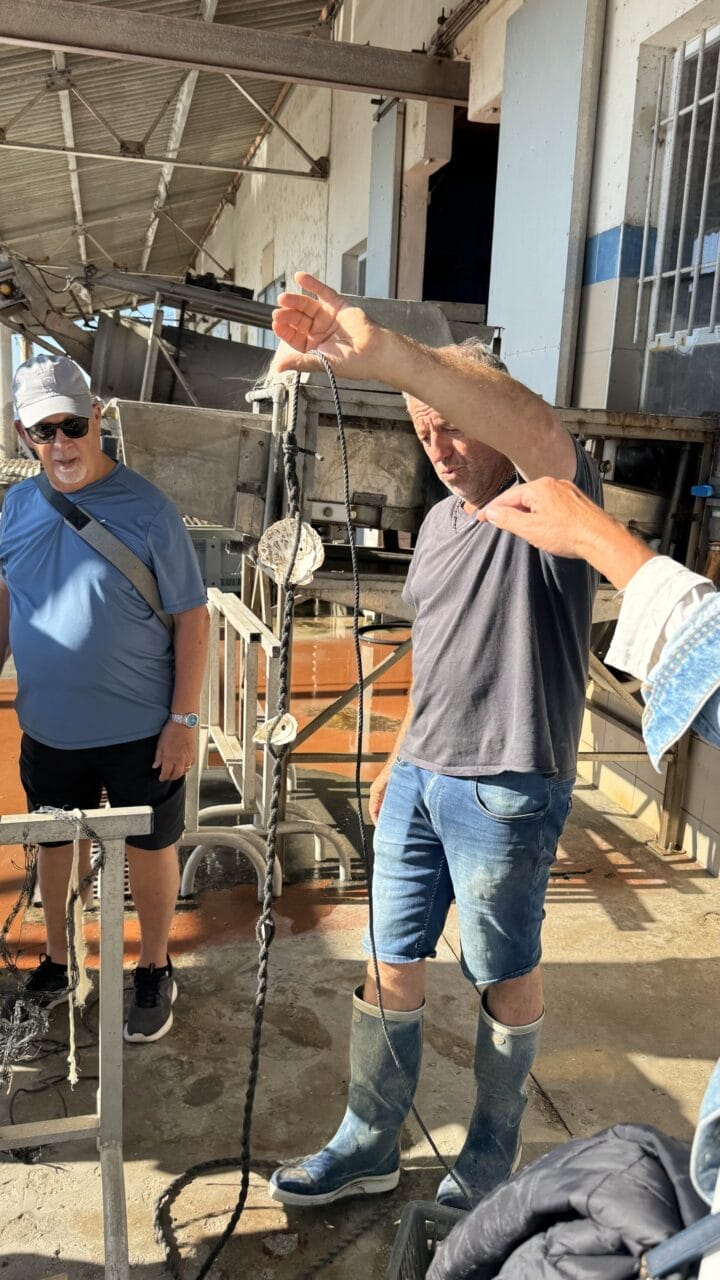
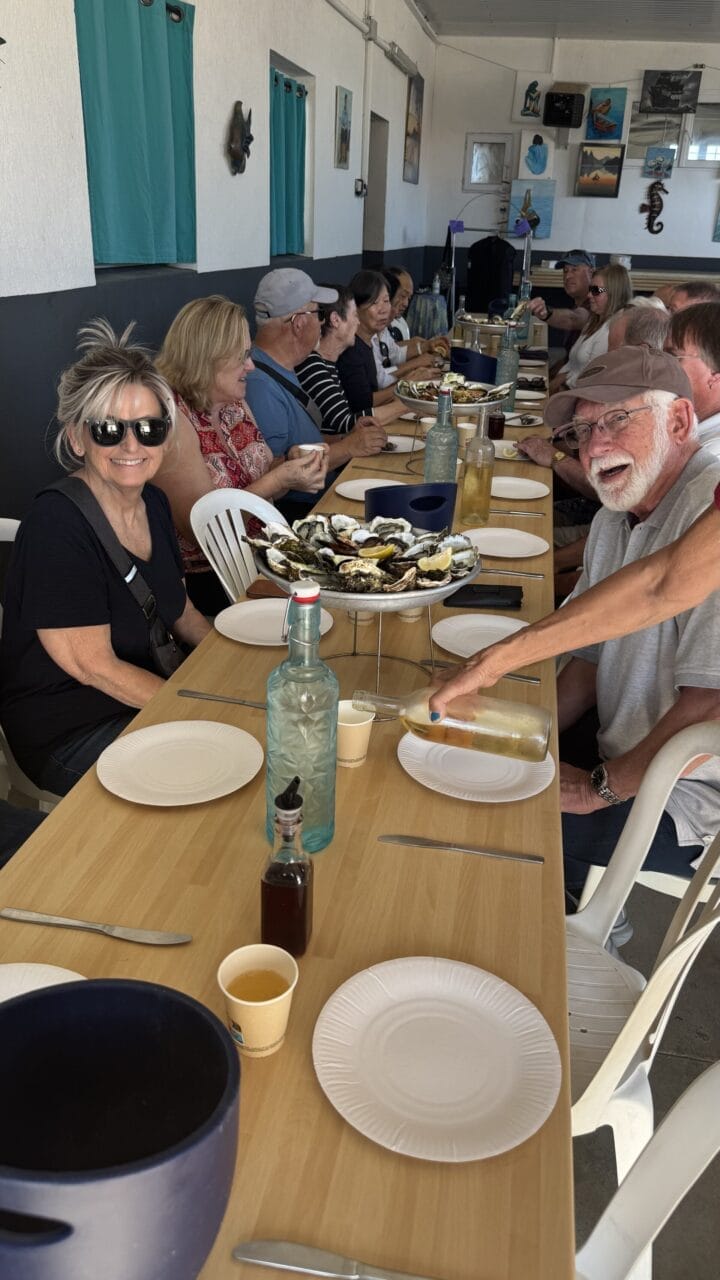
In the village of Mèze, Didier, our host at an oyster farm, walked us through the production process before inviting us to taste oysters fresh from the water. Paired with a glass of Picpoul de Pinet, a crisp local white wine, and accompanied by mussels, bread and butter, it was a delightful late-morning feast.



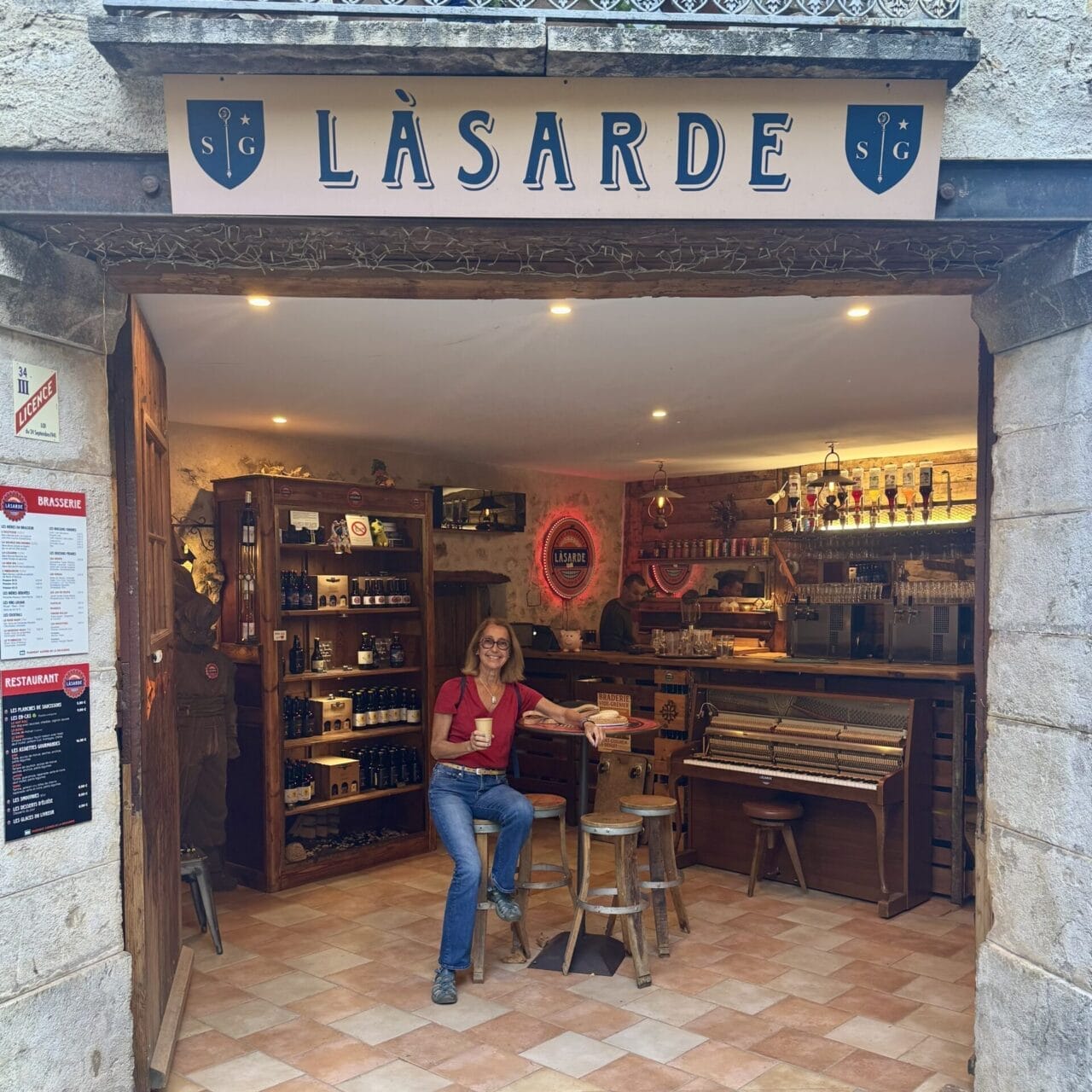
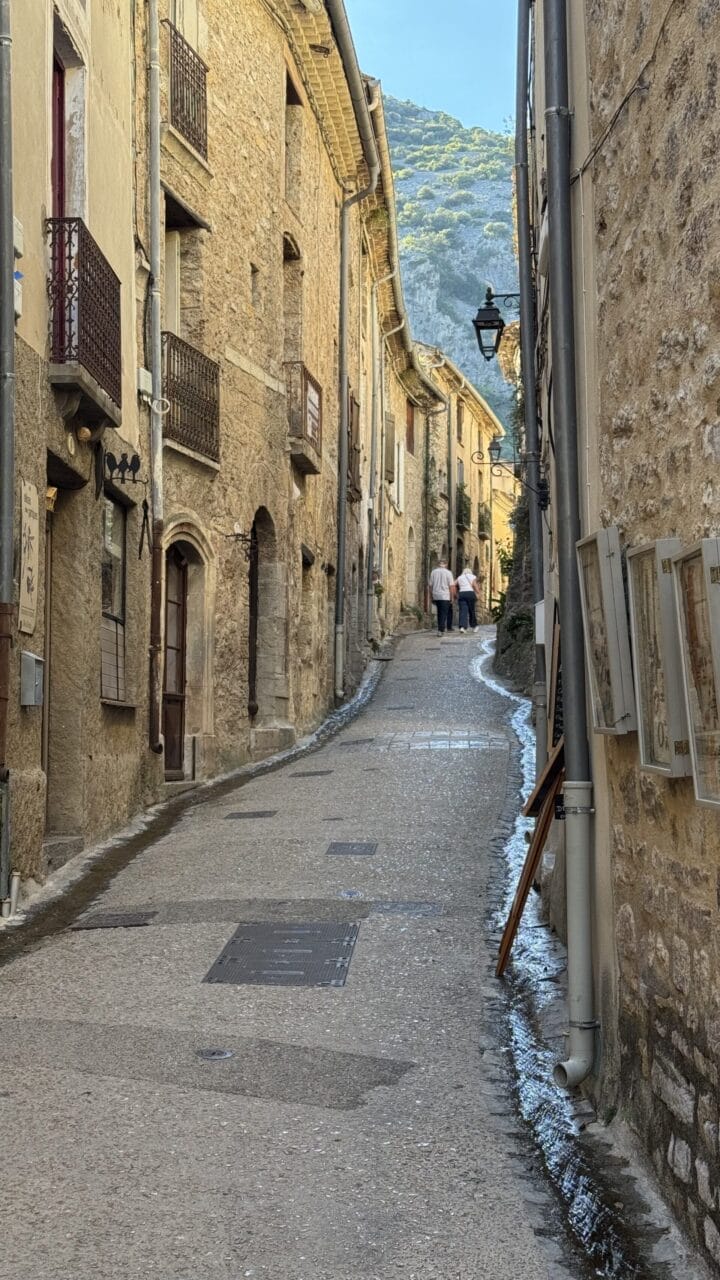
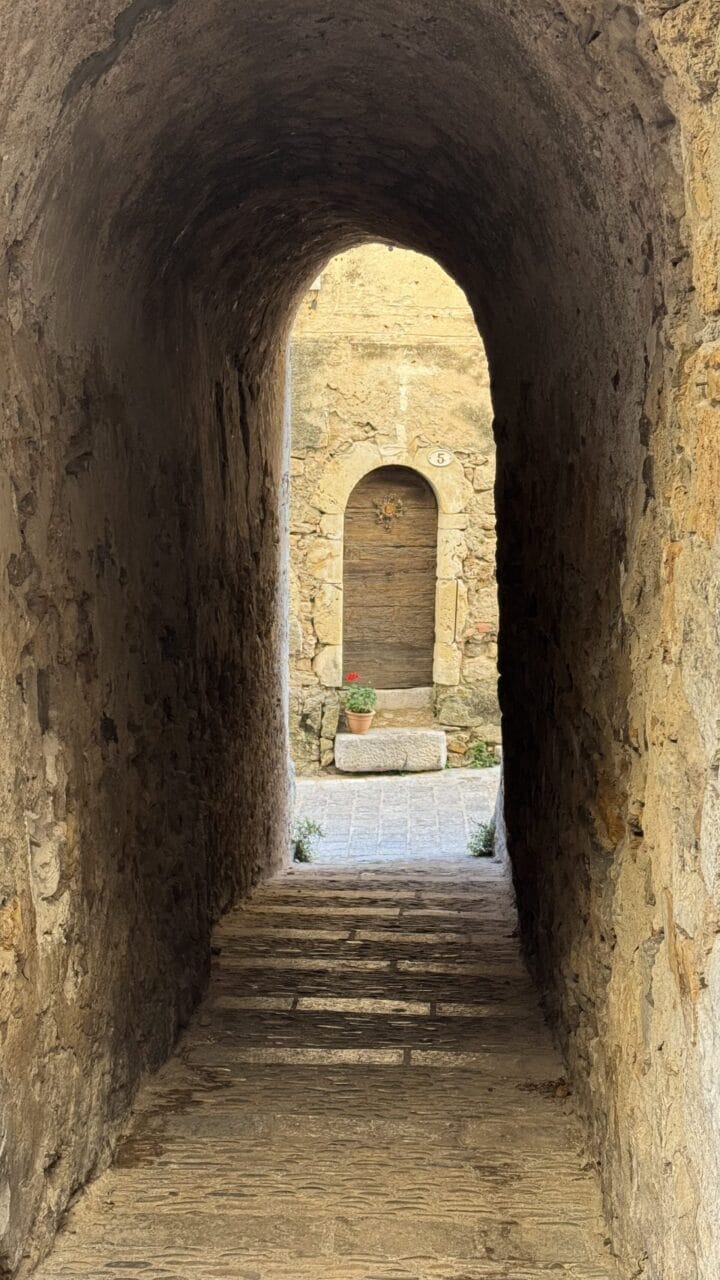
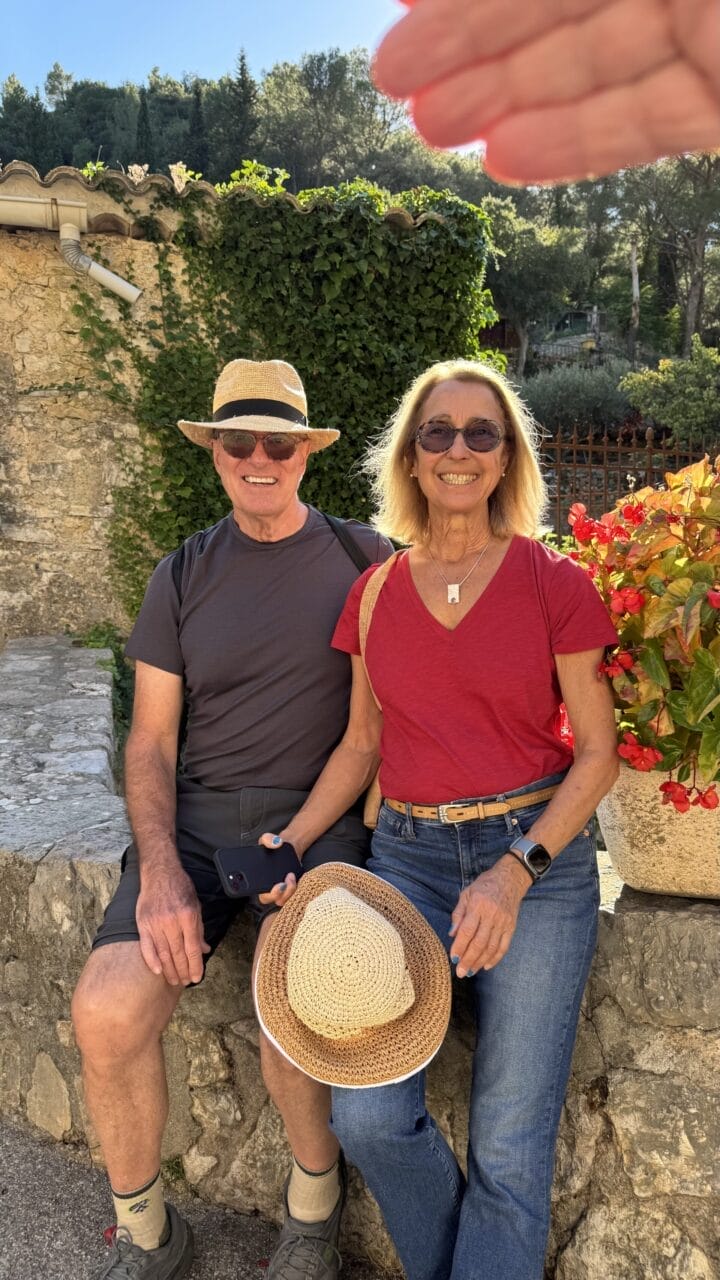
Back on board, we enjoyed lunch as life along the quay unfolded, then set off inland to Saint-Guilhem-le-Désert, a beautifully preserved medieval village tucked into a narrow valley along the ancient pilgrimage route to Santiago de Compostela. With its honey-colored stone houses, Romanesque abbey and quiet cobblestone lanes, the village moved at a gentle rhythm — one of the reasons I prefer traveling in April, May, September or October, when the crowds thin and the air cools.
Marucia and I had spent a week in Marseille in late June, when daytime temperatures were stifling, so the contrast in climate was still fresh in our minds.
Day 3 — Maguelone Island & Manade Visit
We left Sète at 8 a.m., motoring toward Maguelone Island, a peaceful, scenic spot surrounded by vineyards and lagoons, separated from the Mediterranean by a narrow sandbar.
Just a 15-minute stroll from our mooring stood the impressive Maguelone Cathedral, a striking Romanesque structure built between the 11th and 13th centuries. Set amid nature and far from the bustle of towns, the cathedral once served as both a place of worship and a fortress. Today it feels timeless — serene, remote and quietly majestic.
In the afternoon, we joined an excursion to visit a manade, or Camargue bull ranch — a traditional part of life in this region. According to CroisiEurope’s brochure, the visit would include a wagon tour of the property, insights into the life of the herders and a bull-sorting demonstration — the expected highlight.
The bull-sorting demonstration, however, didn’t take place. I later learned these events aren’t held as frequently — if at all — in October. Without it, the tour felt underwhelming compared with how it was presented.
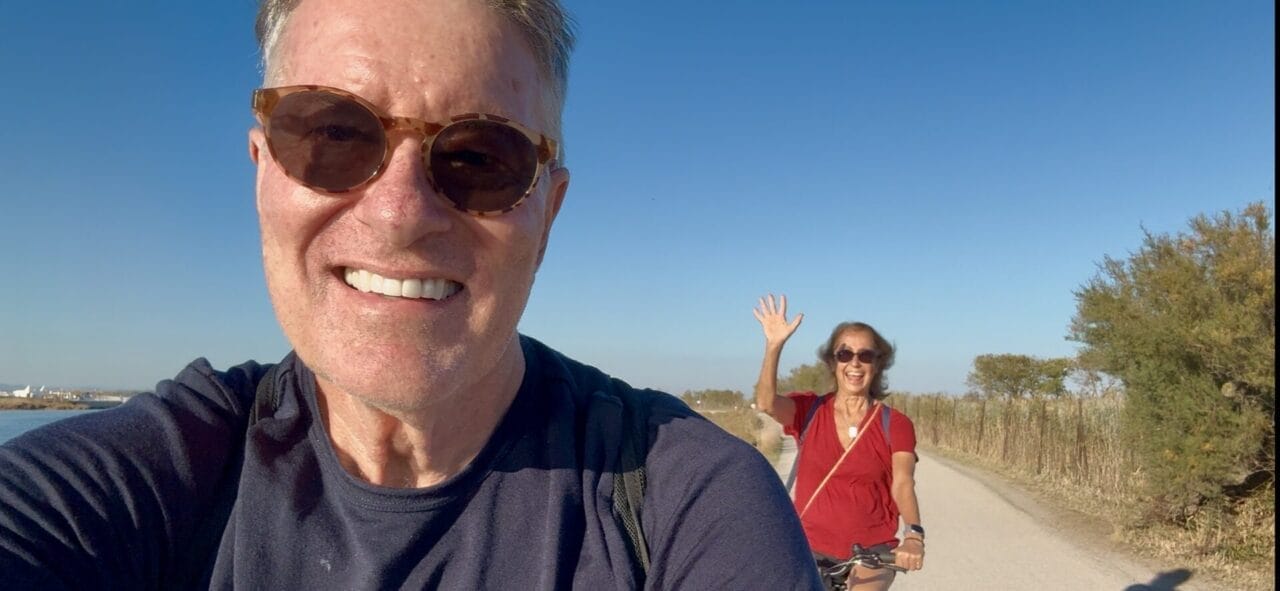
Back at Maguelone in the early evening, Marucia and I pedaled two of the barge’s bikes along the path to the shore. The air was warm, the light softening and the sea beckoned to us. We slipped into the Mediterranean to wade as waves crashed against us — a lovely moment that captured the spirit of slow travel and closed the day on a high note.
Day 4 — Aigues-Mortes: Crusaders, Salt & Bulls
This morning, we gathered in the salon for a talk with Lucien, our guest lecturer and guide. One guest put it perfectly afterward: “He was the best guide we’ve had in all our travels.” Animated, warm and clearly proud of his region, Lucien spoke about the Rhône, which he described as “like a bull” — powerful, unpredictable and charging down from the Alps toward the sea.
He recounted how barges once floated downstream, linking Lyon, Avignon and Arles to Mediterranean ports — a journey that could take up to three weeks. He spoke of floods, sediment shaping the Camargue and the river’s role in carrying not just water but culture: Greek traders founding Massalia (Marseille), Romans planting vineyards and olive groves, and centuries of trade flowing along this vital artery.
Lucien also shared personal stories — about his parents and grandparents, and how his mother fondly referred to wine as a “social lubricant.”
By noon, Anne-Marie was docked at Aigues-Mortes, the medieval walled town rising dramatically from the flat Camargue landscape. From our mooring, the stone ramparts stood just across the canal, and beyond those walls lay the famous pink salt ponds.

Lucien led us through the town, weaving history into vivid storytelling. Aigues-Mortes was dense with people and alive with music, as our visit coincided with the finale of a nine-day festival celebrating life in the Camargue.
In the 13th century, King Louis IX — Saint Louis — founded Aigues-Mortes as his gateway to the Mediterranean, launching two Crusades from these “dead waters.” At the Tour de Constance, we heard the story of Marie Durand, imprisoned for 38 years for refusing to renounce her Protestant faith. She carved RESISTER into the stone — a single word that still echoes. Lucien told us she was just 15 when she was taken captive. How tragic to imagine a woman spending nearly her entire life behind those dark walls.
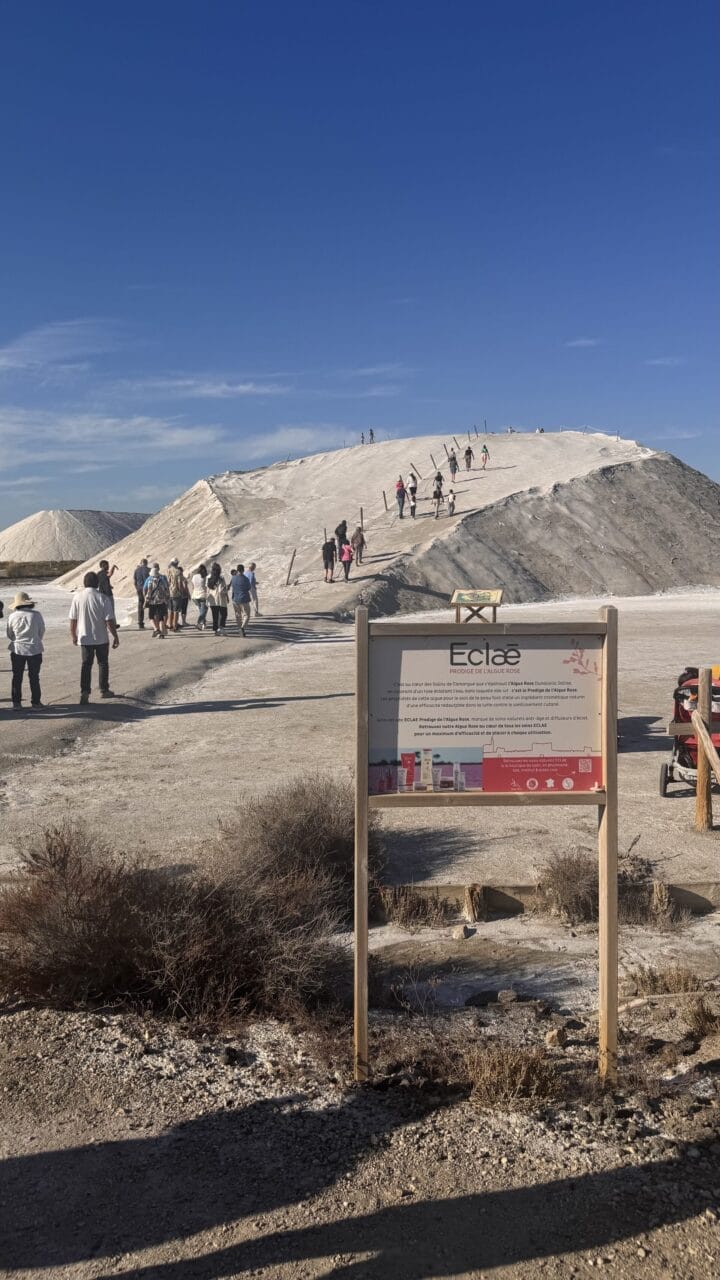
Later, a small tourist train carried us through the salt marshes, where rose-hued ponds stretched to the horizon. Lucien explained how Dunaliella salina algae give both the water and flamingos their pink tint as we passed gleaming white salt mounds piled like snowdrifts against the sky.
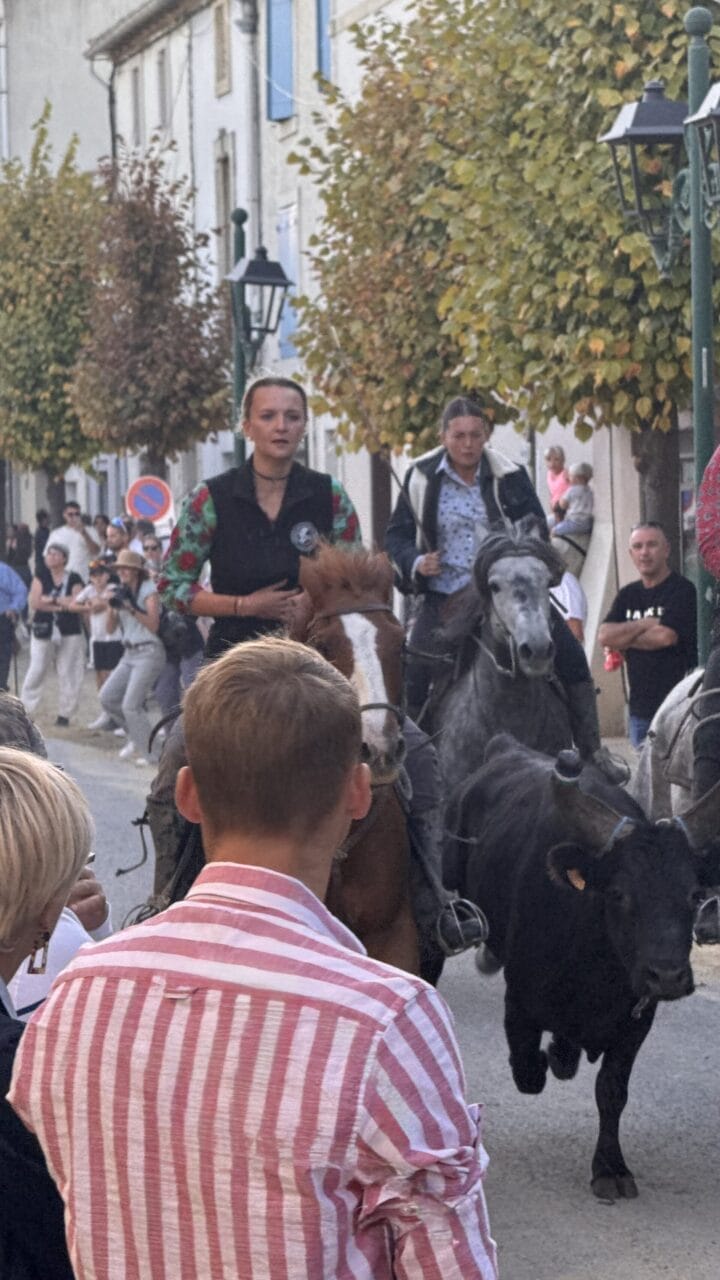
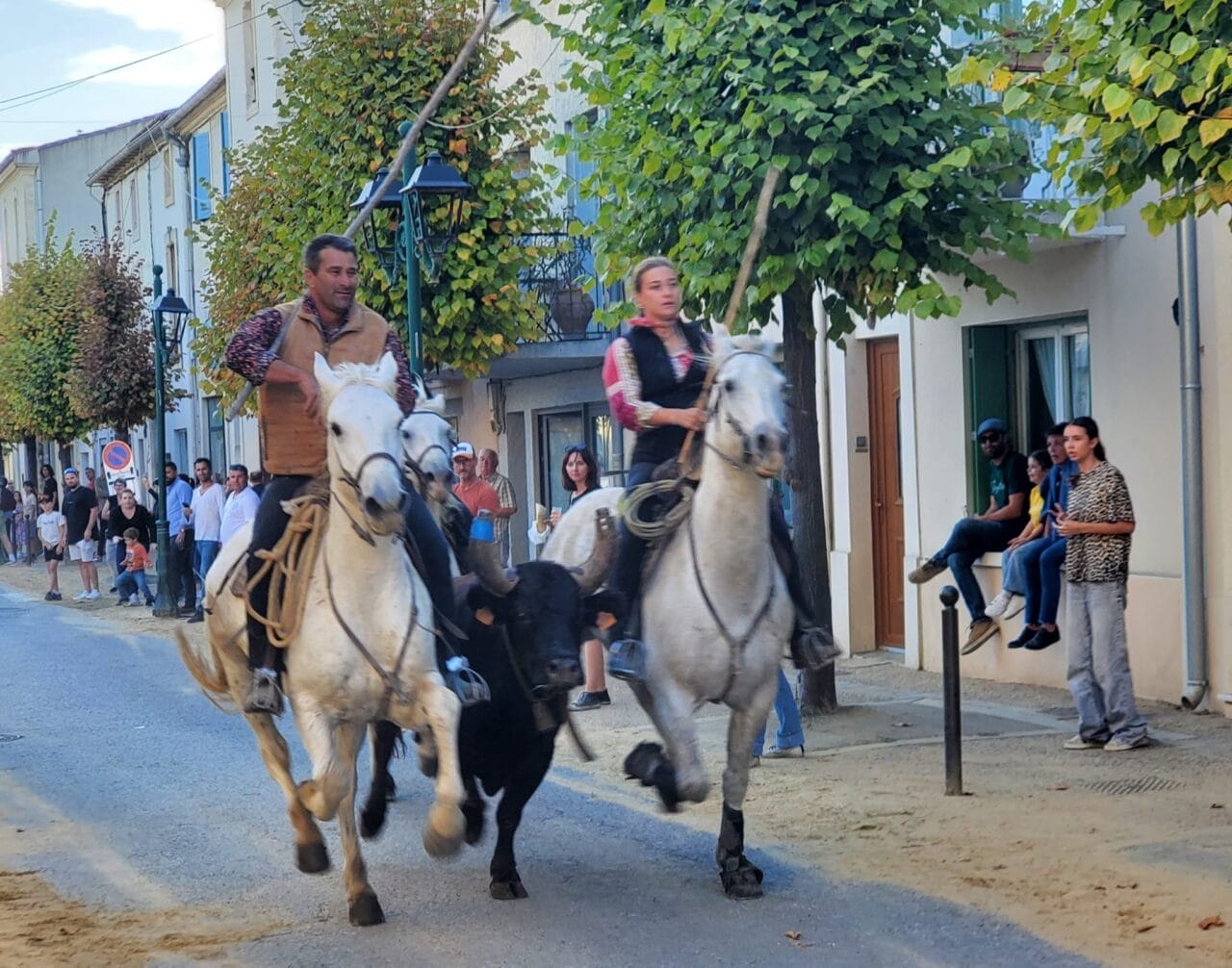
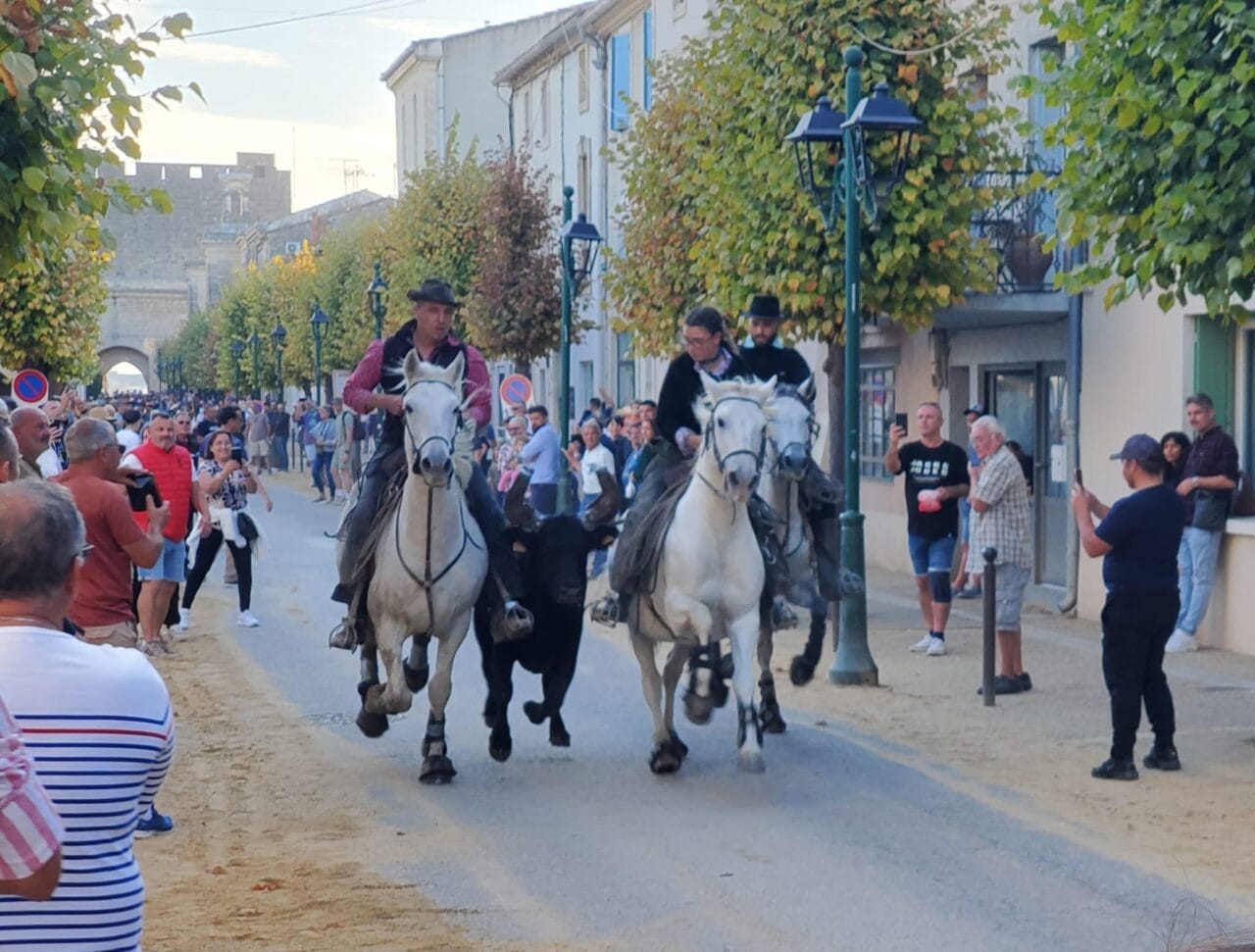
Back inside the fortified city, the streets filled for a bull run. Gardians — Camargue cowboys — raced bulls, one at a time, flanked by two horses, through the narrow streets in a display of skill and tradition. The sound of hooves echoed off the ramparts as horses and bulls thundered past. It was exhilarating — Crusader walls, salt ponds, flamingos and a bull run, all in a single afternoon.
Day 5 — Gallician & Franquevaux: Canal, Wine & Sunset Sail
We set off from Aigues-Mortes in the morning, gliding along the canal toward Gallician. A walk to the local wine co-operative offered a glimpse into everyday Camargue life — small growers pooling their harvests to produce regional wines. It wasn’t staged for visitors, just authentic, friendly and local. We returned to the barge for lunch on deck as the sun climbed high.
In the afternoon, some guests joined an excursion to Saintes-Maries-de-la-Mer, the spiritual heart of the Camargue. According to legend, this is where the Three Marys — Mary Magdalene, Mary Salome and Mary Jacobe — landed with their servant Sara after fleeing persecution. Sara, revered as Saint Sara la Kali, is the patron saint of the Romani people. Each May, thousands of pilgrims accompany her statue to the sea in a moving procession.
The fortified Église des Saintes-Maries, dating from the 9th to 12th centuries, dominates the town. With its thick stone walls and sweeping rooftop views, it embodies both faith and defense — a place where legend, landscape and devotion meet.
A few of us stayed behind on the barge. One guest and I borrowed bikes and pedaled along the towpath — a simple ride through quiet countryside that turned into one of those unplanned highlights.
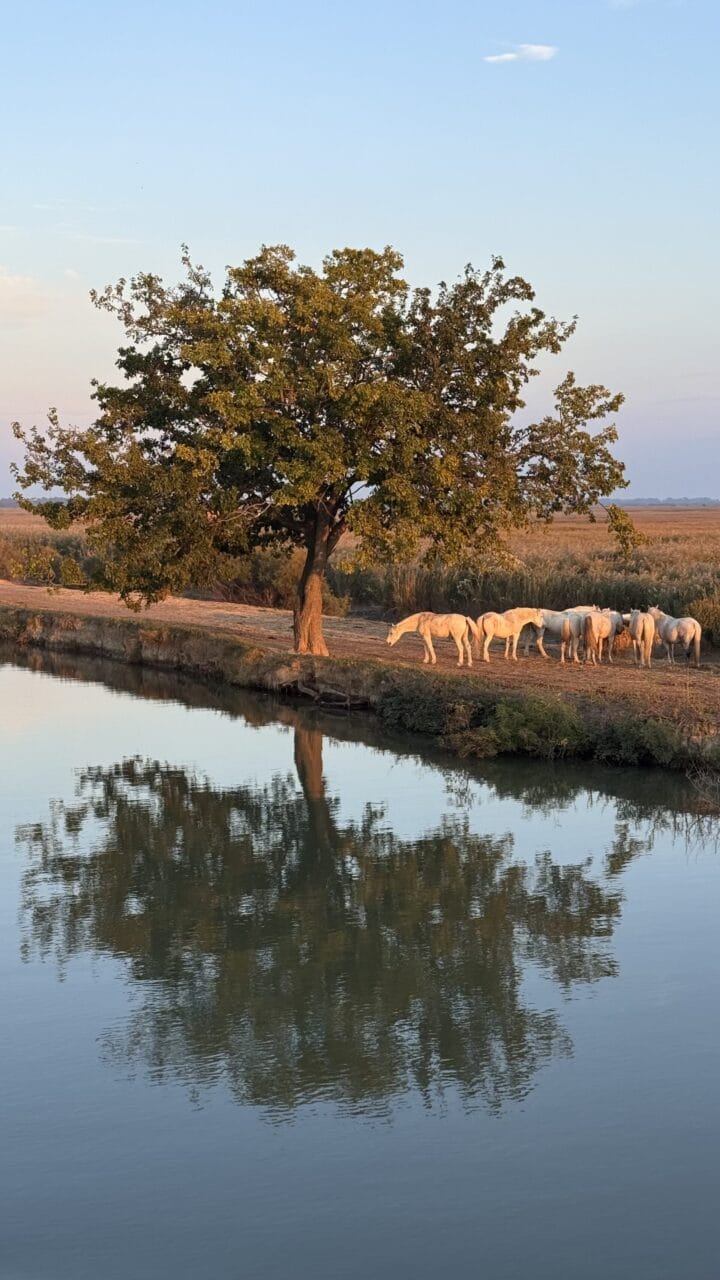
Later, about 90 minutes before sunset, we set sail again, bound for Franquevaux. Everyone gathered on the top deck, wine in hand, as the sun sank over the Camargue, painting the sky in amber and rose. Along the riverbanks, wild white Camargue horses grazed among herds of goats. It was a gorgeous evening — one of the best of the week.

Day 6 — Sailing to Arles & Olive Oil Tasting
Our final full day began as Anne-Marie left Franquevaux. By mid-morning, we passed through a lock from the canal into the Petit Rhône, and then on to the mighty Rhône itself. There was a sense of arrival as we turned toward Arles — the river Lucien had brought to life now carrying us toward our journey’s end.
In the afternoon, we visited Moulin de la Coquille, a family-run olive-oil mill outside Arles. Surrounded by groves shimmering in the autumn light, we learned how olives are transformed from fruit to oil through careful, mechanical extraction. Tasting the fresh, peppery oil on-site was a reminder of how deeply food and landscape are intertwined here.
Back on board that evening, we dressed for a gala dinner — our final night together. The mood was warm and celebratory, filled with laughter, shared memories and that gentle poignancy that comes with endings. Two local musicians played acoustic guitars, filling the salon with what the French affectionately call “gypsy music,” as we danced and savored our final evening aboard Anne-Marie.
Day 7 — Farewell in Arles
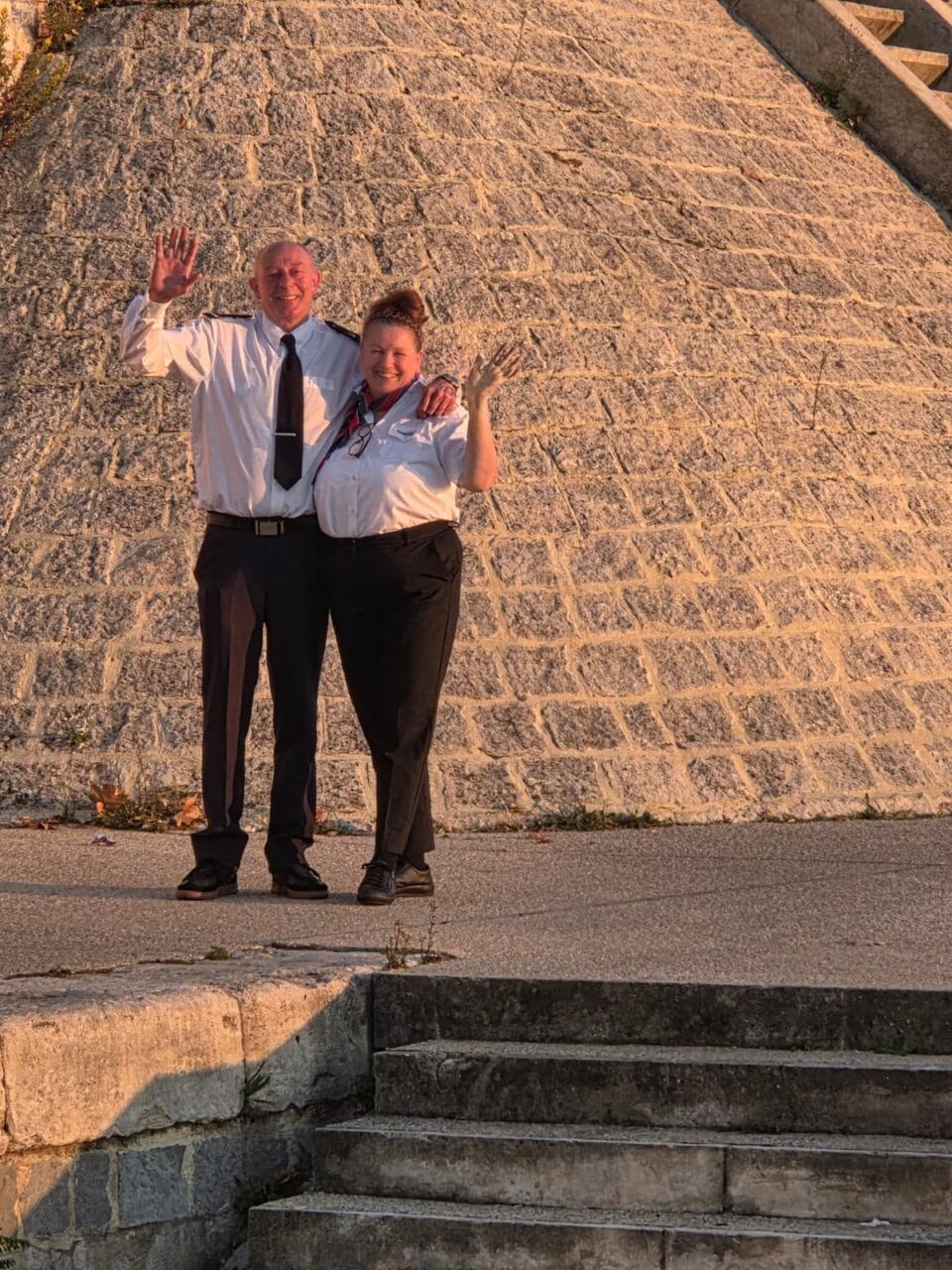
Morning came too soon. After breakfast, it was time to say goodbye. As luggage rolled along the gangway and guests exchanged hugs, Sariah — our wonderful cruise manager — stood on the quay wiping tears from her eyes. Watching Sariah wave from the quay, I thought about how rare it is to find days that feel this complete, and how hard it is to let them go.






2 Responses
Very well said Gayle (and Jeff). I couldn’t agree more. And your cheery demeanor and positive attitudes added immensely to the trip. Thanks for being a part of it!
Very nice recap Ralph! I just have one more thing to add. We SO enjoyed EVERY single crew member! They went out of their way to make it nice, while being so warm and pleasant every day.
We were blessed to have our Chef! He created every single meal to perfection, if not already, he should be a Michelin-stared Chef! Please pass on our gratitude for these amazing meals!!
Gayle and Jeff