
Editor’s note: This article was last updated March 29, 2026. The government shutdown situation is evolving rapidly, and airport conditions may change. We recommend checking your departure airport’s website and TSA’s official channels before you travel.
If you’re heading out on a river cruise this spring or returning from one, you need to know what’s happening at U.S. airports right now — and plan accordingly.
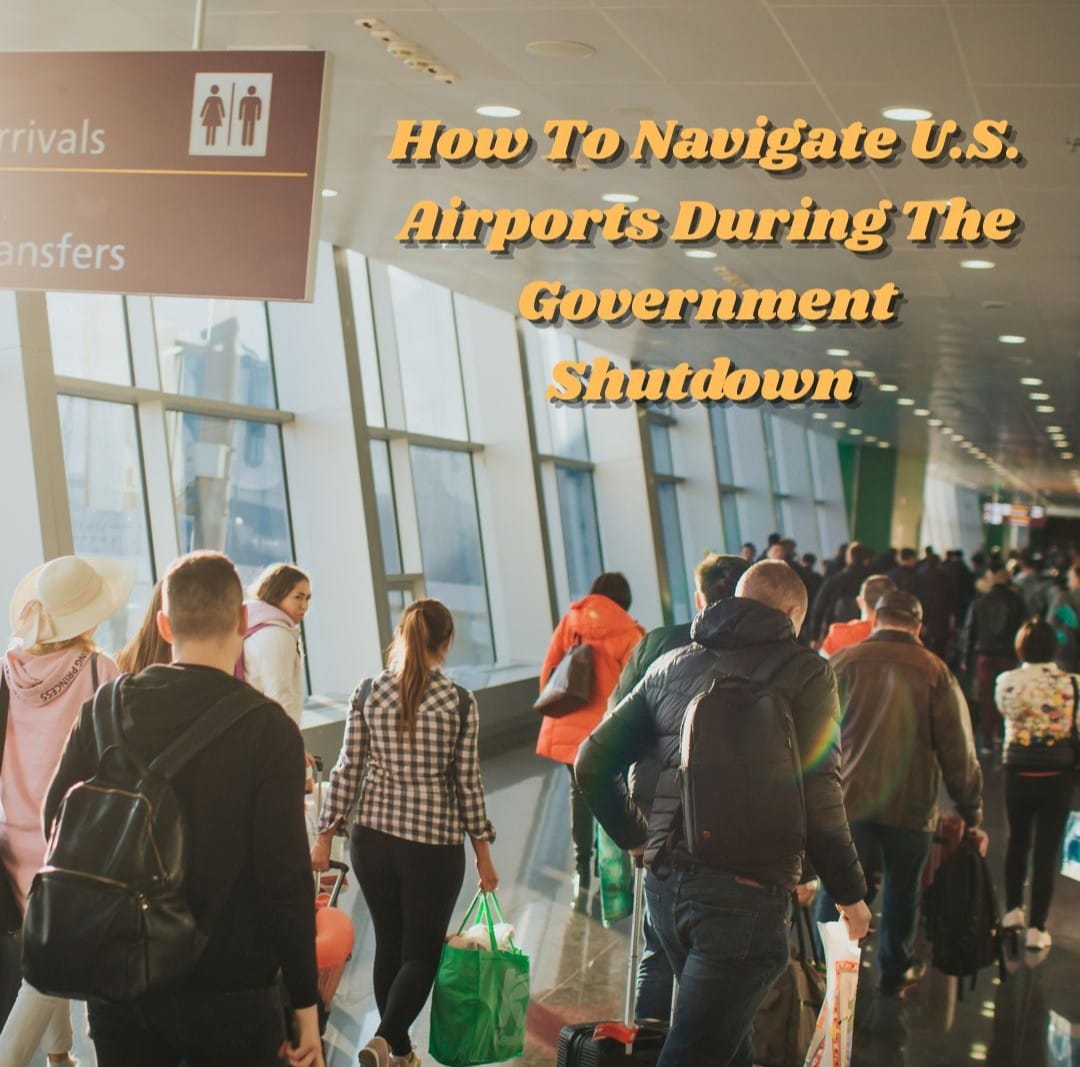
A partial federal government shutdown that began in mid-February has left the Department of Homeland Security without full funding, and the ripple effects are being felt at security checkpoints from Houston to New Orleans to Atlanta.
For river cruise travelers flying out of or returning to the U.S., that means your airport experience needs some extra thought.
Here’s what you need to know.
The Situation On The Ground
Hundreds of TSA workers have resigned over unpaid wages, while others have taken unscheduled leave — the result has been long lines and delays at airports amid staffing shortfalls.
The numbers are sobering. Houston Hobby Airport has urged passengers to arrive four to five hours ahead of their flight. Hartsfield-Jackson Atlanta and Louis Armstrong New Orleans International have reported hours-long average backups, with New Orleans advising travelers to arrive at least three hours early.
There may be some relief on the way. A new executive order directs the Department of Homeland Security to ensure TSA employees receive the compensation and benefits they missed during the shutdown by reallocating available funds tied to TSA operations.
The goal is to stabilize staffing levels and reduce disruptions, though it may take time for conditions at airports to fully return to normal.
Departing The U.S.: Get TSA PreCheck If You Don’t Have It
Enroll in TSA PreCheck and do it now, not the week before you leave. If you have Global Entry, you may already be enrolled in TSA Precheck.
TSA PreCheck helps you move through security more quickly at participating airports. While the PreCheck lines might still be long, they are significantly shorter than general security lines. Plus, the screening process doesn’t require you to remove your shoes or belts. PreCheck is available at more than 200 airports and with over 90 participating airlines. It typically costs up to $77 for five years — a bargain in any travel environment, and essential in this one.
You can start the enrollment process online and schedule your in-person appointment at the TSA PreCheck enrollment page. Allow a few weeks for processing, so don’t wait until the week before your cruise departure. One encouraging note: anecdotal reports suggest that TSA PreCheck applications and renewals are operating normally during the shutdown, with some travelers receiving eligibility confirmation within hours of applying.
There was brief confusion in late February when DHS announced it would suspend PreCheck lanes, but DHS reversed course after discussions with the White House and TSA, and PreCheck remains operational with no change for the traveling public.
That said, even if you’re enrolled in TSA PreCheck, it’s still smart to arrive early and check travel alerts for your upcoming travel.
If you’re not enrolled in PreCheck and can’t get it before your flight, budget more time at the airport. Depending on your departure city, that could mean arriving up to four hours before your scheduled departure.
Understanding CLEAR
Some travelers have CLEAR memberships but don’t fully understand what the service actually does — and what it doesn’t do. The distinction matters especially now.
CLEAR is a biometric identification platform that uses fingerprints and iris scans to identify travelers. Those with a CLEAR+ membership usually do not have to show their IDs during security screening. That’s the key word: identification. CLEAR handles the identity verification step — bypassing the queue where you’d normally hand your ID and boarding pass to a TSA agent. It does not bypass the physical screening conveyor belt.
A CLEAR+ membership costs $209 per year. But here’s the good news: you may already be covered. Several credit cards offer full reimbursement for a CLEAR+ membership. Check your credit cards before paying out of pocket — you may already have this benefit sitting unused.
You can enroll or check your membership status at clearme.com.
Returning To The U.S.: Global Entry Is Back — For Now
River cruisers flying home from European gateways will be relieved to know that Global Entry has been restored. The program was halted in late February but restarted on March 11, with DHS saying it was able to resume service as the department “continually evaluates measures it can take” amid the funding lapse.
Global Entry grants expedited entry back into the U.S. from other countries, with shorter wait times through customs and no requirement to fill out paperwork. It costs $120 for five years and enrollment includes TSA PreCheck — making it the better value of the two programs for frequent international travelers. If you already have Global Entry, you do not need to enroll separately in TSA PreCheck. Your Known Traveler Number covers both programs.
You can apply at the Global Entry enrollment page.
Renewing Global Entry is easier than many travelers expect. Many renewals are approved without an in-person interview — CBP may re-approve you based on your updated application and records.
Global Entry’s status could change again. Given the ongoing uncertainty, CLEAR and Mobile Passport are still running at participating airports and can save meaningful time where available — worth having as a backup.
The Bottom Line
Though an executive order was recently signed aimed to solve the issue, TSA expects to screen about 2.8 million passengers a day in March and April — an all-time high. That combination of reduced staffing and surging demand is a recipe for exactly the kind of delays that can turn an otherwise wonderful river cruise trip into a frustrating bookend.
A little preparation goes a long way. Enroll in TSA PreCheck, understand what CLEAR does and doesn’t do, give yourself extra airport time and keep an eye on conditions at your departure city. Your river cruise deserves a stress-free send-off — and a smooth homecoming.
Practical tips for river cruise travelers
- Enroll in TSA PreCheck now. The process requires an online application plus an in-person appointment. Visit https://ttp.cbp.dhs.gov to get started. Processing can take a few weeks, so act well ahead of your departure.
- Consider upgrading to Global Entry. For the extra $35 over PreCheck, you get expedited customs re-entry — invaluable when you’re landing after a long transatlantic flight from your river cruise. Apply at https://ttp.cbp.dhs.gov.
- Check your credit cards for CLEAR coverage. Before paying the $209 annual fee out of pocket, check whether any card in your wallet already reimburses it.
- Arrive earlier than you think you need to. Regardless of your PreCheck or CLEAR status, add buffer time. If your instinct is two hours, make it three.
- Check your airport’s social media the morning of travel. Airports have been posting real-time wait time updates on social media and their websites. Louis Armstrong, Houston Hobby and Hartsfield-Jackson have been especially communicative.
- Download the Mobile Passport Control app. It’s free, works at major U.S. international airports and can speed up the passport control process even without Global Entry.
- Build connection time into your itinerary. If you’re connecting through a major hub on your way home from a river cruise, this is not the time for a tight 60-minute layover. Ask your travel advisor or airline about longer connection options.
- Talk to your travel advisor. If you booked your river cruise through a travel agent, reach out to see if they have any airport-specific guidance or air deviation options that might route you through less-congested airports.
Already Enrolled In TSA Precheck? Here’s How To Check.
Not sure if you already have TSA PreCheck? Check your Known Traveler Number (KTN) first. Log into your frequent flyer account — United, Delta, American or whichever airline you fly most — and look under your profile’s travel or security settings. Your KTN should be stored there if you added it at enrollment. You can also log in directly at https://tsaenrollmentbyidemia.tsa.dhs.gov/ktn-lookup.


