
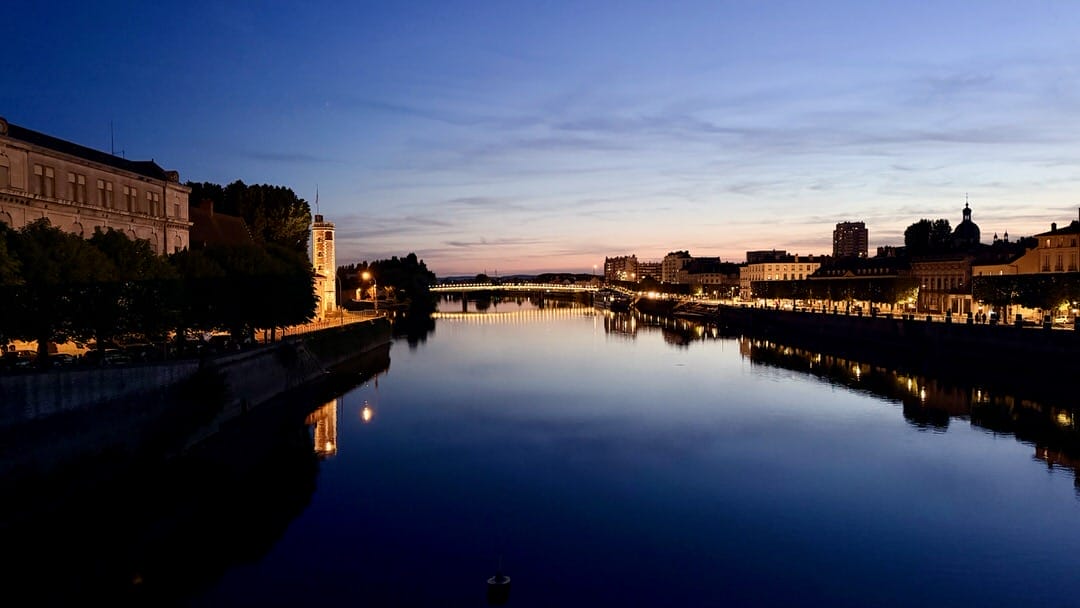
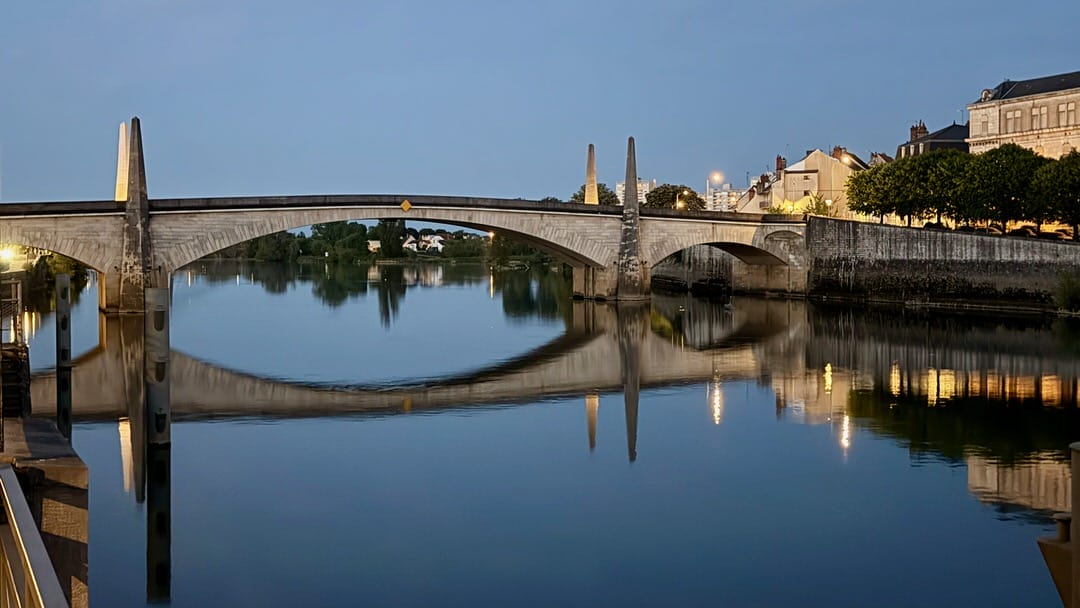
A week ago I was on a 22-passenger barge, ducking through a tunnel under Besançon’s citadel at first light. Tonight I am on AmaWaterways’ AmaCello, watching the sun set over the Pont Saint-Laurent in Chalon-sur-Saône.
The contrast is worth noting. Last year we paired a canal cruise on the Camargue with a Rhône sailing—switching vessels after seven days—and as my daughter writes in her piece on river cruise vs. canal cruise, the two experiences aren’t comparable. They’re just different. Both work. They just work differently. See Slow Water: Seven Days On CroisiEurope’s Daniele
We are cruising the Saône from Lyon to Chalon (originally Dijon—more on that later), with stops in Mâcon, Tournus and Seurre. Slower than the Rhône, quieter, and—if you let it—more immersive.
A Week Aboard the AmaCello
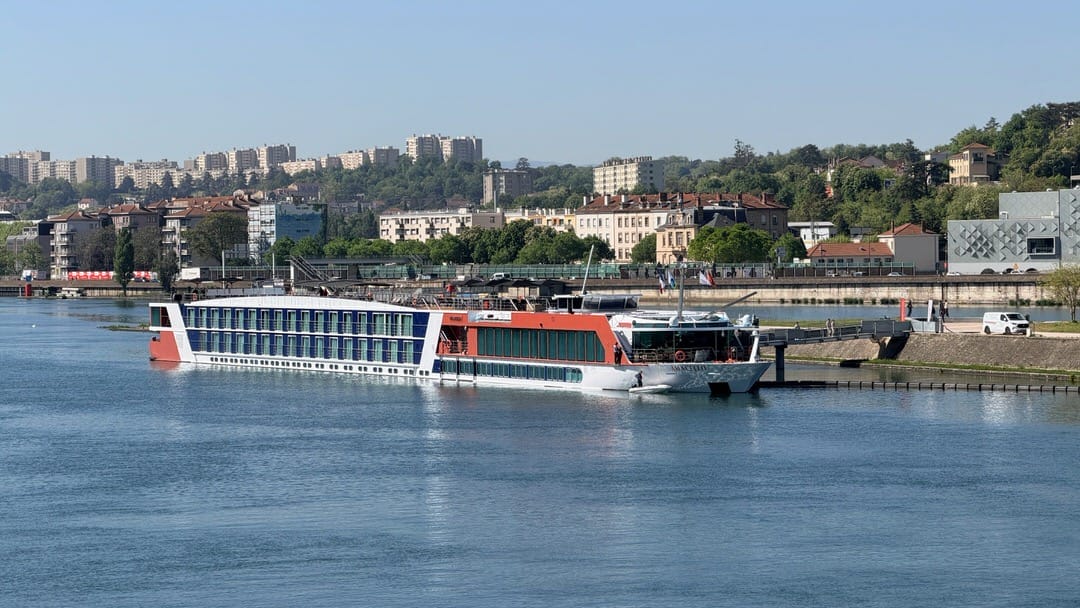
AmaWaterways is not quite the same company it was the last time I sailed it. In March 2024, global investment firm L Catterton acquired a significant stake, with co-founders Rudi Schreiner and Kristin Karst retaining meaningful ownership. Catherine Powell, a former Disney and Airbnb executive, became CEO in July 2025, with Rudi Schreiner moving to chairman and my friend Kristin Karst becoming global brand ambassador. A rebrand followed—the previous blue and gold giving way to a warmer rust-red palette the company calls vivace, with fleet repainting underway and expected to complete by 2027. Onboard, the experience felt seamless. The color on the hull is new. The rest is continuity.
AmaWaterways operates two ships on this stretch of southern France—the AmaCello on the Saône and the AmaKristina on the Rhône. Last October we cruised the AmaKristina with a group from Arles to Lyon; you can read that story here. The two itineraries pair naturally—different rivers, different character, the same standard of ship.
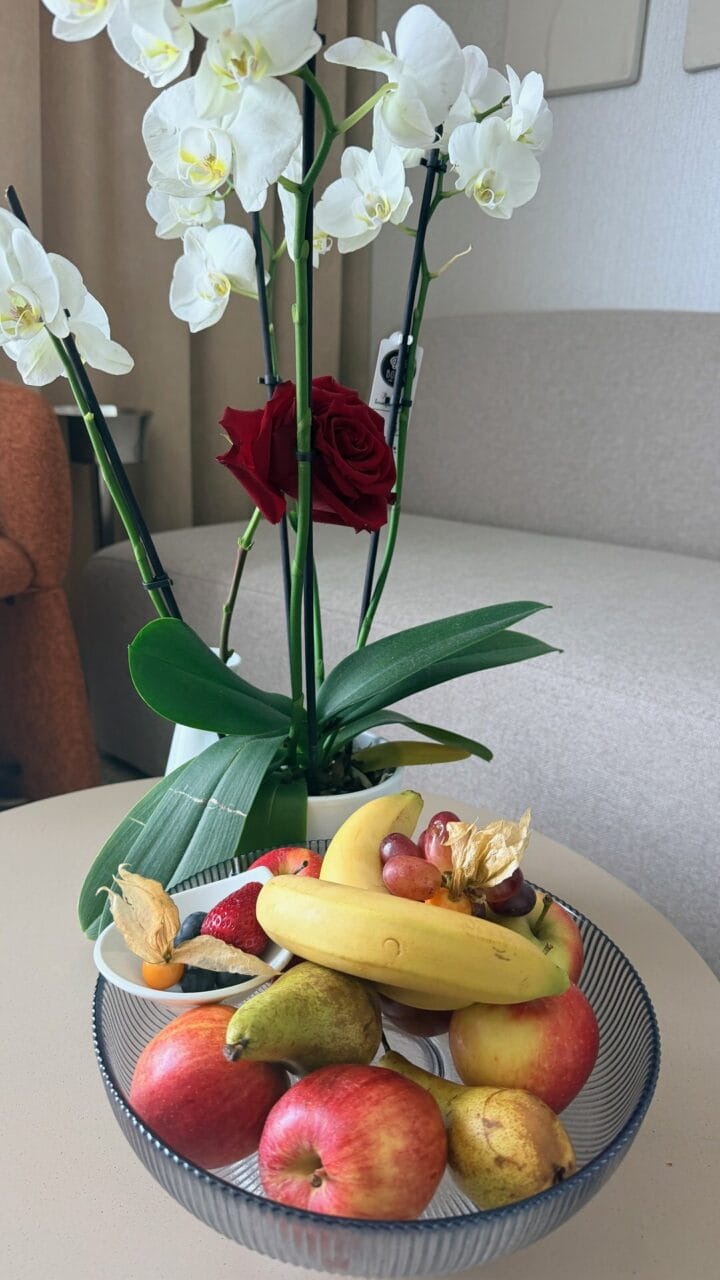
We were in stateroom 303, a junior suite. Fresh fruit arrived daily and was replenished without being asked. Laundry service was included and delivered back to us sometimes within hours. Soft drinks and juices were restocked daily in our minibar. There was a sitting area, and in the bathroom, a tub and separate shower. Aside from the space, what we appreciated most was the large French balcony that opened onto the river—each day we enjoyed watching Burgundy go by.
The ship’s gym was recently enlarged, though it remains modest—two stationary bikes, a treadmill, dumbbells to 8 kilograms. Wellness host Adrian’s morning sessions drew early risers, including some in our group who attended every day.
The Chef’s Table at the stern requires a reservation but costs nothing extra. Though AmaCello’s Always Available menu features hamburgers, cheeseburgers, pizza and an evening selection of Black Angus ribeye, Caesar salad and chicken dishes, we nearly always opted for the Chef’s Recommendations—usually regional dishes such as Beef Bourguignon, paired with excellent regional wines at no additional cost.
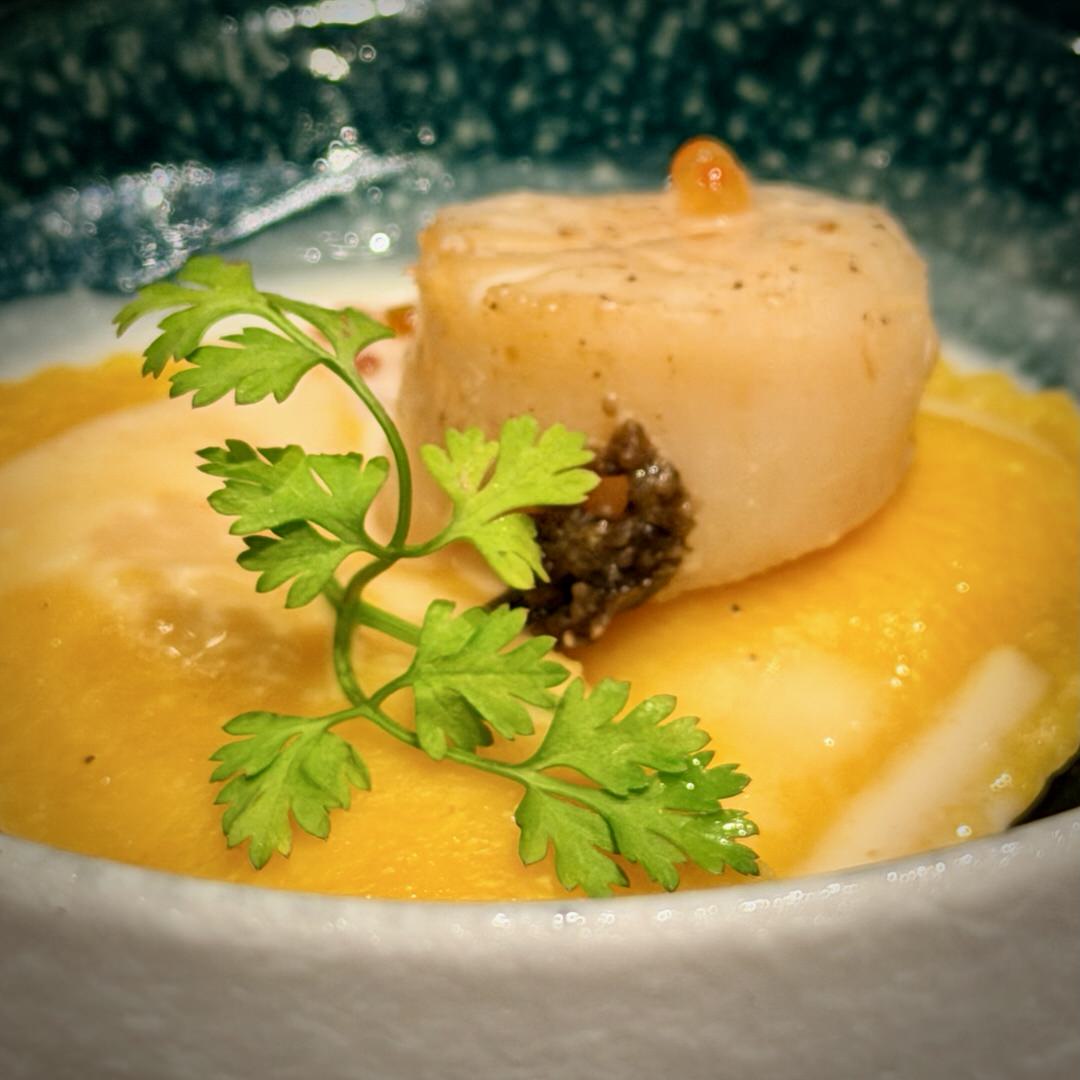
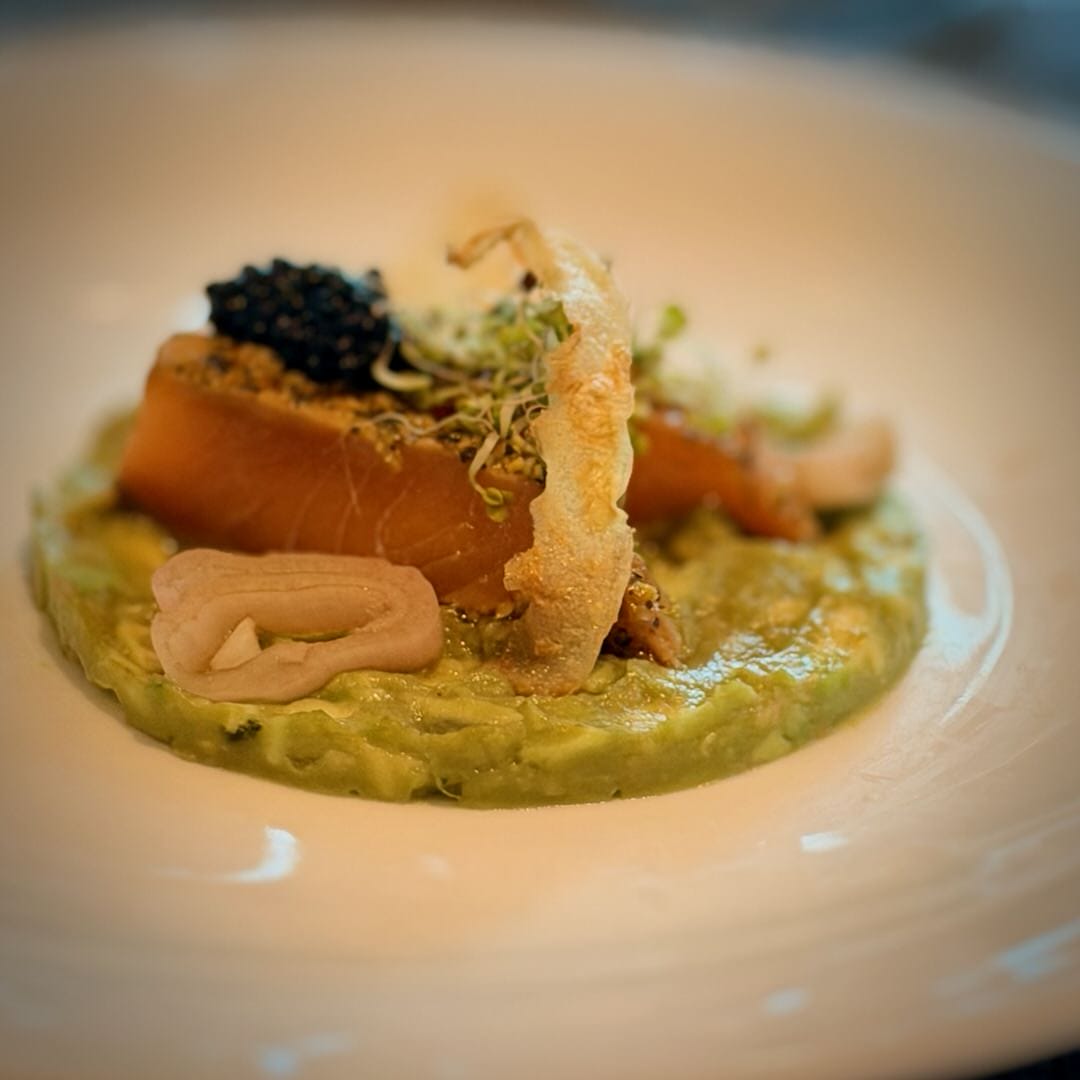
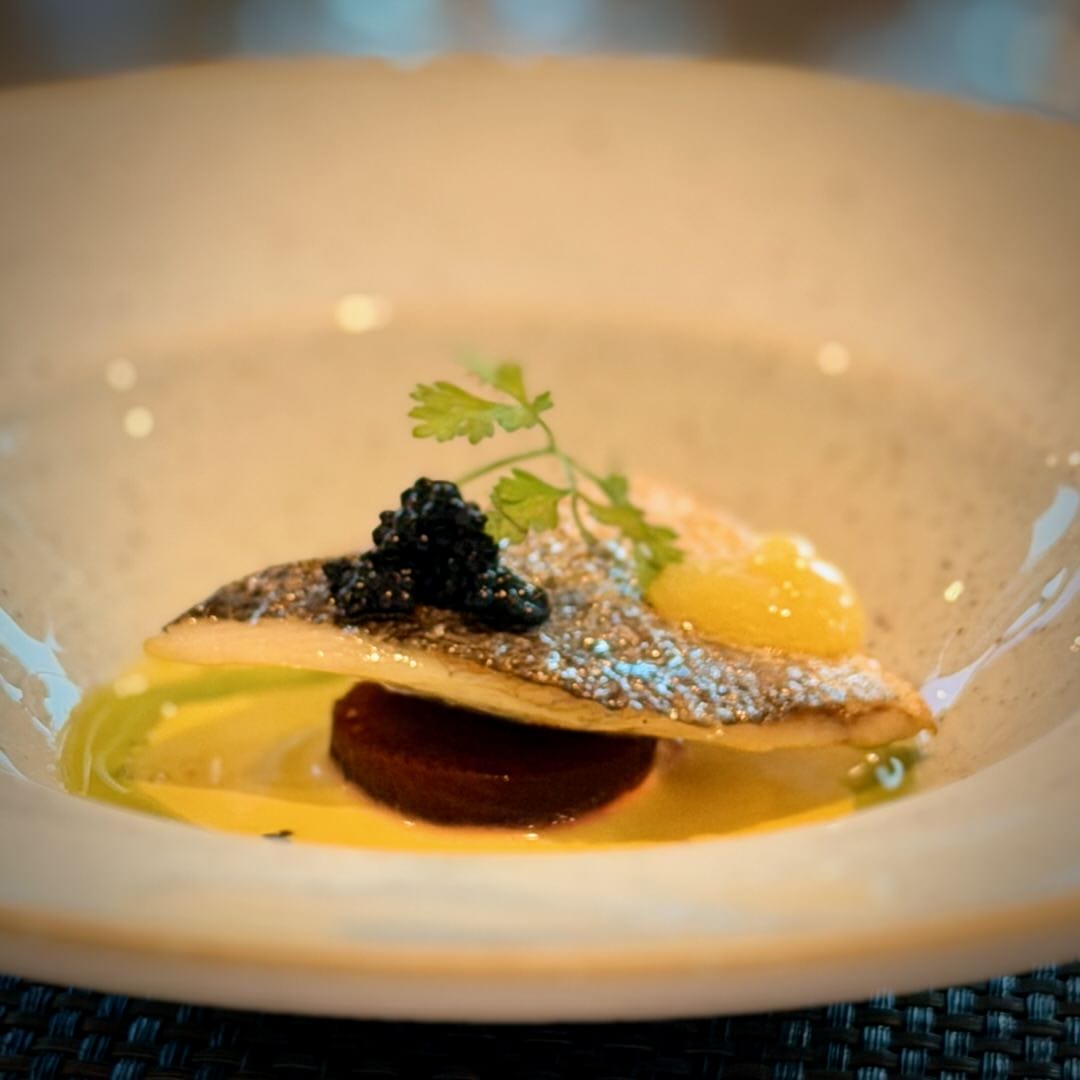
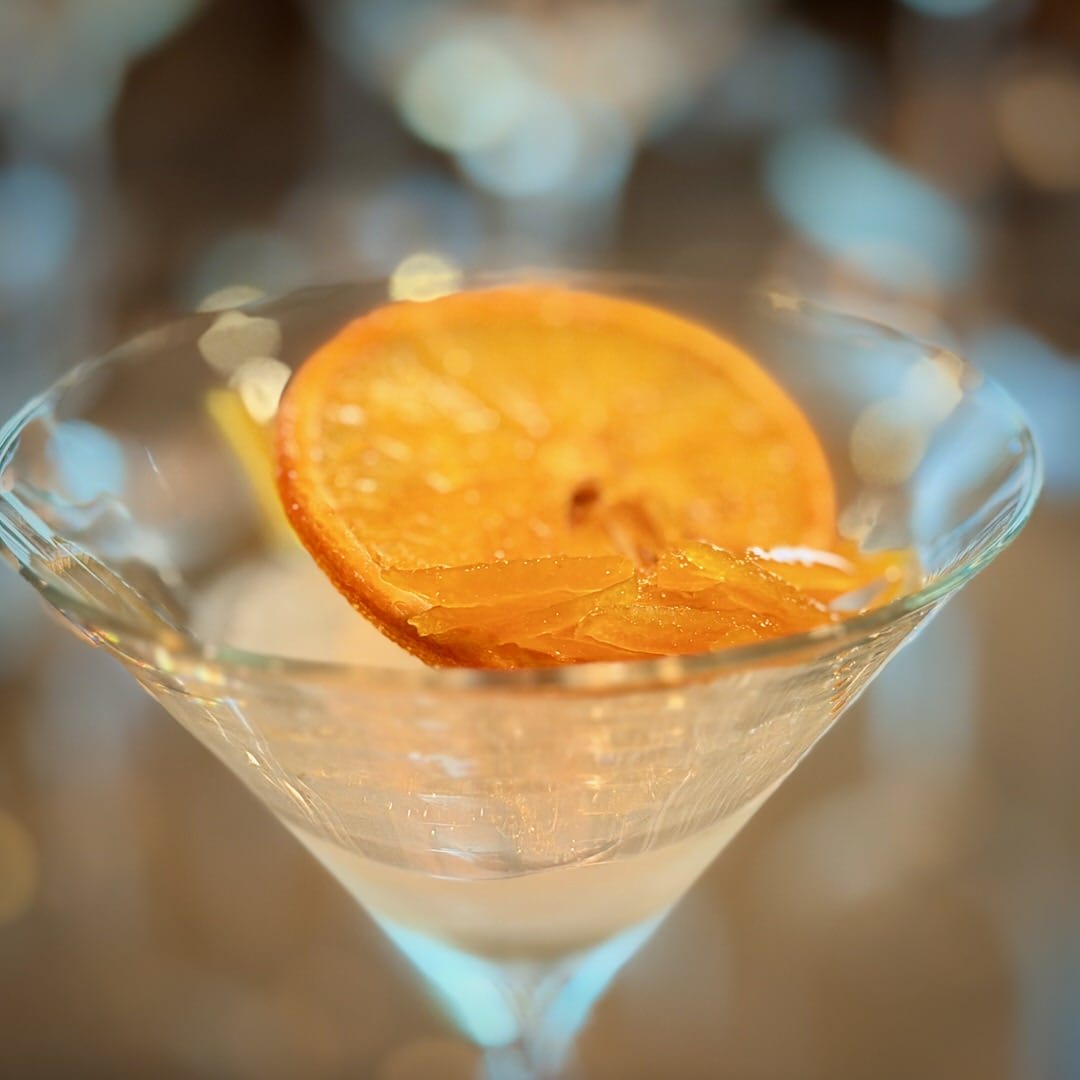
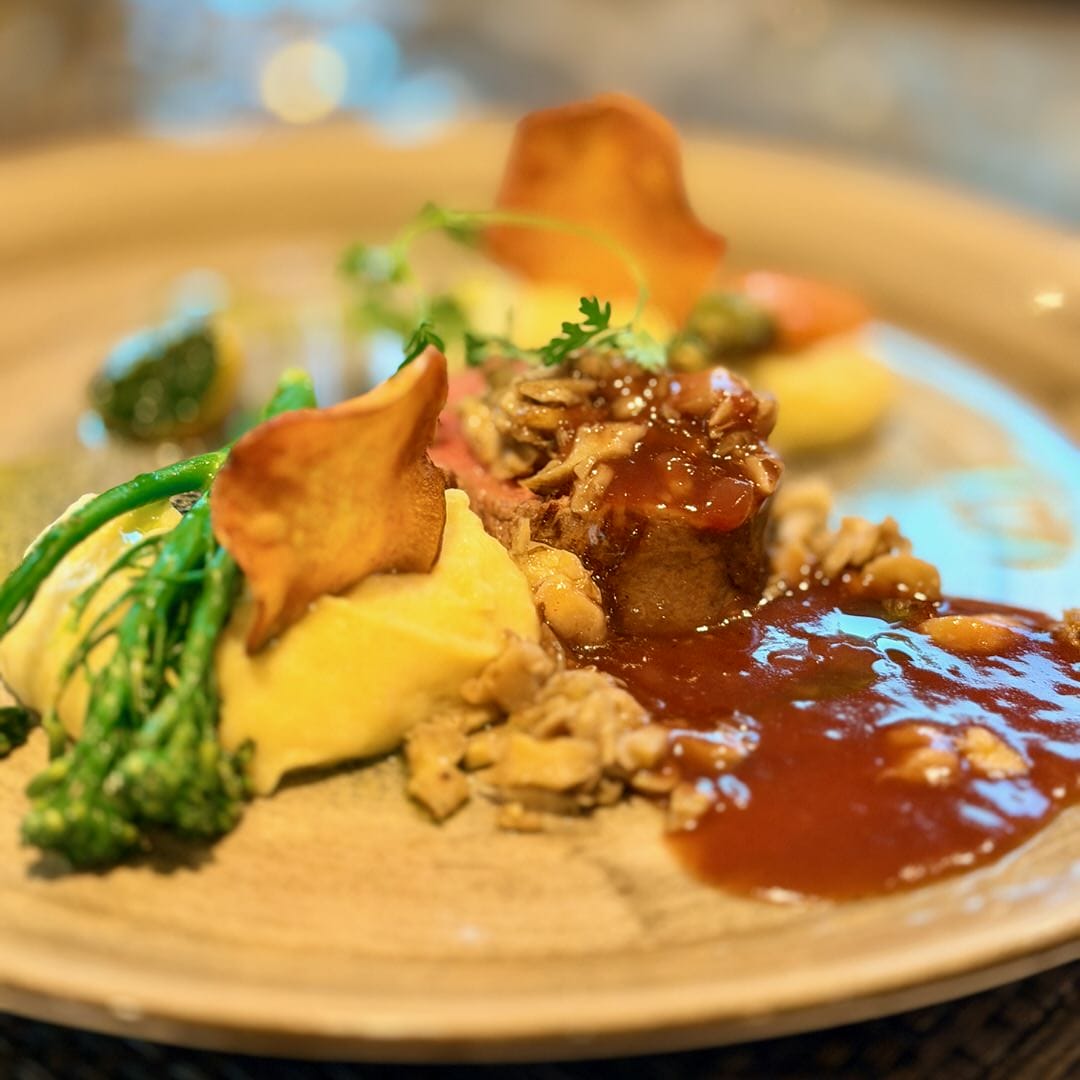
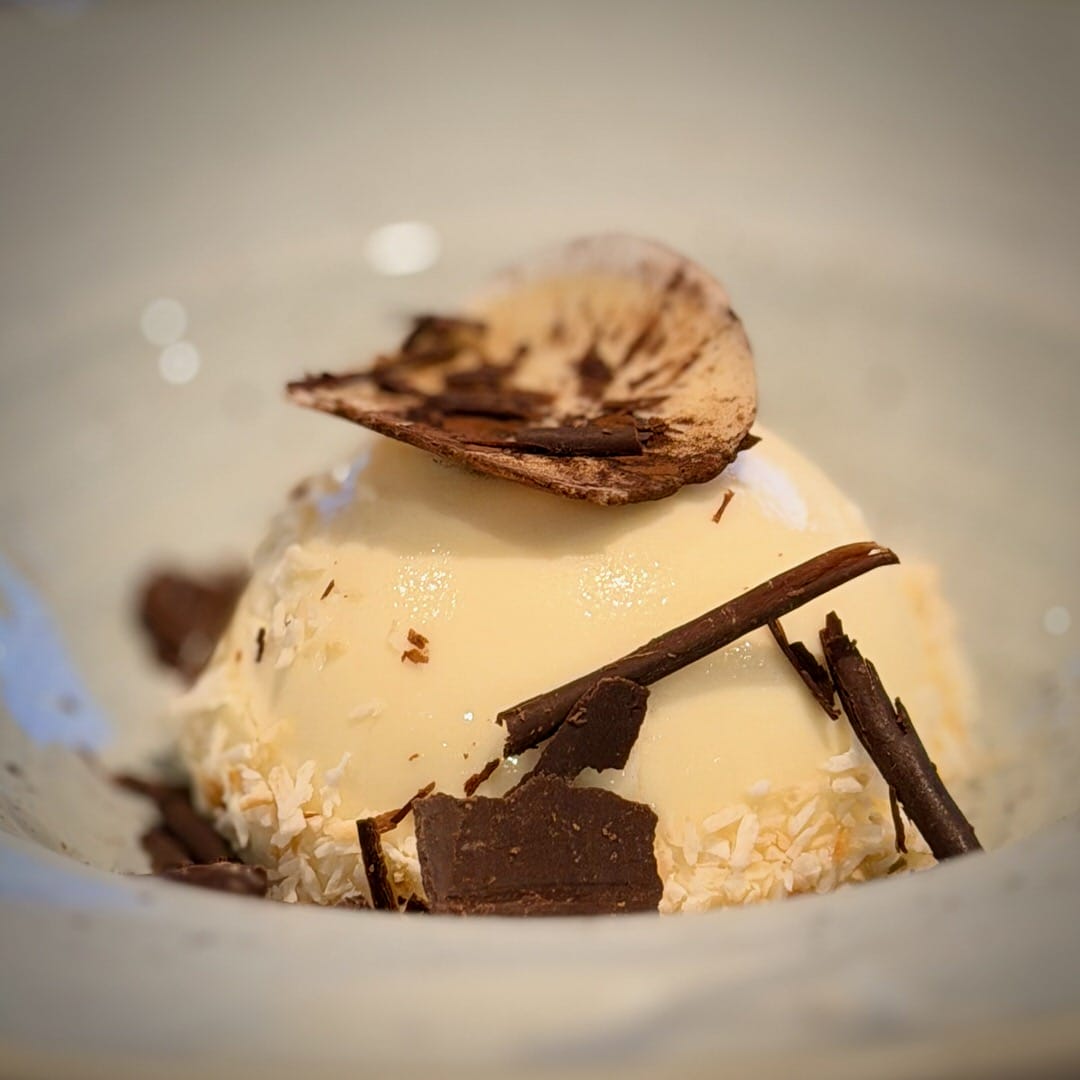
Dietary needs are handled without ceremony. There is a focus on wellness, with items such as chia pudding, fresh salads, smoked salmon and trout on the breakfast and lunch menus. Dinner menus even list protein content.
One personal touch that signals the company’s new direction: a Laura Geller beauty gift set arrived in our stateroom mid-week, with a handwritten note from CEO Catherine Powell. Small gesture, but much appreciated.
The Saône
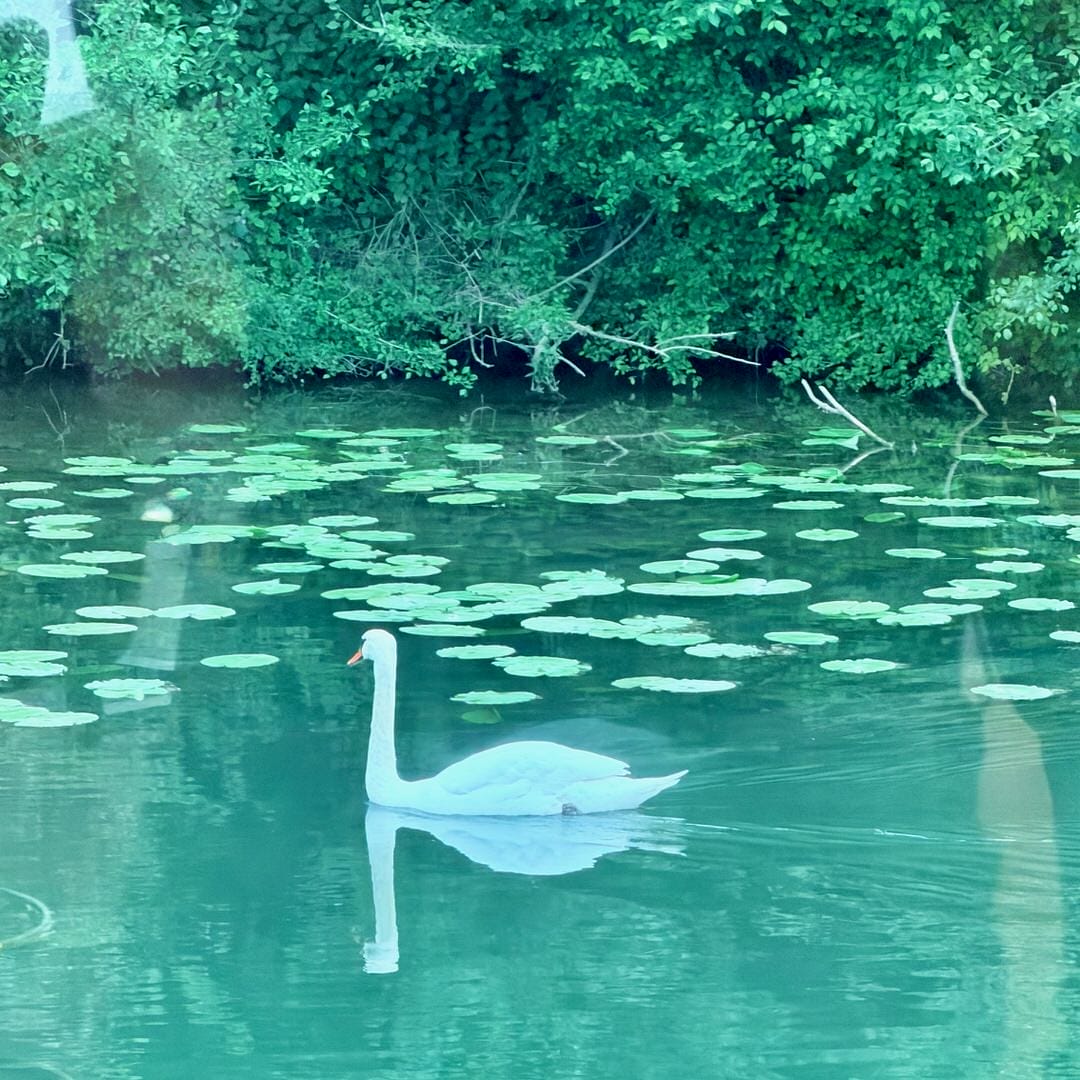
The Rhône moves with purpose toward the Mediterranean. The Saône does not. It widens, slows, and settles into Burgundy—vineyards, limestone villages, plane trees and poplars and long stretches where the point is not getting somewhere but watching carefully as you go. Sailing it feels less like transit and more like reading a landscape slowly, page by page.
Lyon
A proper starting point—food-driven, historic, confident in its identity. We overnighted here, which is the right amount of time to begin to understand it. Les Halles de Lyon Paul Bocuse is a cathedral to French food; we moved from stall to stall sampling wines, cheese and pâté the way you move through a very good meal—slowly. Some in our group raved about the guided bike tours. Others walked Vieux Lyon, the UNESCO-designated old town. I rode 20 miles along the waterfront, watching signs for Geneva on the bike route markers—the EuroVelo 17 follows the Rhône all the way from Lake Geneva, fed by the river’s headwaters in the Swiss Alps, to the Mediterranean.
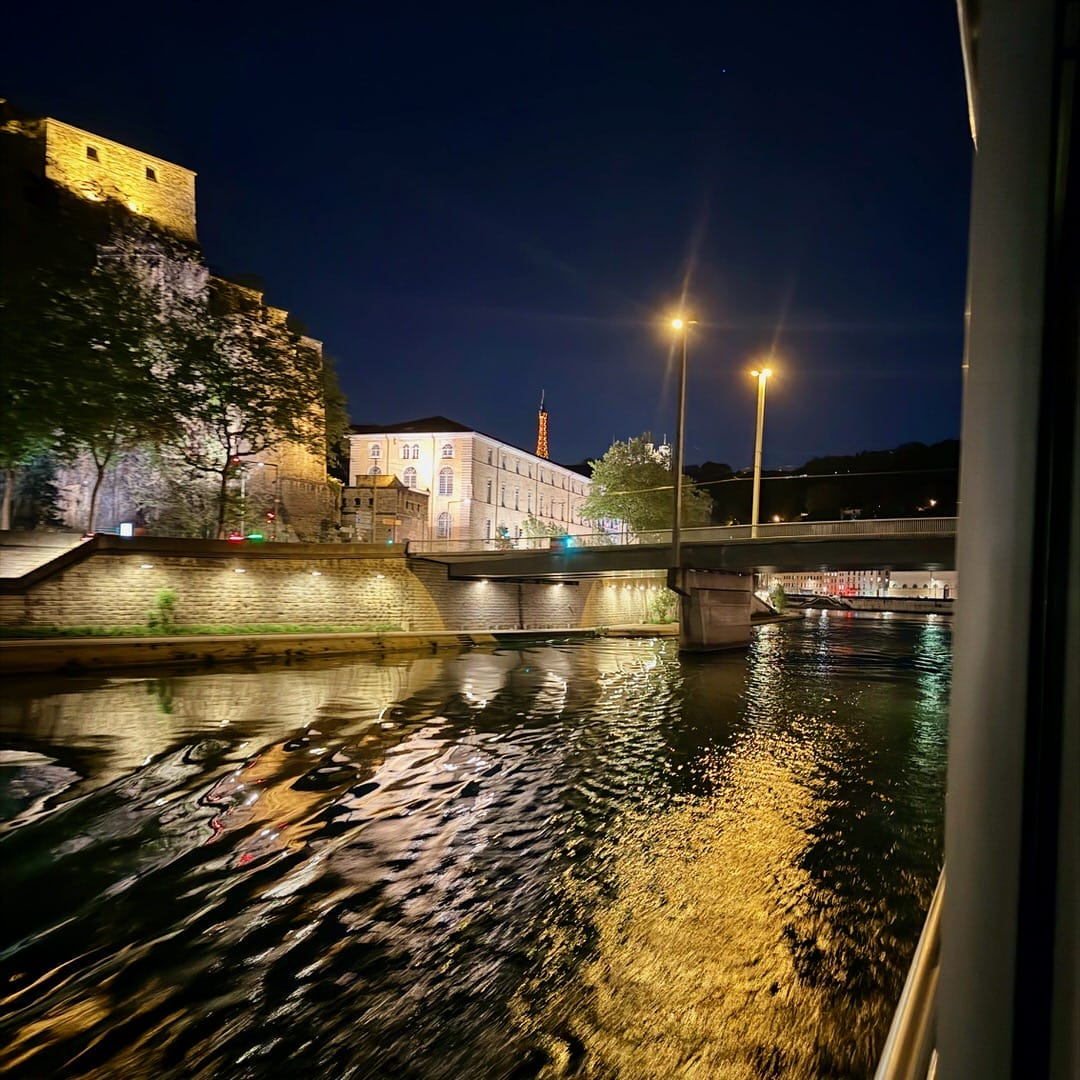
We left Lyon in the evening, and Marucia and I stood at the French balcony with the sliding door fully open, watching the city pass. Young people sat in clusters along the riverside promenade. Buildings were brightly illuminated, their reflections breaking apart on the water below. The sailing had the quality of a Monet—light and water and the blur of a city at ease with itself on a Friday night.
Mâcon
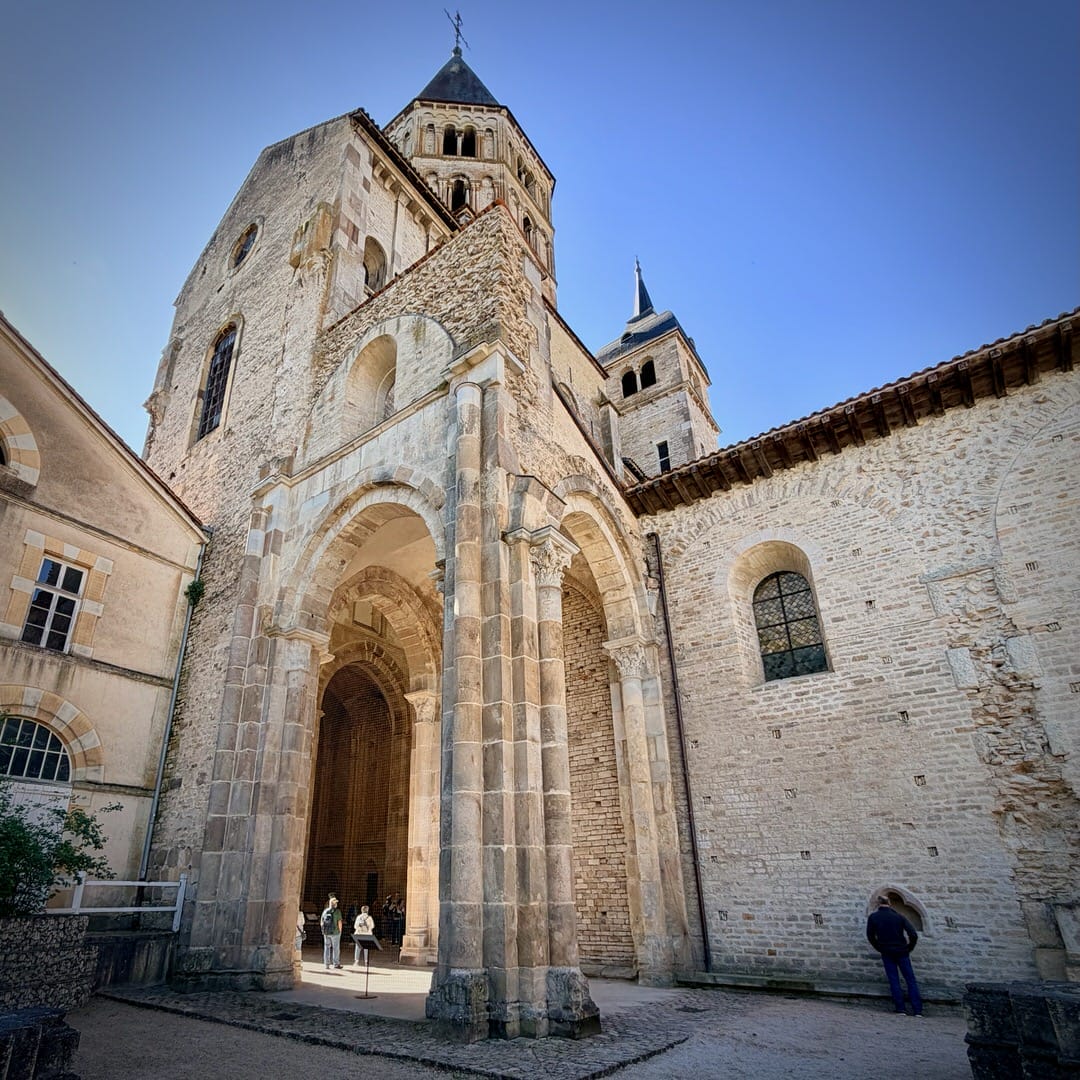
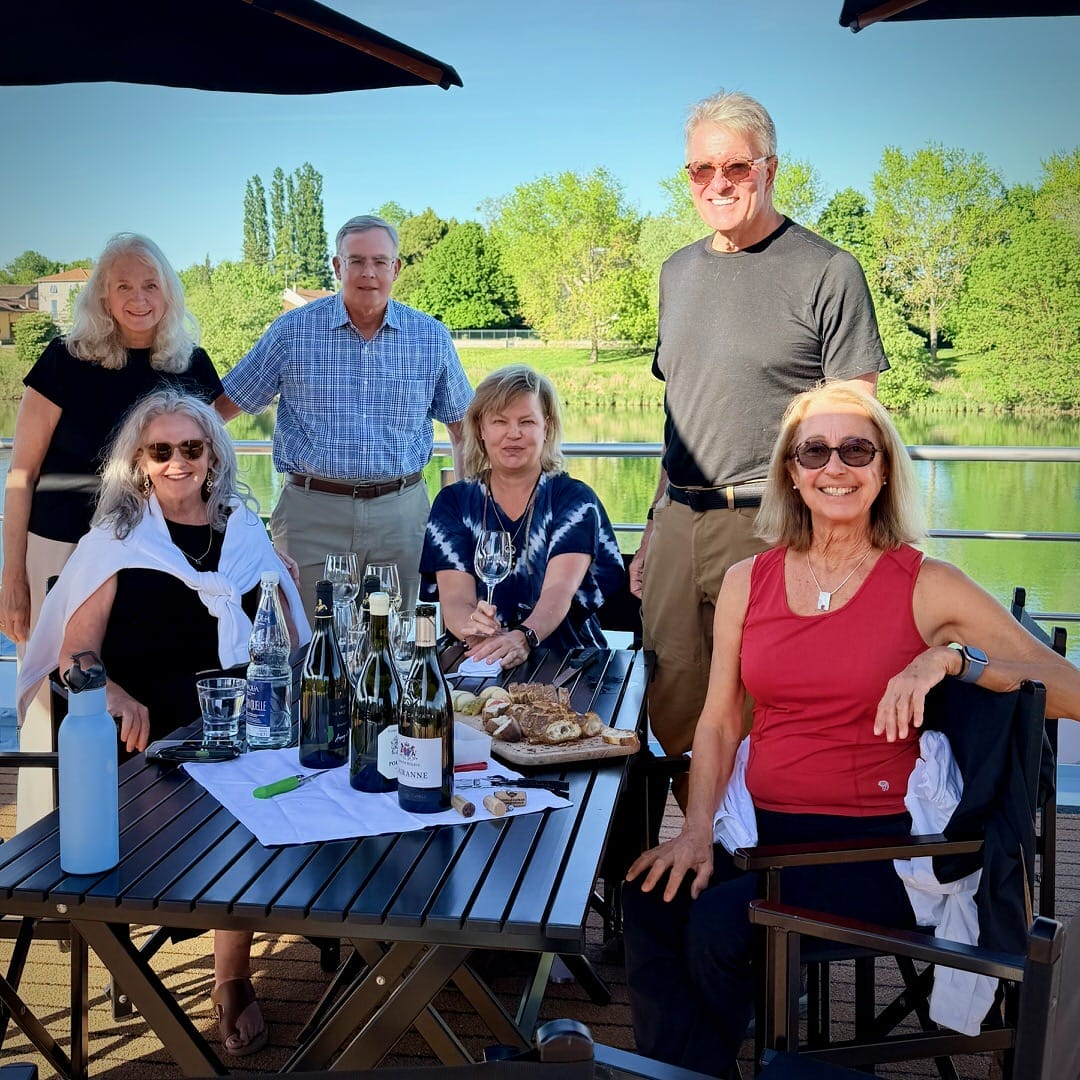
Marucia and I traveled with others to Cluny Abbey, where the scale of what the Cluniac order once was—1,450 abbeys, 10,000 monks—is legible even in the ruins. Others did a Mâconnais wine tasting. After lunch I stayed aboard; the day’s real highlight came before sunset, when our small group gathered on the sundeck with wine, bread and cheese from the morning market. After dinner, Marucia and I danced in the lounge.

Tournus
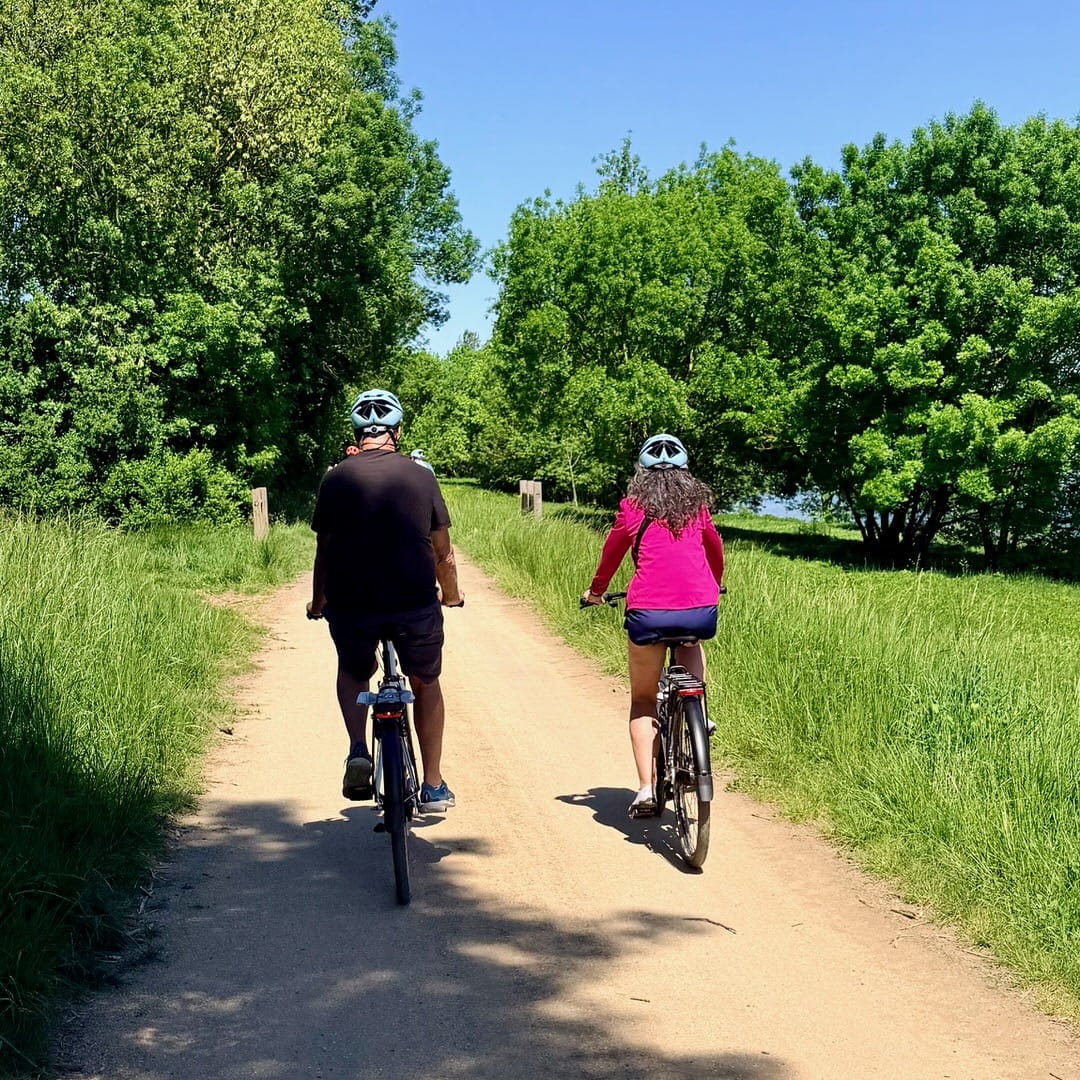
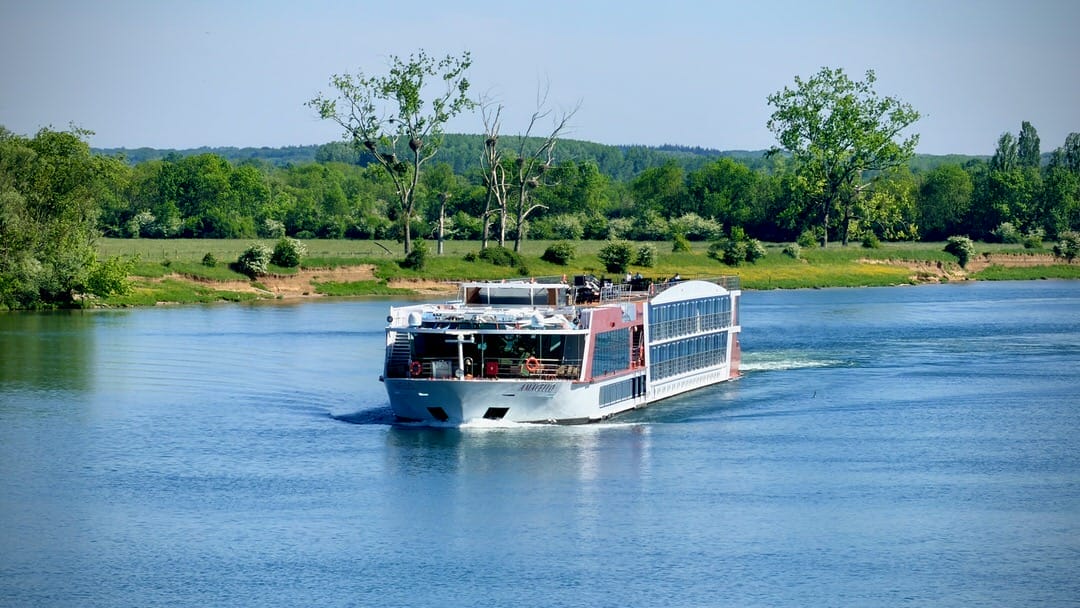
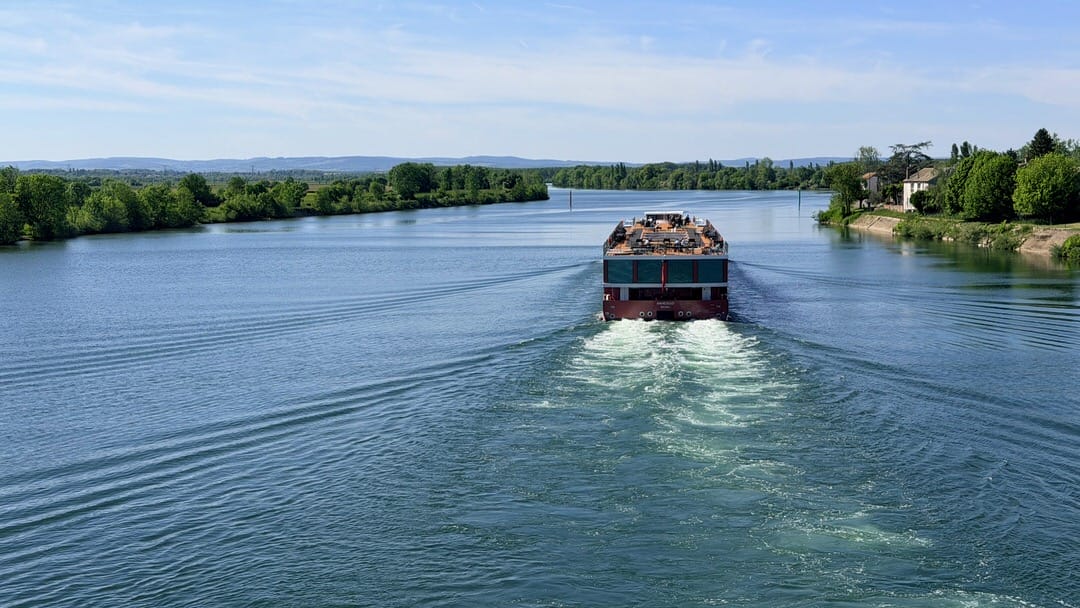
Marucia visited the Abbey Saint-Philibert, Romanesque architecture that has stood above the Saône since the 10th century. I spent 20 minutes in the gym first, then joined seven others on bikes for 21 miles along the Voie Bleue to Chalon—flat, scenic, unhurried. Full sun, the river on one side, vines on the other. At one point we were crossing a bridge just as the AmaCello passed underneath; I stopped and photographed her from above.
The bike ride is a good place to note what sets AmaWaterways apart from most river cruise lines on the activity front. The company is among the more active in the industry—bikes are available to every guest at no extra charge, as are guided bike tours, which run on most port days. Guests can also ride independently. The same goes for the wellness programming: Adrian, our wellness host, led morning stretch, core and yoga sessions throughout the week, all included in the fare. The gym is there for those who want it. On a cruise where wine and cheese appear on the sundeck most afternoons, the balance feels intentional—and appreciated.
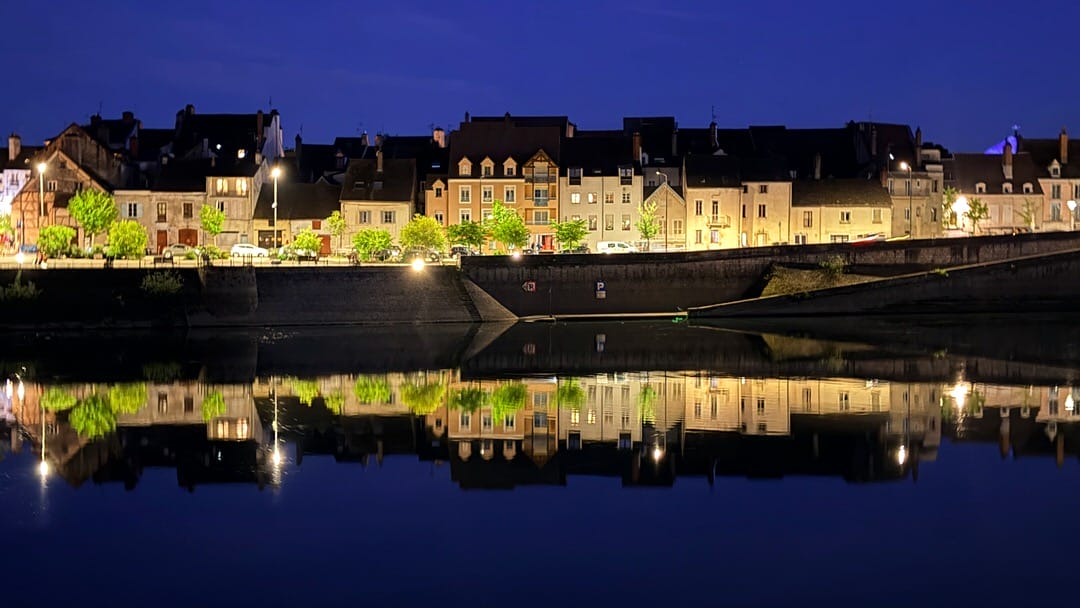
That evening’s wine-paired dinner, guided by sommeliers Roxanne Langer and Tamara Carver, was the week’s best meal. Five of us walked afterward and found an illuminated church. Marucia and I danced again, this time to Marion Borius—French classics and jazz.

Chalon-sur-Saône
Chalon-sur-Saône is a proper market town, medieval bones and half-timbered houses. Marucia took the walking tour. I stayed aboard for the afternoon sailing—the Saône north of Chalon is Burgundy at its most composed, and there is something to be said for watching it pass from the sundeck with a coffee and no particular plan.
Seurre
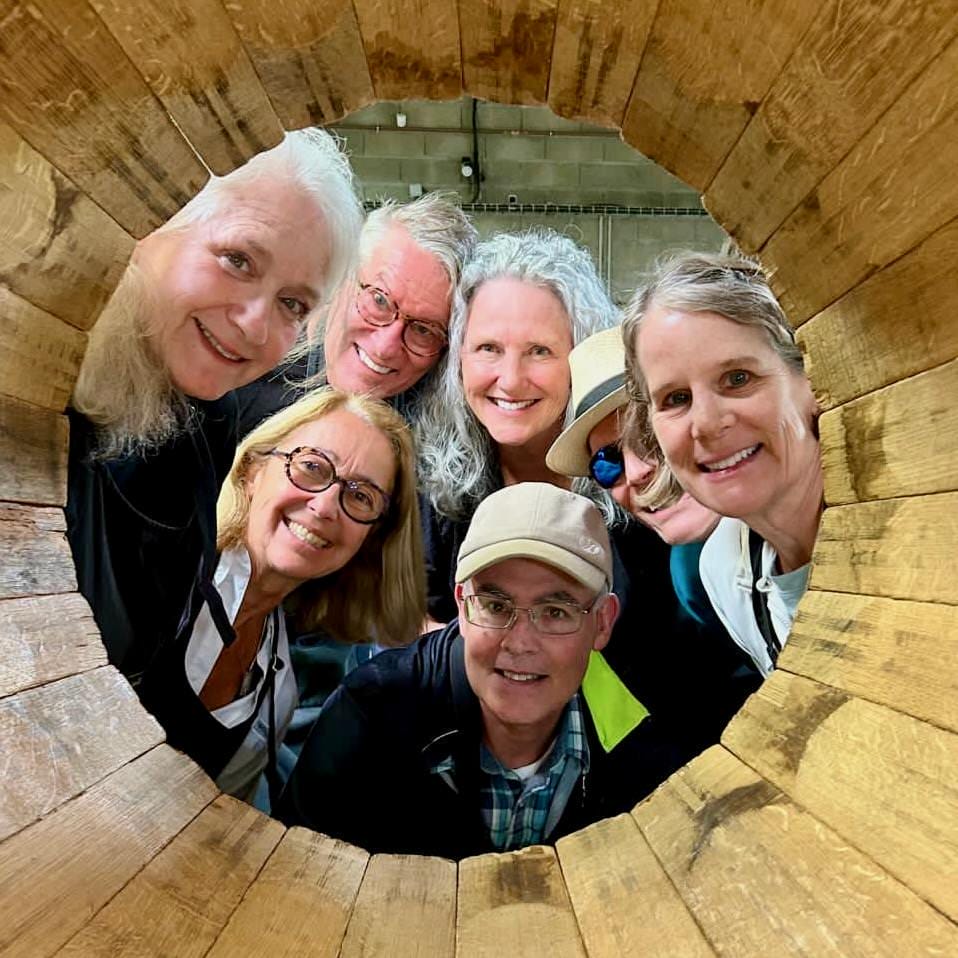
The strongest excursion of the trip: a cooperage visit at Art du Tonneau, where host Daniel walked us through 2,000 years of barrel-making history before handing us the tools. I’ve written about it in full here. Short version: Book it. It’s the best excursion on this itinerary.

In the afternoon, a mechanical issue—something interfering with the starboard stern thruster—halted the ship. A diver came from Marseille and found nothing obvious, but the AmaCello still couldn’t maneuver safely enough to continue to Saint-Jean-de-Losne, where the river narrows and turning around without a fully functioning thruster would be difficult. Departure was canceled. The afternoon bike ride became a shorter local tour. The ship overnighted in Seurre. No one seemed particularly bothered. This is where river cruising distinguishes itself: the ability to absorb disruption without losing the experience.
Overnight, Captain Nicolas resolved the problem via video call with the engineer—air in the hydraulic line, it turned out. Nicolas is 37, and has the easy authority of someone who has been doing this long enough to be unrattled by it. I stopped by the wheelhouse on the final morning’s sailing, and he gestured at the landscape passing beyond the glass—rapeseed fields, cattle, the river bending ahead. He has sailed this river many times. He is still mesmerized by it.
The farewell cocktail that evening had the particular feeling that last nights on ships always have—the crew lined up, Captain Nicolas and hotel manager Nicoleta working the room, Cruise Manager Christian making the rounds. The Krystal Live Band closed the night. Marucia and I found the dance floor one more time.
A Personal Thread
This sailing carried a second purpose. In September 2024, Hurricane Helene devastated parts of Western North Carolina, including Fairview, a community I know well—I own 2.5 acres there and was present when the storm came through. Months later, a conversation with Kristin Karst at the River Cruise Expo in Vienna ended with a simple question: How can we help? That question became this cruise. The six people I brought aboard—eight of us with Marucia and me—had all lived through Helene. Their bookings supported FairviewStrong.org, the grassroots organization still rebuilding homes and lives. That context didn’t define the cruise—but it gave it weight.
An Improvised Ending
The final morning in Seurre was logistically complicated, and hotel manager Nicoleta earned every bit of the Wonder Woman title I gave her. Normally the ship is provisioned from an 18-wheeler—pallets offloaded by small forklift-like devices, the crew forming into a chain, moving goods aboard in an orderly sequence. This morning, that operation had to be completed before 9 a.m., simultaneously with breakfast service in the Journeys Restaurant, two tour buses loading guests for Dijon, and a narrow quai that barely accommodated any of it. Kitchens open, guests eating, pallets moving, buses idling—Nicoleta managed all of it without visible distress. When she walked into the lounge afterward with two thumbs up—”We did it”—it was the understatement of the week.
The bike tour was canceled—the logistics made it impossible. Most guests boarded coaches for Dijon, where guides led walking tours through the UNESCO-designated historic center and its Palace of the Dukes. I stayed aboard. The ship was ready to sail—not to Saint-Jean-de-Losne, where the cruise was scheduled to end, but back to Chalon-sur-Saône. Saint-Jean-de-Losne is the Dijon port, though Dijon itself is 30 kilometers away via the Burgundy Canal—a waterway barges can navigate but river ships cannot. Chalon docks right in the city. It is probably better that way.
The last stretch on the Saône was quiet: golden rapeseed fields, white Charolais cattle—the breed native to this land between the Saône and Loire—grazing at the bank, bird songs on both sides of the river, the engine so quiet you could hear the water parting at the bow. Purser Cosmina Ionita came up on deck and looked out at the fields and the cattle and the light on the water. “It’s like these people live in paradise,” she said. She wasn’t wrong.
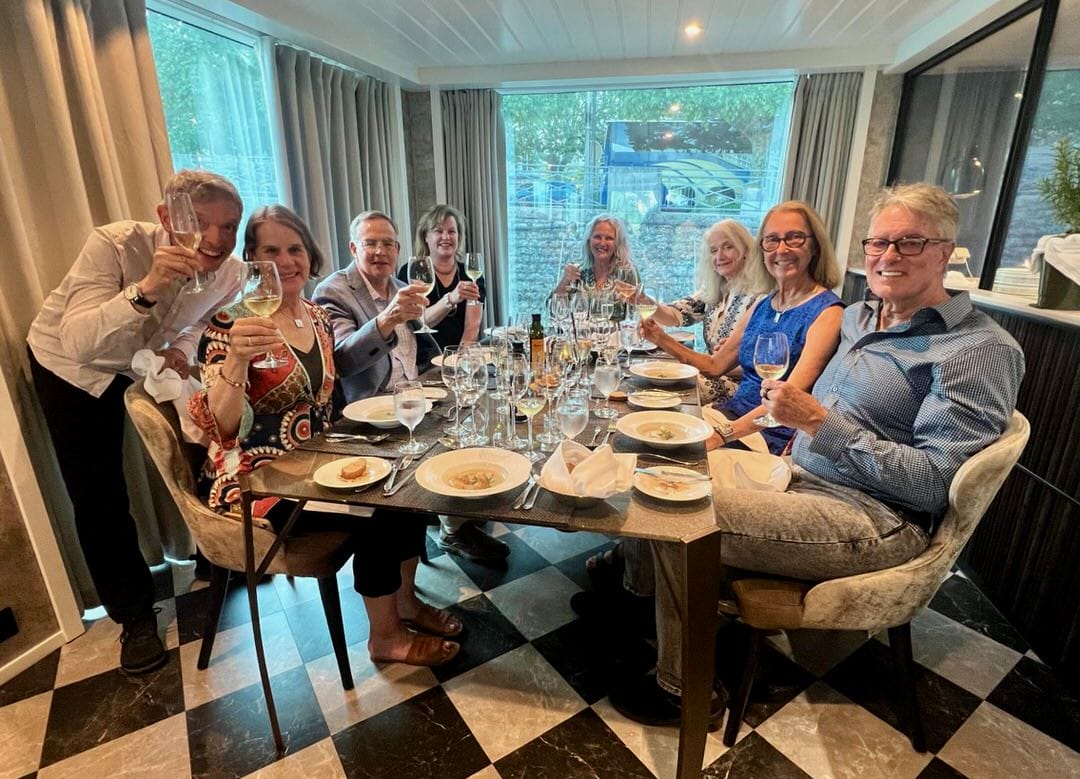
That evening, our group of eight had dinner together at the Chef’s Table. Situated at the stern, it is enclosed in windows on all sides—the river, the city, the bridges of Chalon-sur-Saône framed like paintings as the sun went down. It was a beautiful way to end the trip. There were hugs afterward—the kind that mean something. Seven days on a river has a way of doing that to a small group. We talked about it, actually: how this kind of travel, unhurried and close, makes bonding almost inevitable. None of us wanted to say goodbye. So we said what French friends say to one another—à bientôt—and promised a future adventure together.
Learn more about upcoming trips: 2026 Alsace | 2027 Paris in the Middle: One Week Or Two, Plus Reims At The End
A note on our cruise manager: his name is Christian Abker, and the world is smaller than it appears. Though German by birth, Christian lives in Brazil—in Vitória, Espírito Santo, the city where Marucia grew up, near the beach village where her family home is and where we spent six weeks earlier this year. He and Marucia spent part of an afternoon comparing notes on a place all three of us love. I wrote about that time in Two Months In Brazil: Samba, Soul & The Road To The Amazon.


