
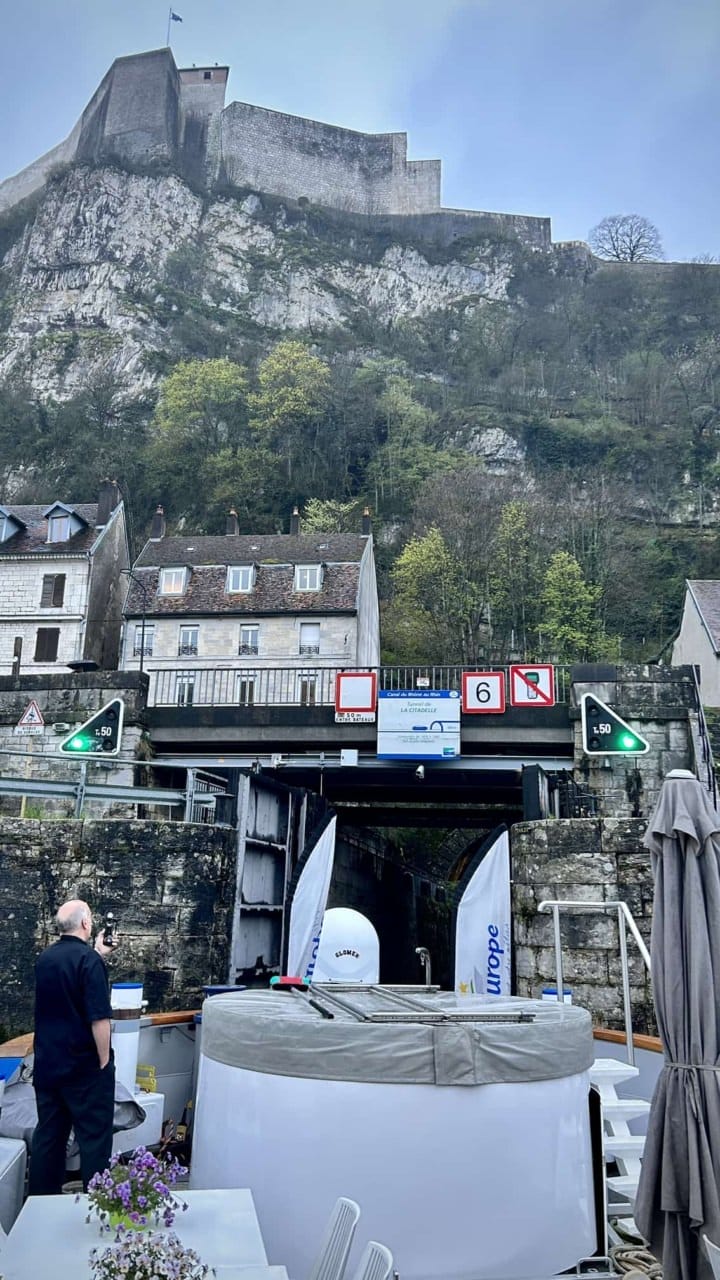
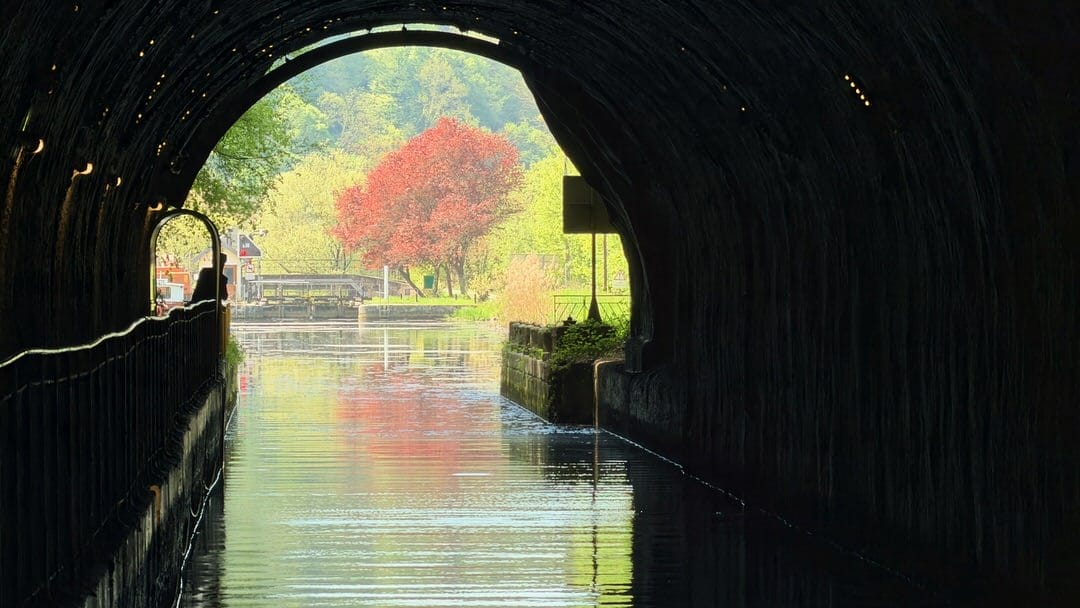
The Daniele’s first move is unexpected. Rather than turning west into the open Doubs, the barge noses toward the base of the Citadelle — and then into it. A tunnel cut through the limestone bluff beneath Vauban’s fortress draws us in, lit and narrow, the stone walls close on both sides. The engine note changes in the confined space, deepening, bouncing off rock that has been here since the 17th century. And then daylight again and the Doubs opening up beyond. This is how barge travel begins from Besançon. Not with a departure, exactly. More like a passage.
The week before we arrived, it had been raining. Dreary was what we heard from those who were there. April can be like that, but April can also be glorious. Daniele’s former cruise manager who I worked with several times once told me I always choose the best seasons. Yes, April on this route is a deliberate call, based on experience. But there is luck in it too, and we had it. Seven days of sustained spring sunshine. It did not rain once. That kind of weather does not make a barge trip — but it made this one shine.
The Daniele carries 22 passengers and a crew of six. She is not a large vessel —even the cabins are small by river cruise standards. No guest has ever complained that they were too small, however. In fact, Daniele’s smallness is a plus. She navigates canals that the river cruisers can’t even think about. We pass countryside that river cruise guests never see—at least not from our vantage point. And on a vessel this size, you learn the names of everyone aboard within the first hour.
A River Runs Through It
The Doubs river moves through eastern France, sometimes quietly and at other times with a roar. Canals appear in stretches of the river where it would be impossible for boats to pass. The mix of canal and river makes for interesting navigation. We stand on the sun deck and watch as a heron lifts from the reeds and glides over the river. Life appears as patient as that heron. There is no hurry. You could forget entirely that the world operates at any other speed.
Then a lock appears.
The locks on this route are among the great small pleasures of barge travel. The Daniele noses into a chamber, the gates close behind, and the water begins to rise or fall — a foot, two feet, sometimes more — while the stone walls inch past.
Seven days to cover 52 miles. It sounds almost absurdly slow until you are in it, and then it becomes the only pace that makes sense for this particular stretch of France — three waterways in sequence, the Doubs giving way to the Saône, the Saône giving way to the Burgundy Canal, each one with its own character and tempo.
An Exceptional Crew
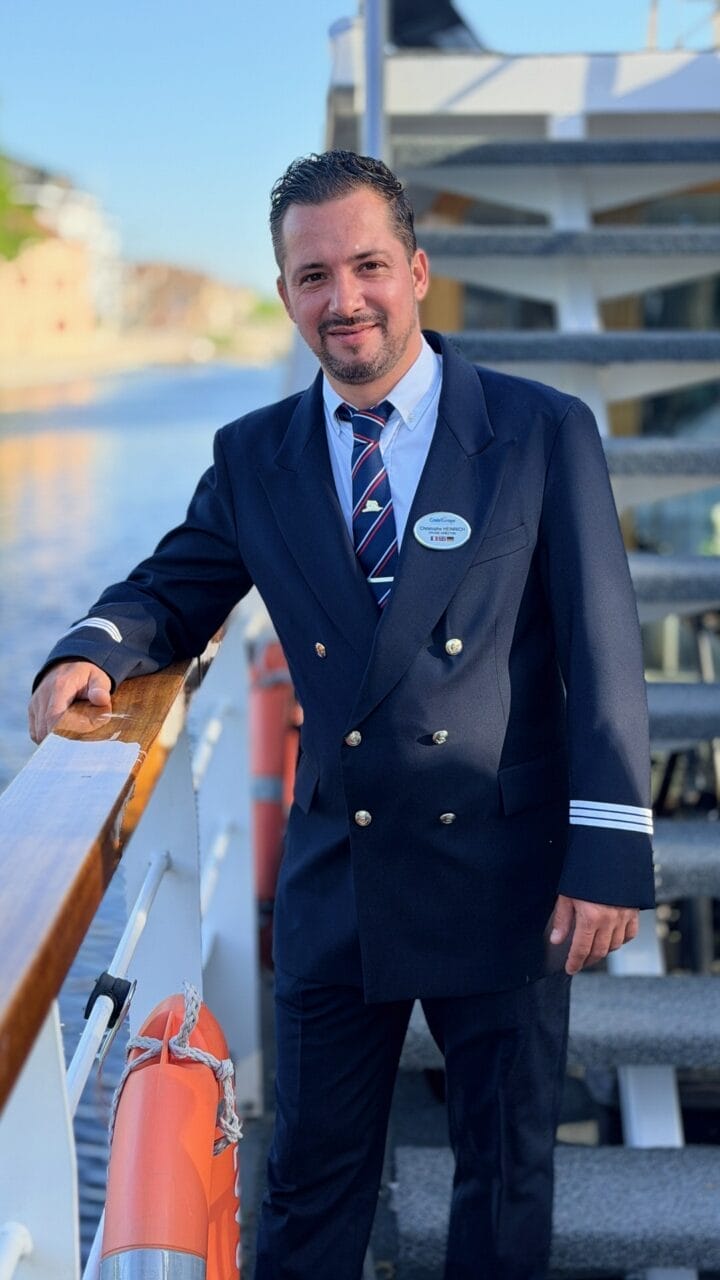
There is another component that makes this style of travel so special. The crew. Our cruise manager Christophe ran the operation with the particular skill of someone who has mastered the balance between structure and ease — organized enough that nothing fell apart, relaxed enough that no one felt managed. But competence was only part of it. He was witty, conspiratorial, the kind of person who could roll his eyes in a way that made you feel you were in on the joke. When one guest announced his last name was King, Christophe didn’t miss a beat: “A bit pretentious.” At the end of the week he asked us to guess how many bottles of wine we had consumed. Eighty, he said, after someone guessed correctly, adding “but we emptied each one with respect.”
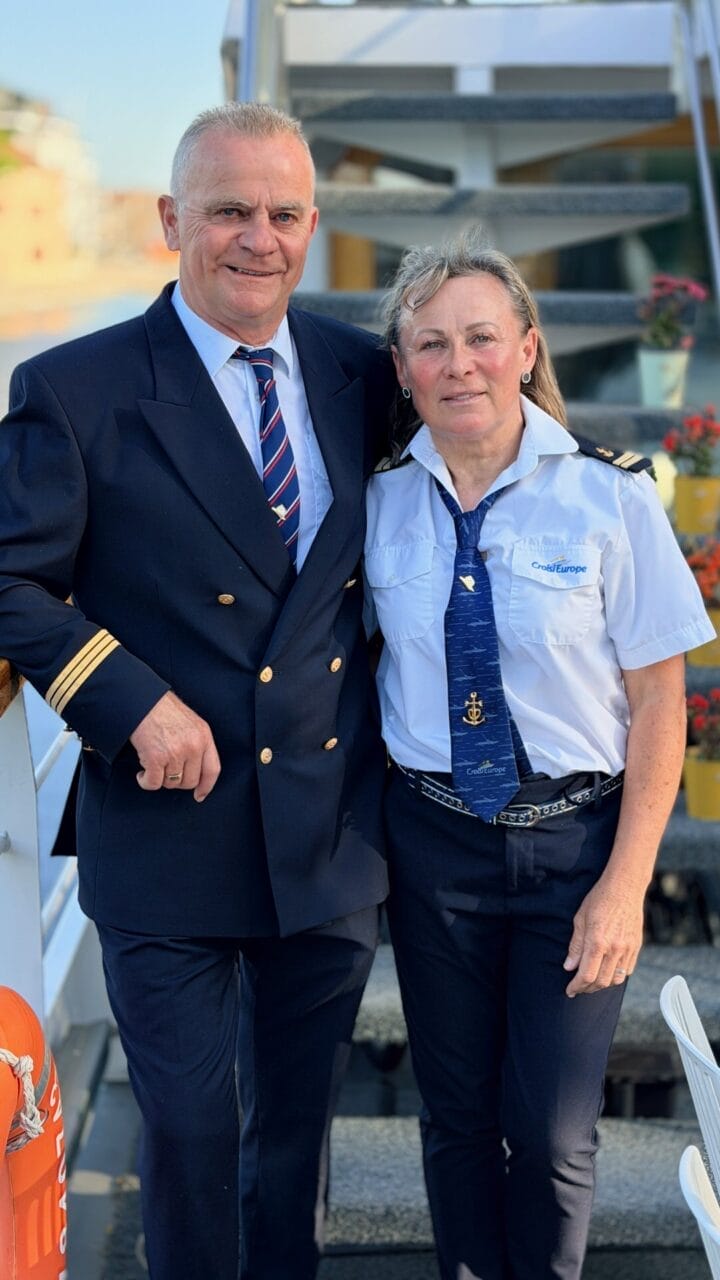
Laszlo, who keeps cabins refreshed, had announced himself on the first evening by holstering his cleaning bottles like a gunslinger at high noon. It was a preview. Later in the week he appeared with a mock Forbes cover bearing his own face and a novelty lottery check for just over a billion dollars — proclaiming himself the new owner of CroisiEurope and announcing that the company would henceforth be known as Crazy Europe. Over seven days he delivered humor with the timing and commitment of someone who had missed a calling on the stage. He kept us laughing in a way that only gets easier when a group is already getting along.
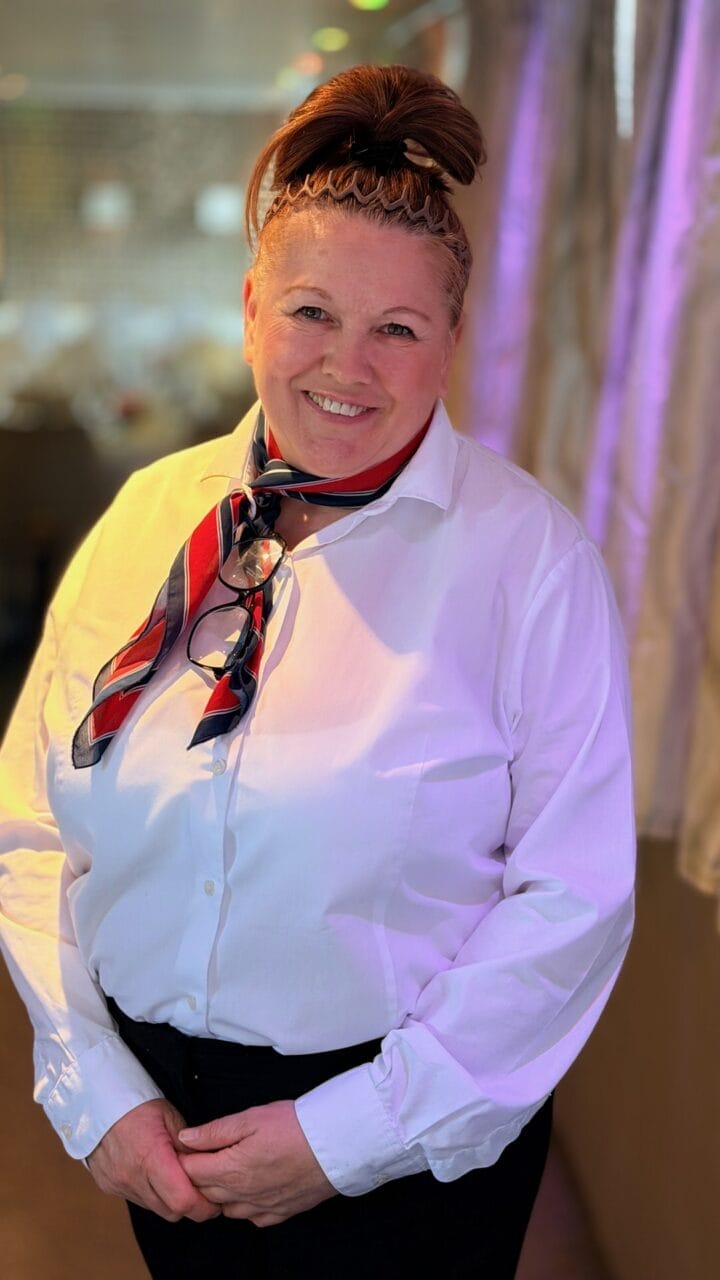
It was around the second day that Margo pulled me aside. Margo is our dining room steward — the kind of person who makes a room feel warmer simply by being in it. “Ralph,” she said quietly, “this group is so kind. It is such a pleasure to have on board.” I’ve worked with Margo many times, and I knew that she meant it. There are groups that can make the crew’s life hard and groups that can make their lives easier.
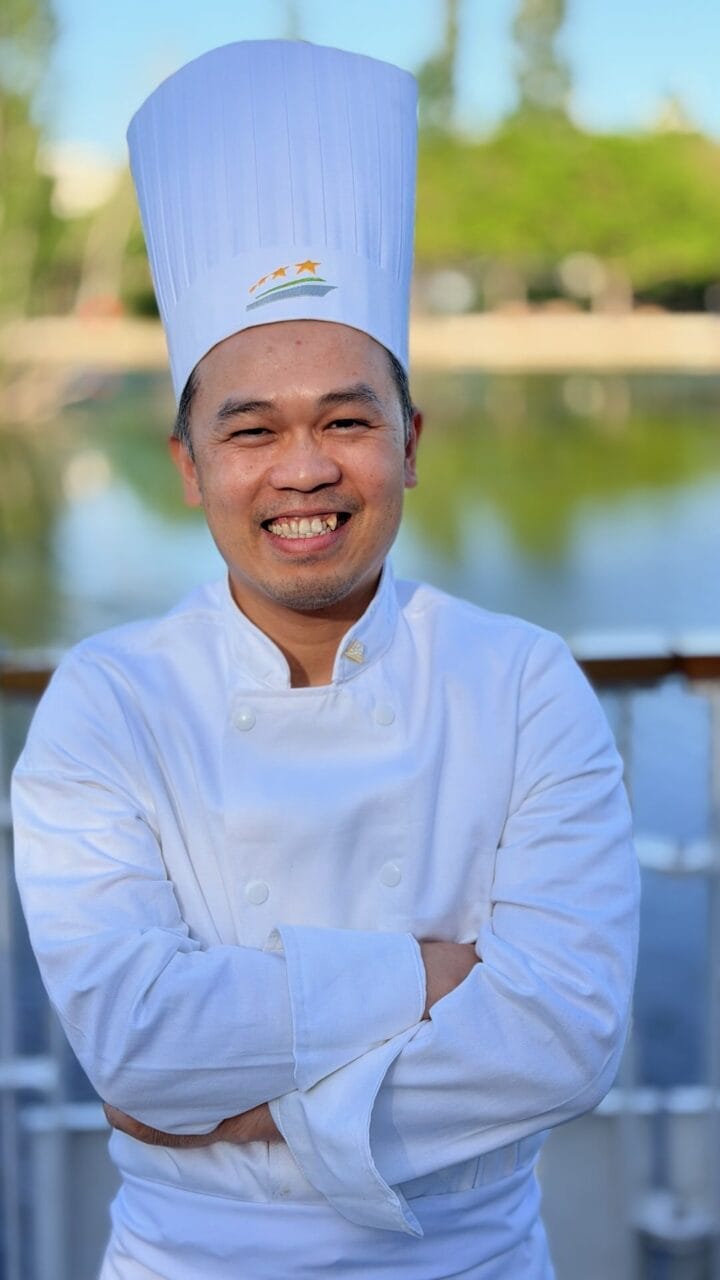
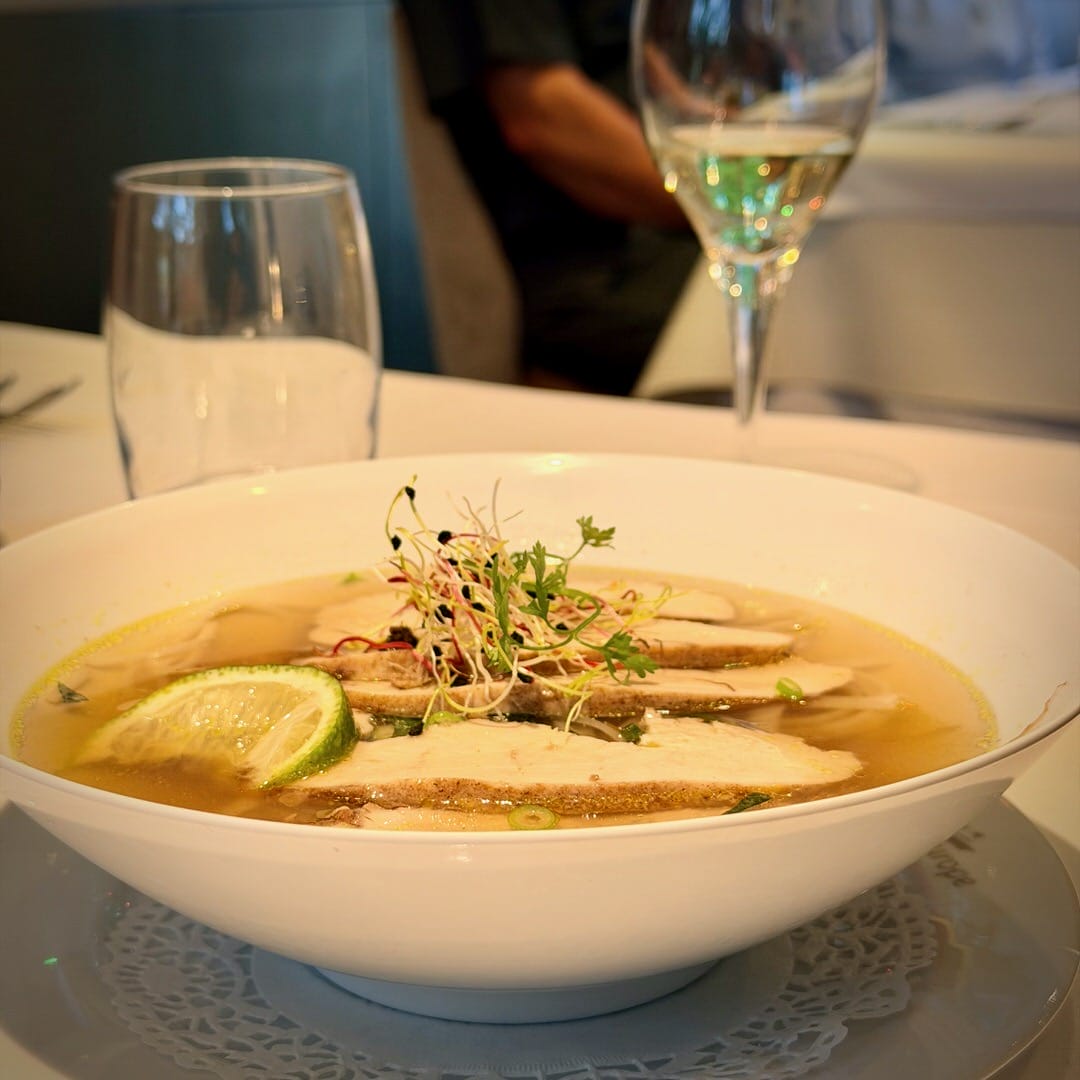
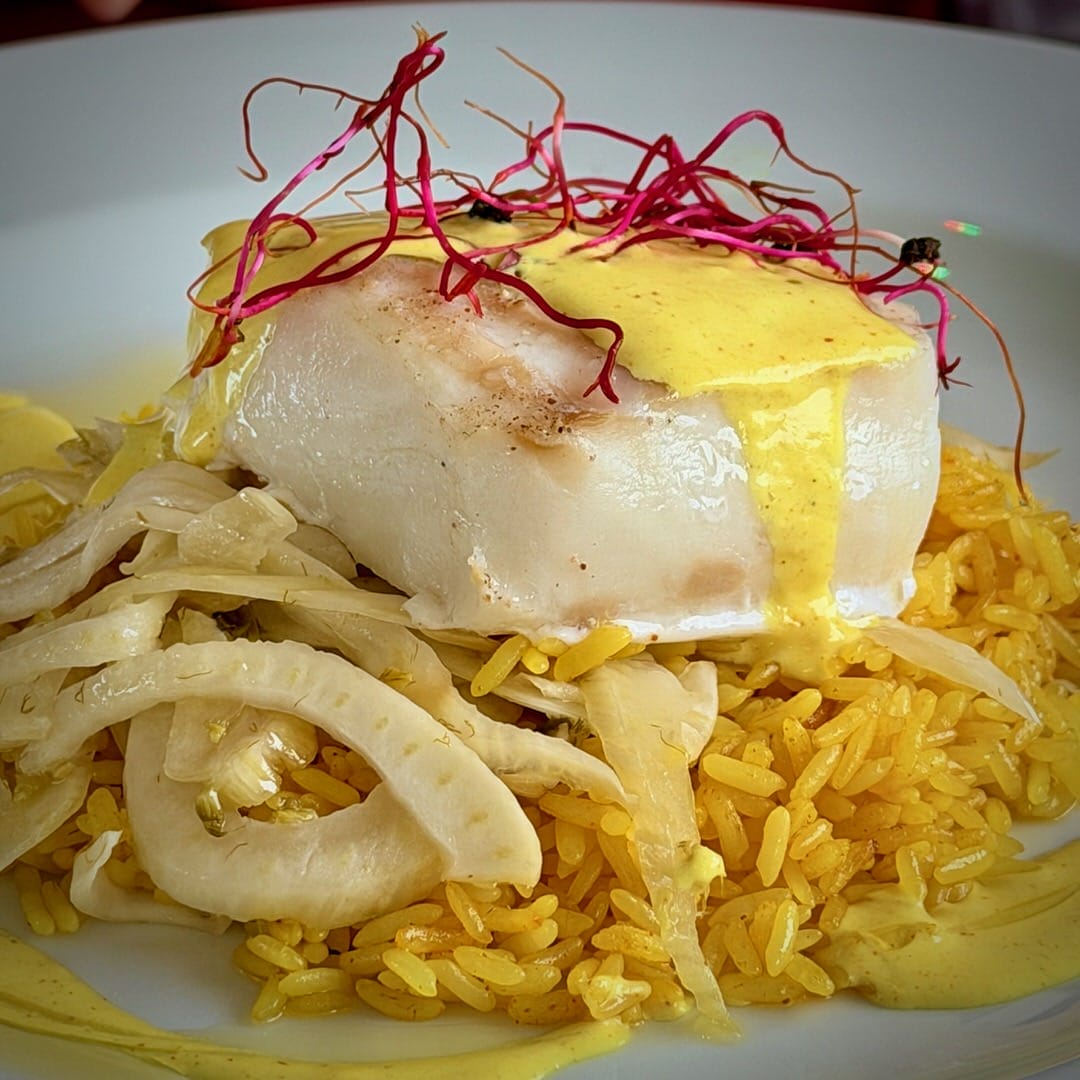
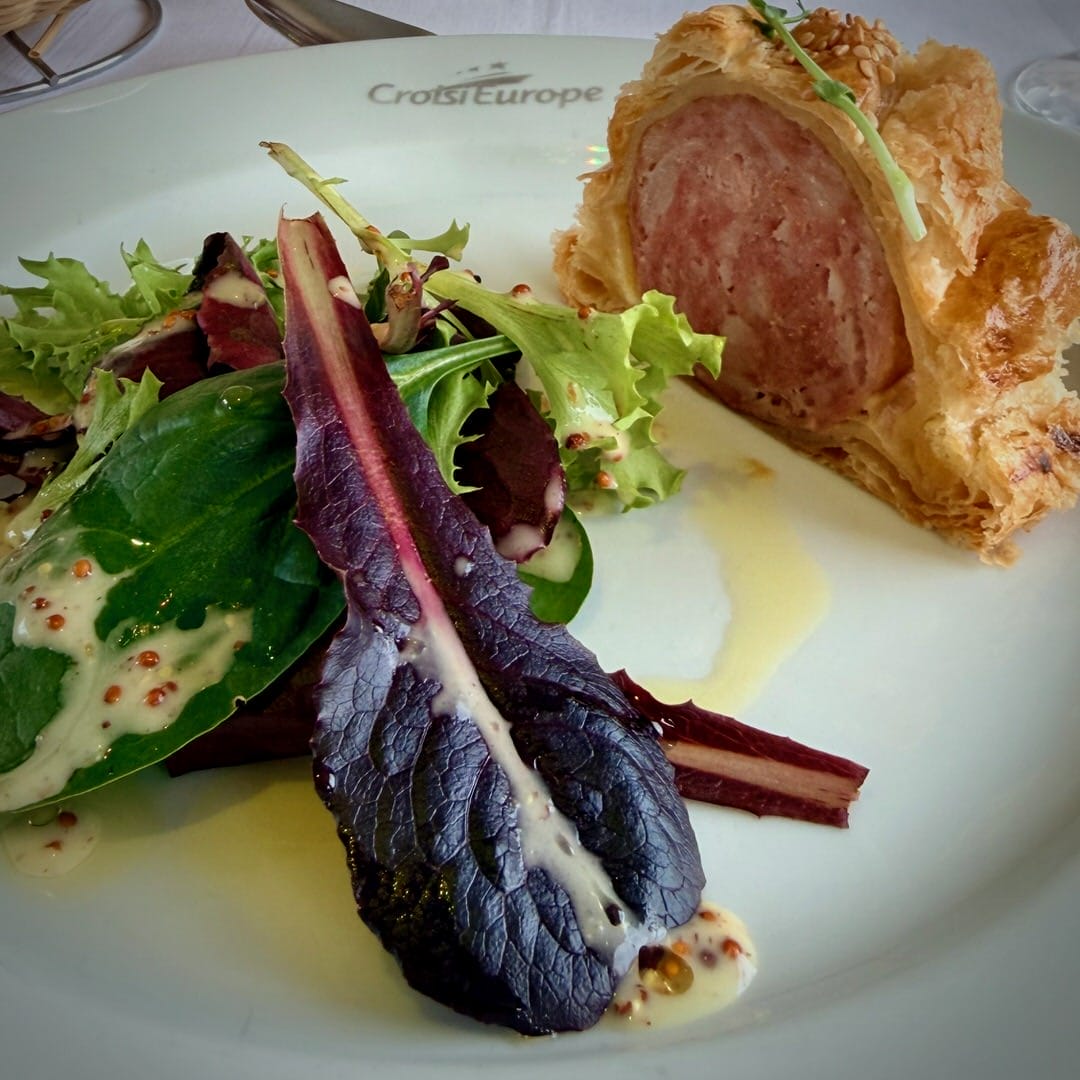
A few days later, the chef — the slim young French Vietnamese gentleman whose physique had given me an irrational moment of doubt when he walked into the lounge on the first evening — told me something similar. A full barge, all 11 cabins occupied, is normally the most demanding for a chef. Not this group, he said.
I understood what he meant. There is a quality some groups have, a collective generosity of spirit, that makes everything easier. This group had it. Strangers on a Thursday in Besançon, easy friends by Saturday, genuinely reluctant to say goodbye on Wednesday in Dijon.
A Beautiful Trip
After leaving Besançon, our first full day brought us to the Saline Royale at Arc-et-Senans, Claude-Nicolas Ledoux’s 18th-century royal saltworks and a UNESCO World Heritage Site that manages to be both monumental and strange. Ledoux designed it as an ideal industrial city, a visionary plan never fully realized. What remains is a semicircle of neoclassical buildings in a clearing, grandiose, the kind of place that makes you think about ambition and time.
Ranchot came next, a village small enough that it asks nothing of you—and you nothing of it. We tied up here at the end of the day after walks along the towpath and navigating some beautiful stretches of the river. After dinner, we walked and found ourselves stopped in front of a gate — red and white picket fencing with motorcycles and targets cut into the boards, a carved wooden owl standing nearly as tall as a man, a yellow boat planted with succulents, painted barrels, ceramic figures, lanterns strung in every direction. A shed at the back bore a hand-lettered sign: EXPO. Inside, walls of handmade birdhouses, each one different, with a stuffed tiger in a straw hat keeping watch over the workbench. The owner, Raymond, appeared and invited us in for a tour, arms already raised, a story already underway. It was the kind of encounter that doesn’t happen on a schedule.
Dole came next, a handsome river town that was the capital of Franche-Comté before Besançon claimed the title. It is also the birthplace of Louis Pasteur, a fact the city notes with appropriate civic pride — his childhood home still stands in the old quarter, a short walk from the canal. The old town climbs from the water in tiers of ochre and cream, church towers rising above rooflines, cafe patrons sitting at tables under trees in a beautiful square. It is the kind of French town that travel writers reach for superlatives to describe, then realize the town itself is the better argument.
The next morning we left the Doubs to enter the Saône river. We weren’t on the river for too long before reaching Saint-Jean-de-Losne. The riverside town is smaller, quieter and more interesting than it first appears. It bills itself as France’s first river port, a distinction that sounds like tourism copy until you visit the Musée de la Batellerie and realize how seriously this town has taken its relationship with water. The museum traces the history of river navigation in France — the boats, the bargemen, the cargo, the culture — and it is genuinely absorbing. Standing there, thinking about de Jouffroy and his steam experiments on the Doubs just upstream, the thread of river history running through this entire week feels less like background color and more like the actual subject.
River cruising was born on these waterways. We are, in our small and comfortable way, still sailing its story.
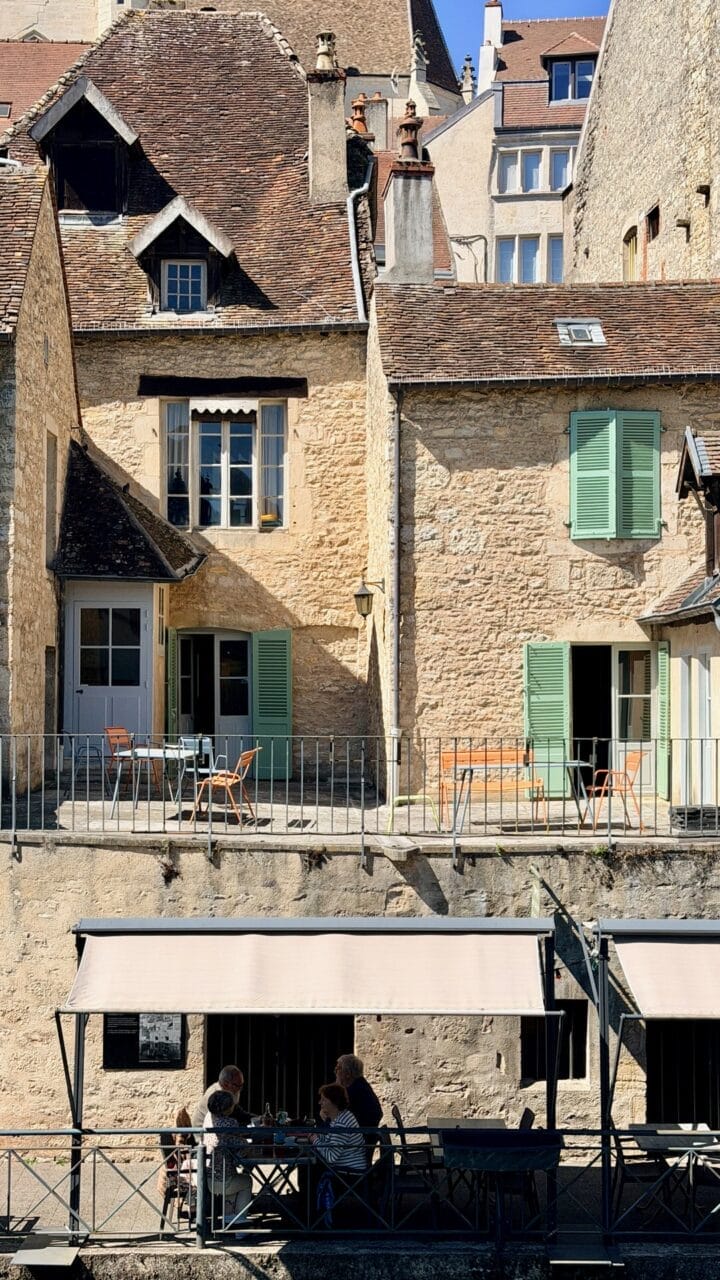
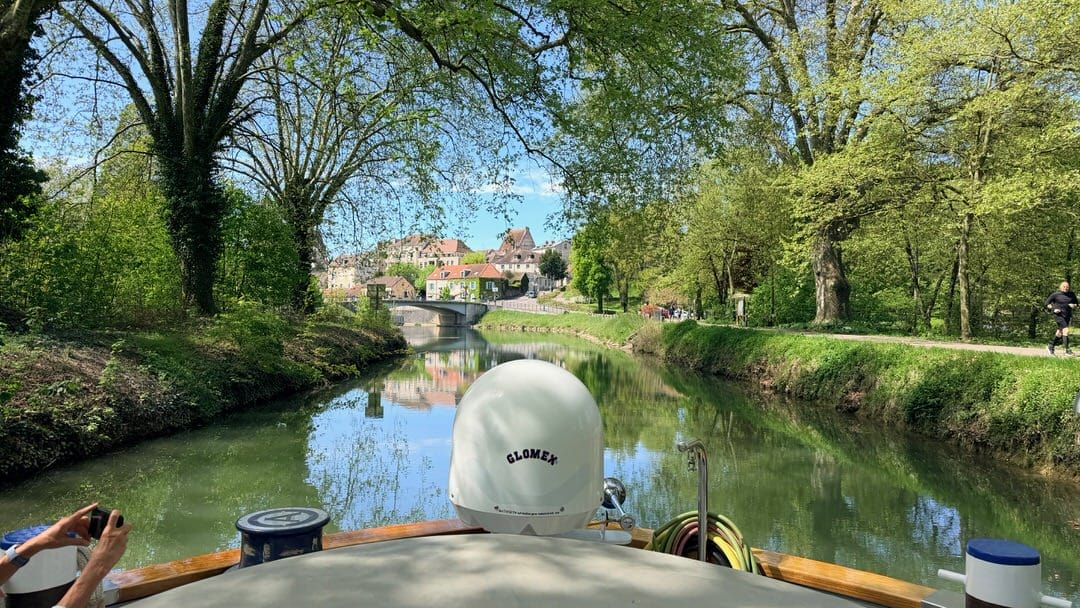

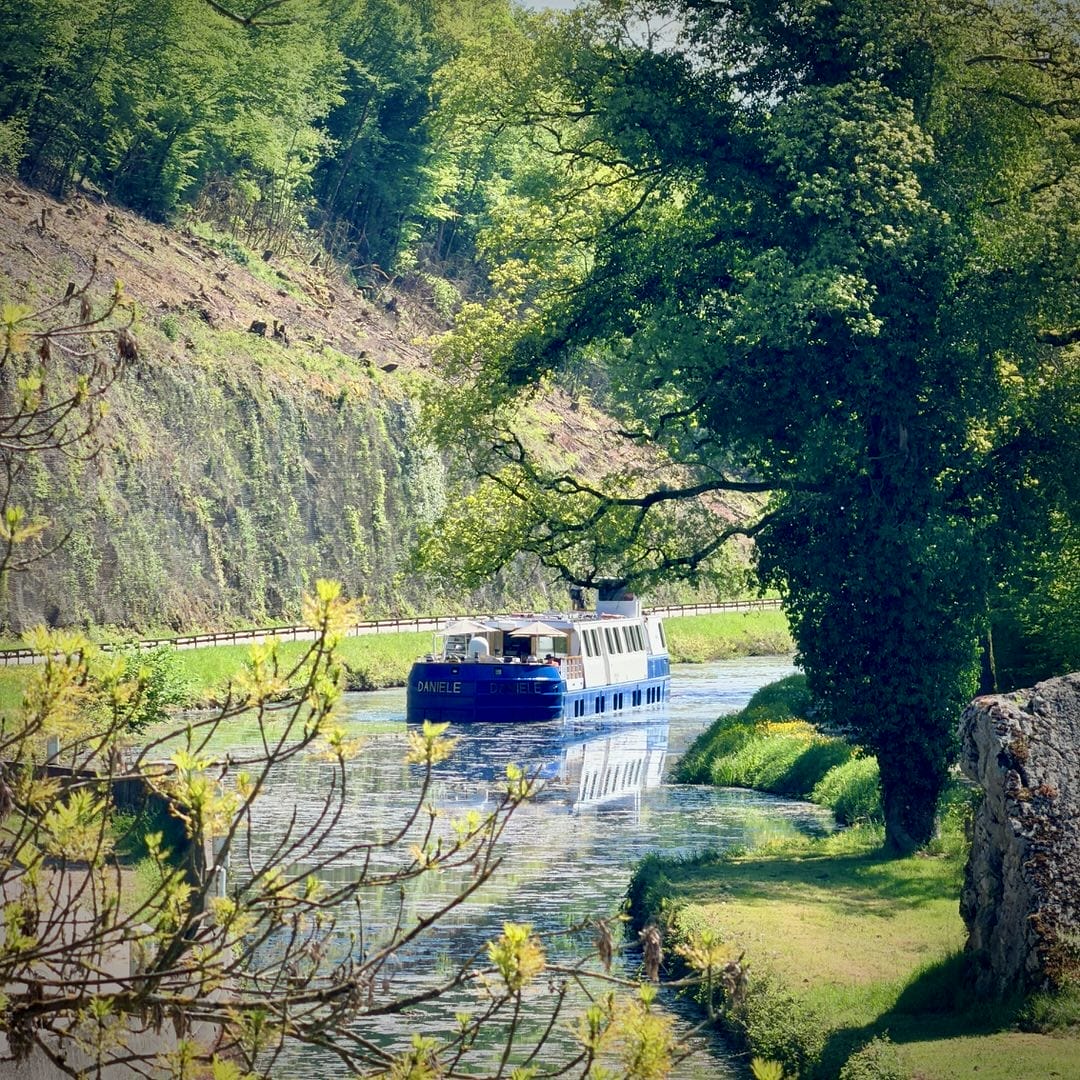
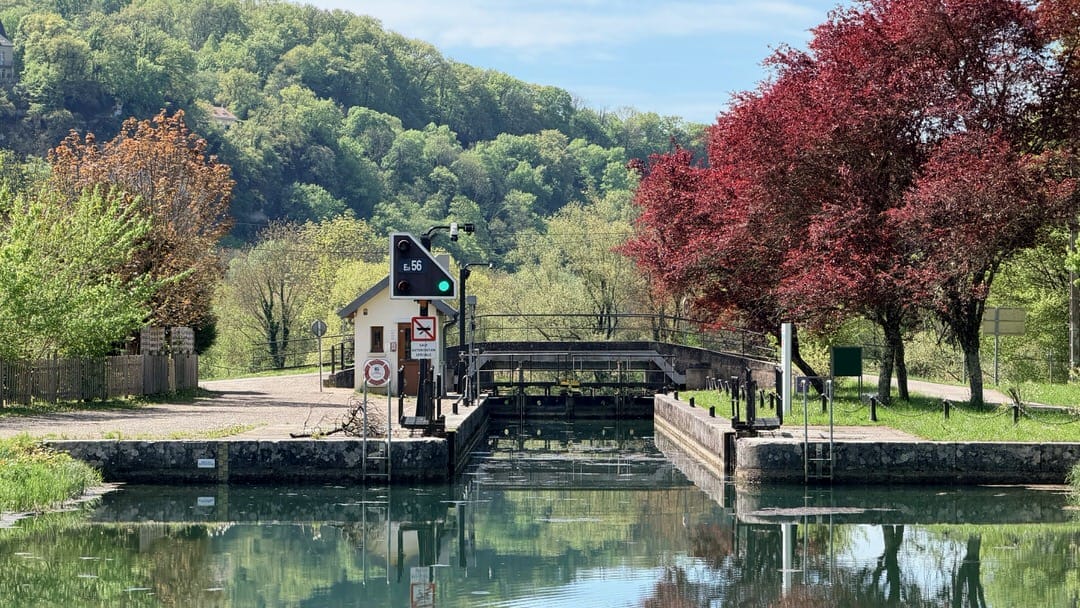
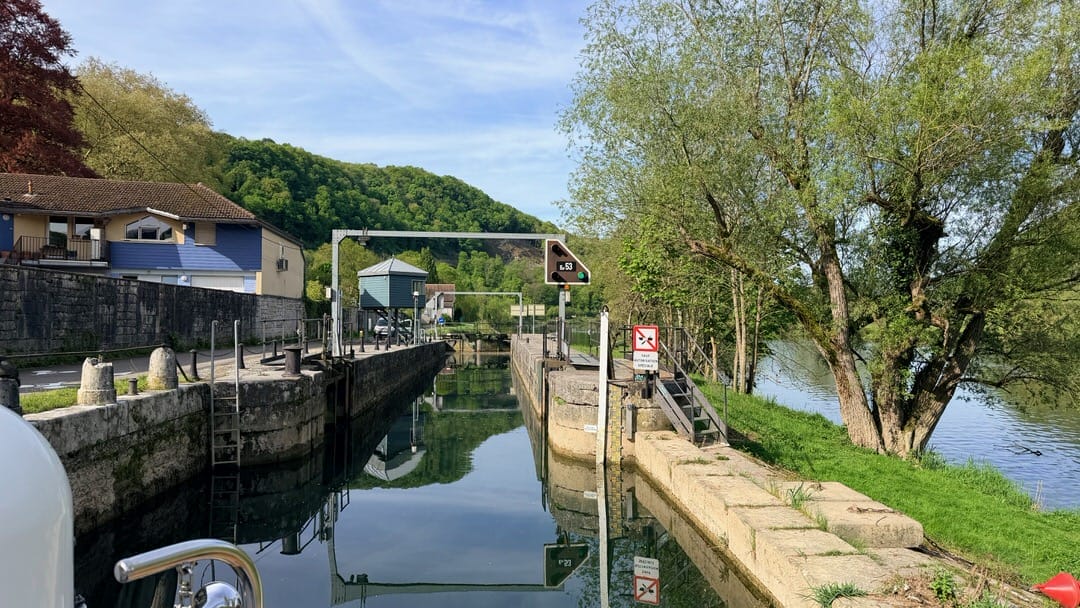
Petit-Ouges barely registers on a map, which is precisely its charm. We moored there in the late afternoon and walked the canal, stopping to take in the old wash houses — stone basins where the women of the village once gathered to do the work that villages ran on. There was nothing urgent to do, which was the point.
And then Dijon — almost. We arrived on the final afternoon and moored near enough to feel the city waiting. Most guests joined the excursion south to Château du Clos de Vougeot, a 12th-century Cistercian estate on the Route des Grands Crus, where the monks who shaped Burgundy wine began their work and where the tasting rooms still do justice to that history. I went the other way — north on a bicycle, along a stretch of canal that curves and bends in a way the Burgundy Canal never does. That one runs arrow-straight from Saint-Jean-de-Losne; this one follows its own logic, winding through countryside that other barges work although the canal eventually narrows to a tunnel barges can’t transit. I rode until the path ran out of reasons to continue, then turned back. The next morning we woke up in Dijon.
The Farewell
Nearly every guest went to hug Margo goodbye. Not once during the week had she sought center stage, but she was, in fact, a quiet star of the show. The whole crew was there to help us disembark — a crew that knew they had done something well and had given us a week in France we would not forget.
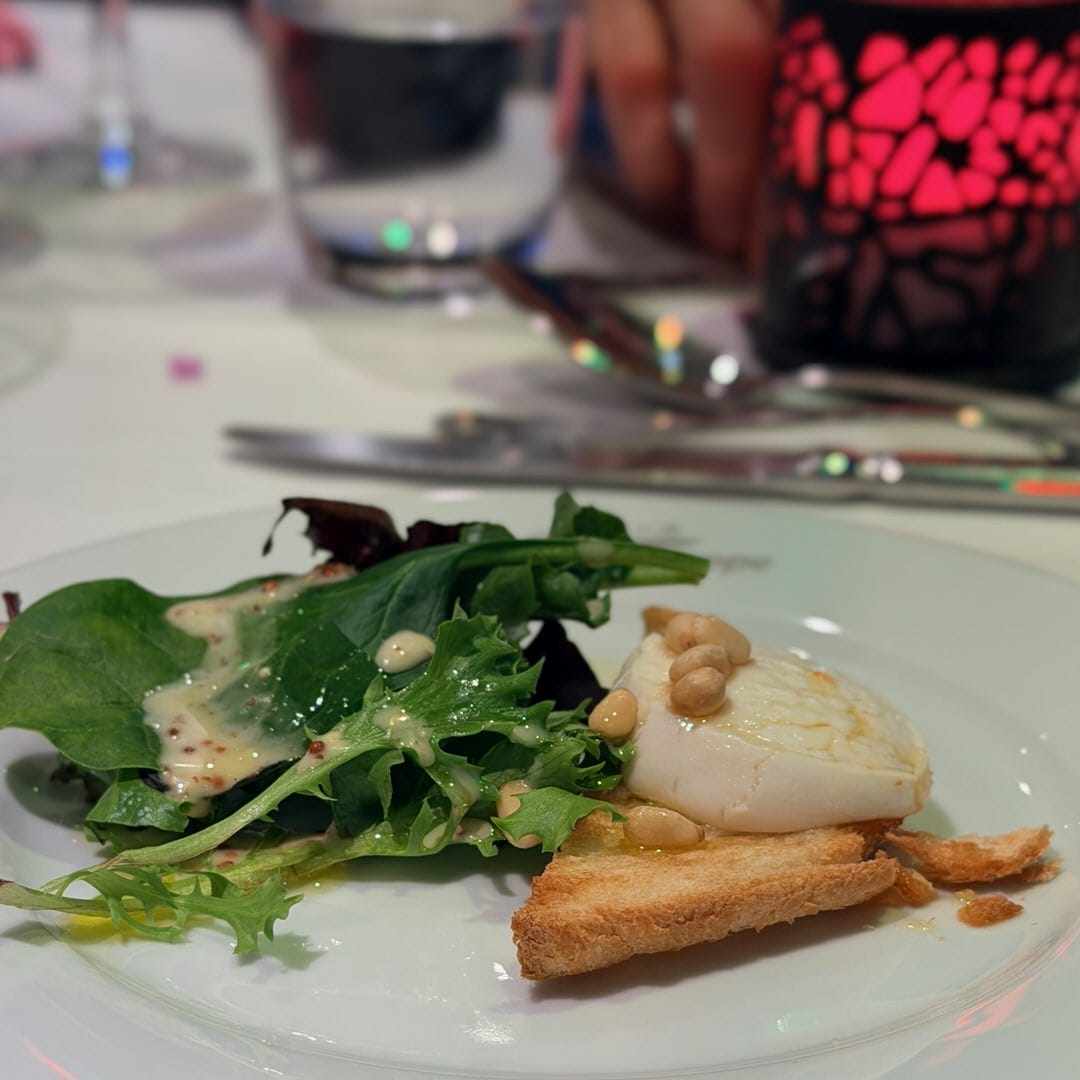
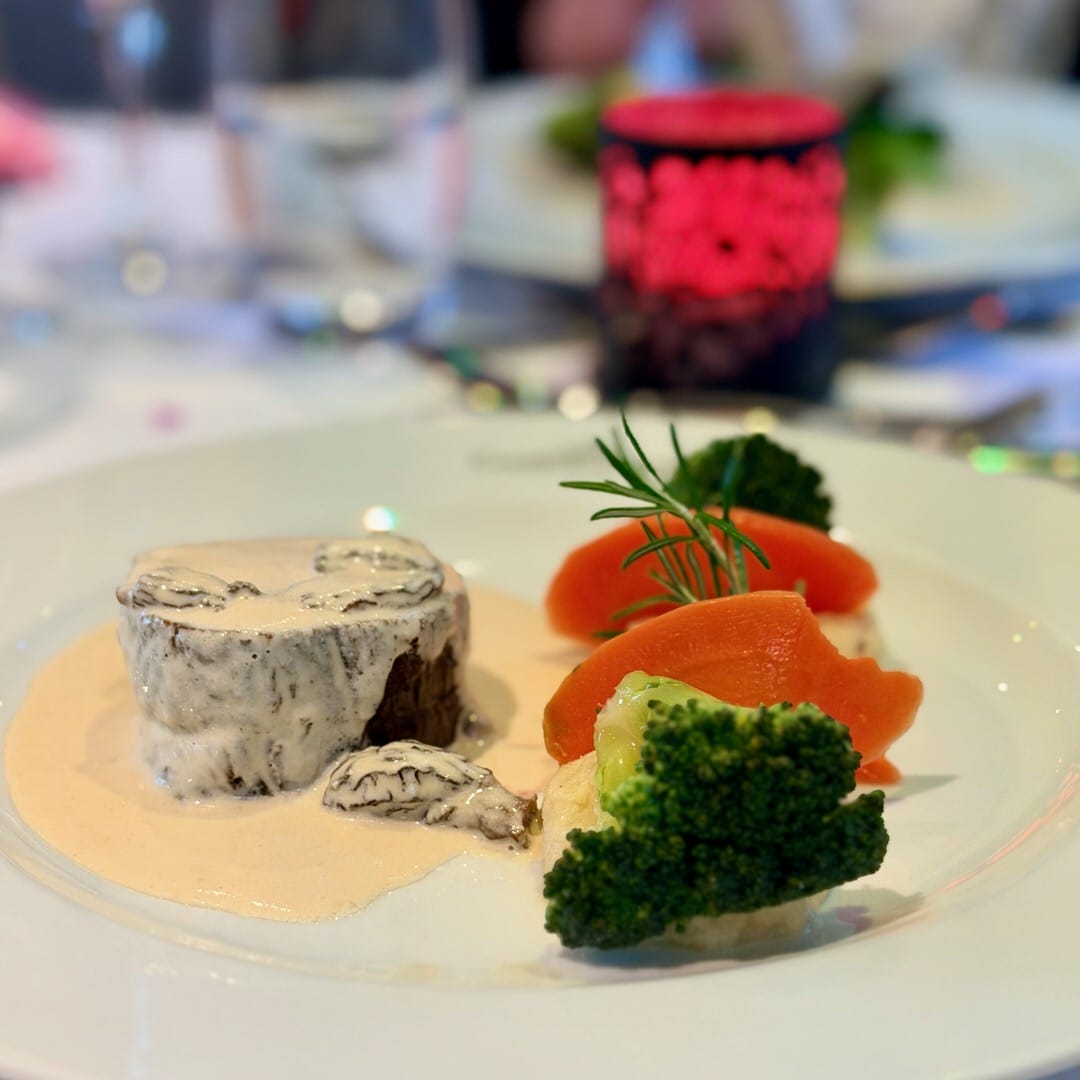
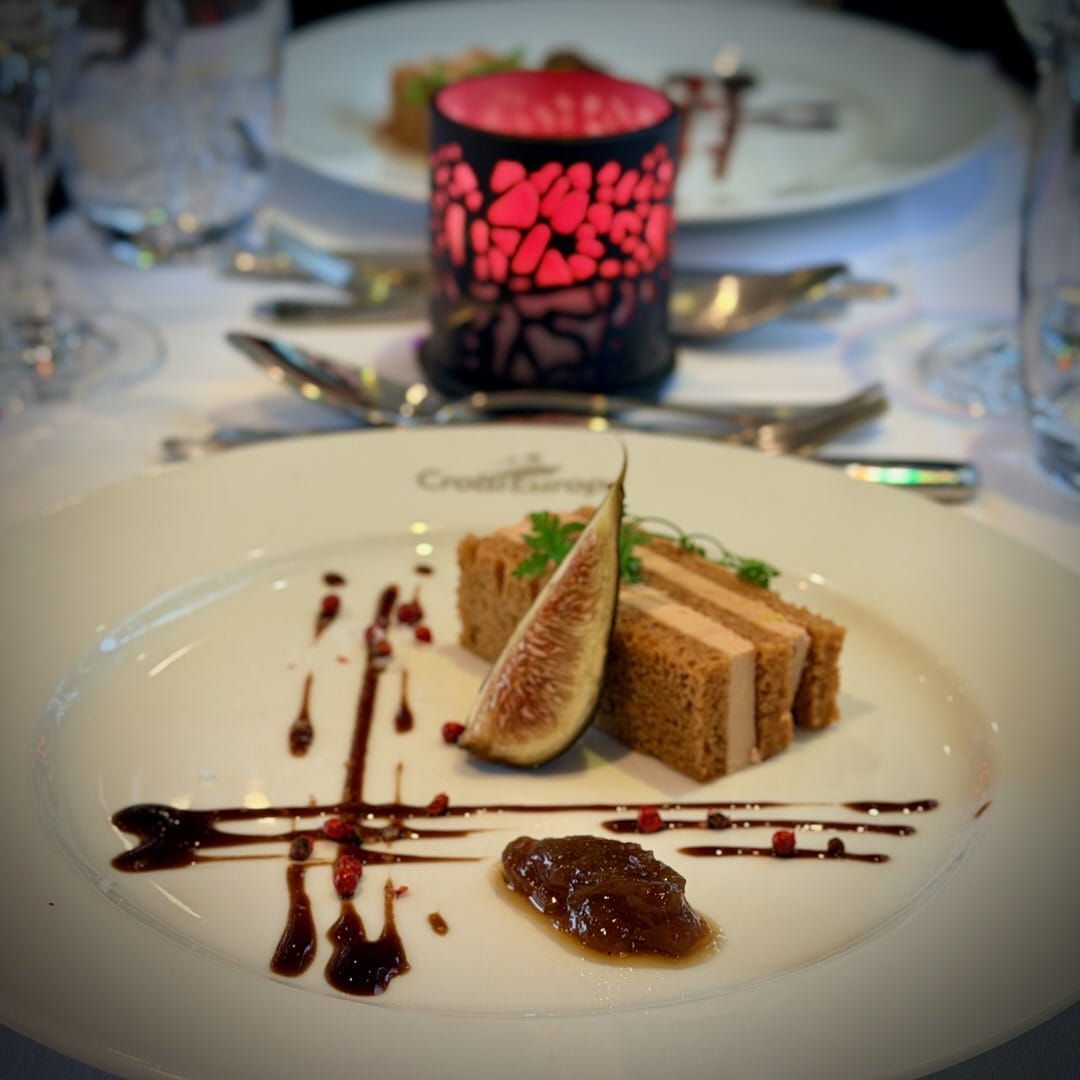
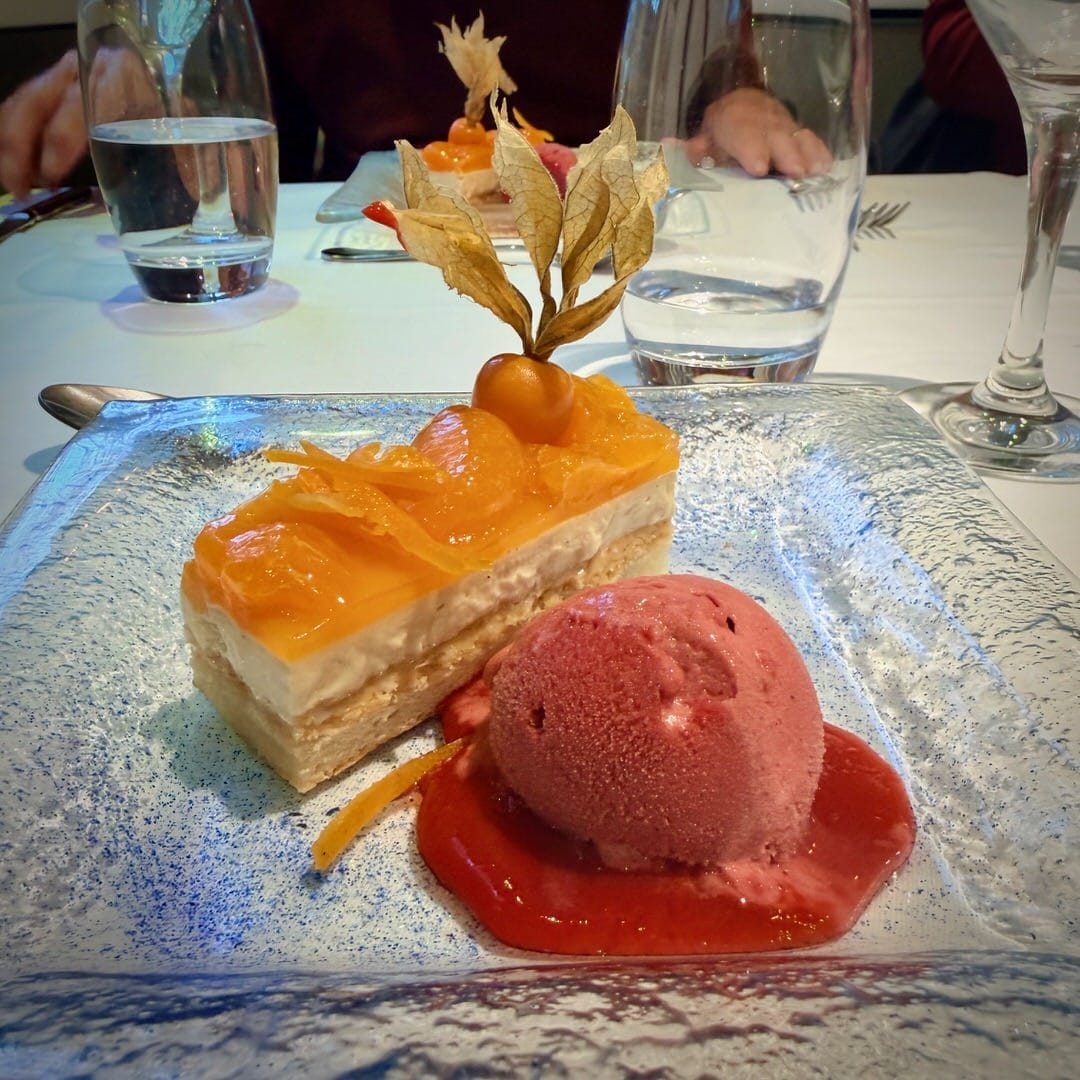
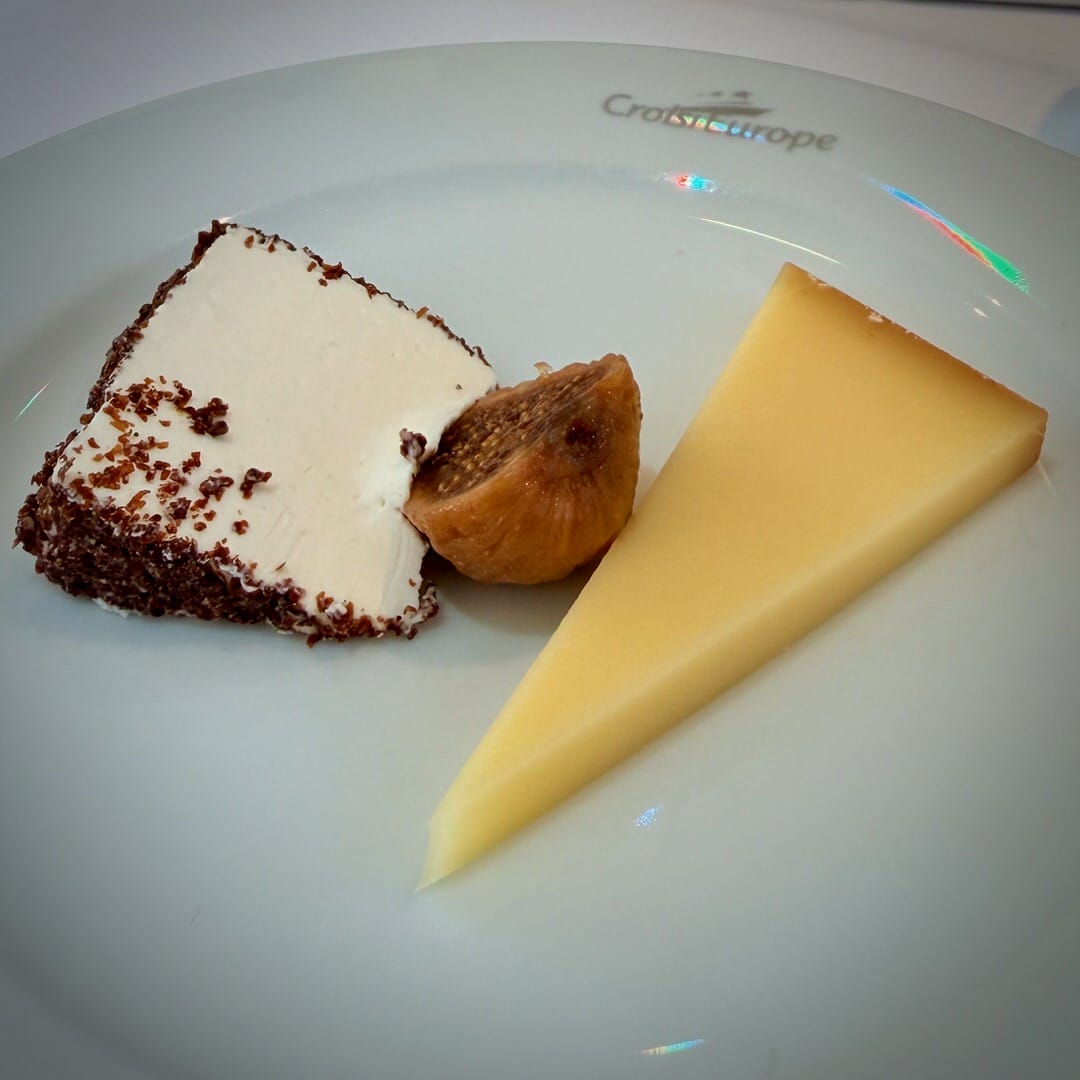
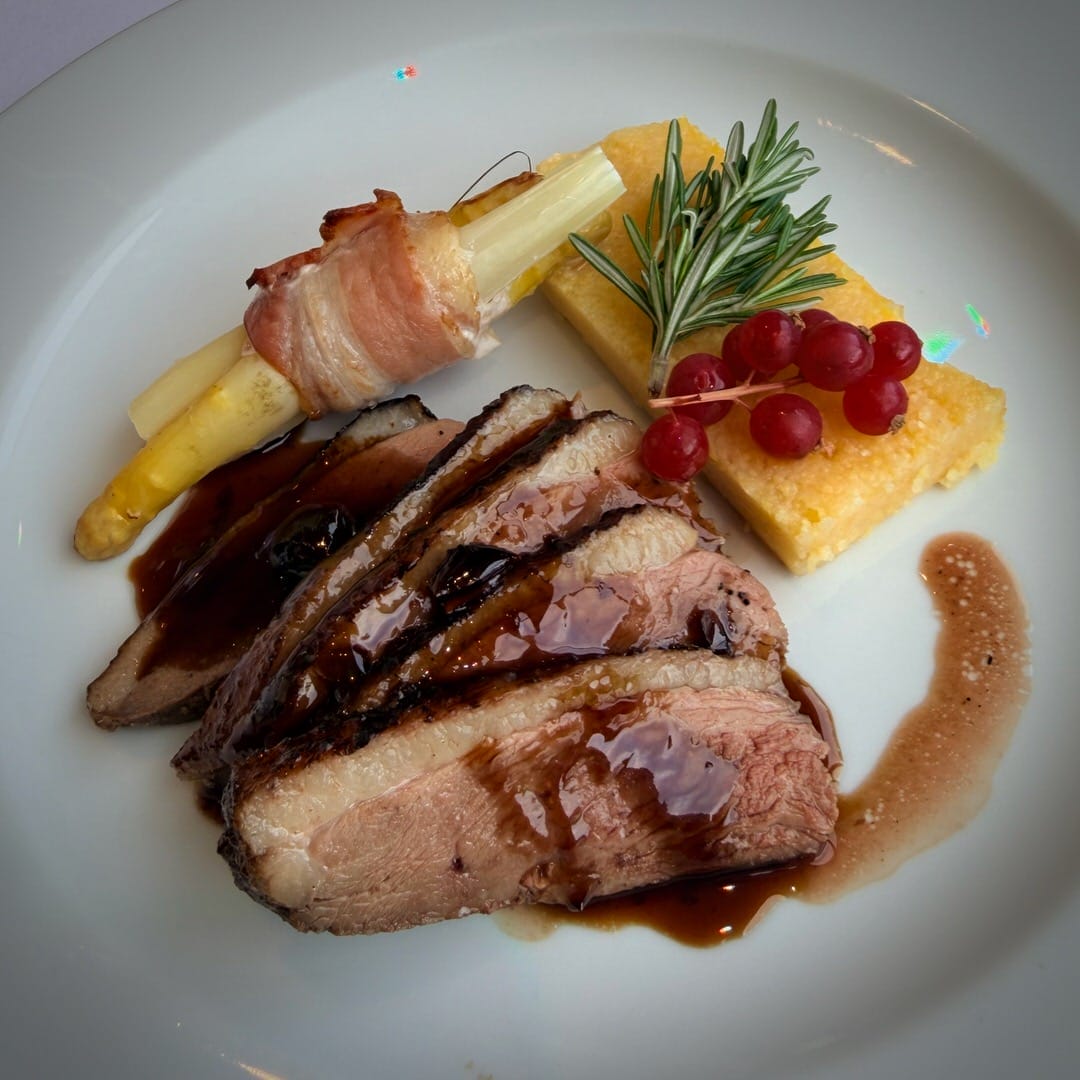
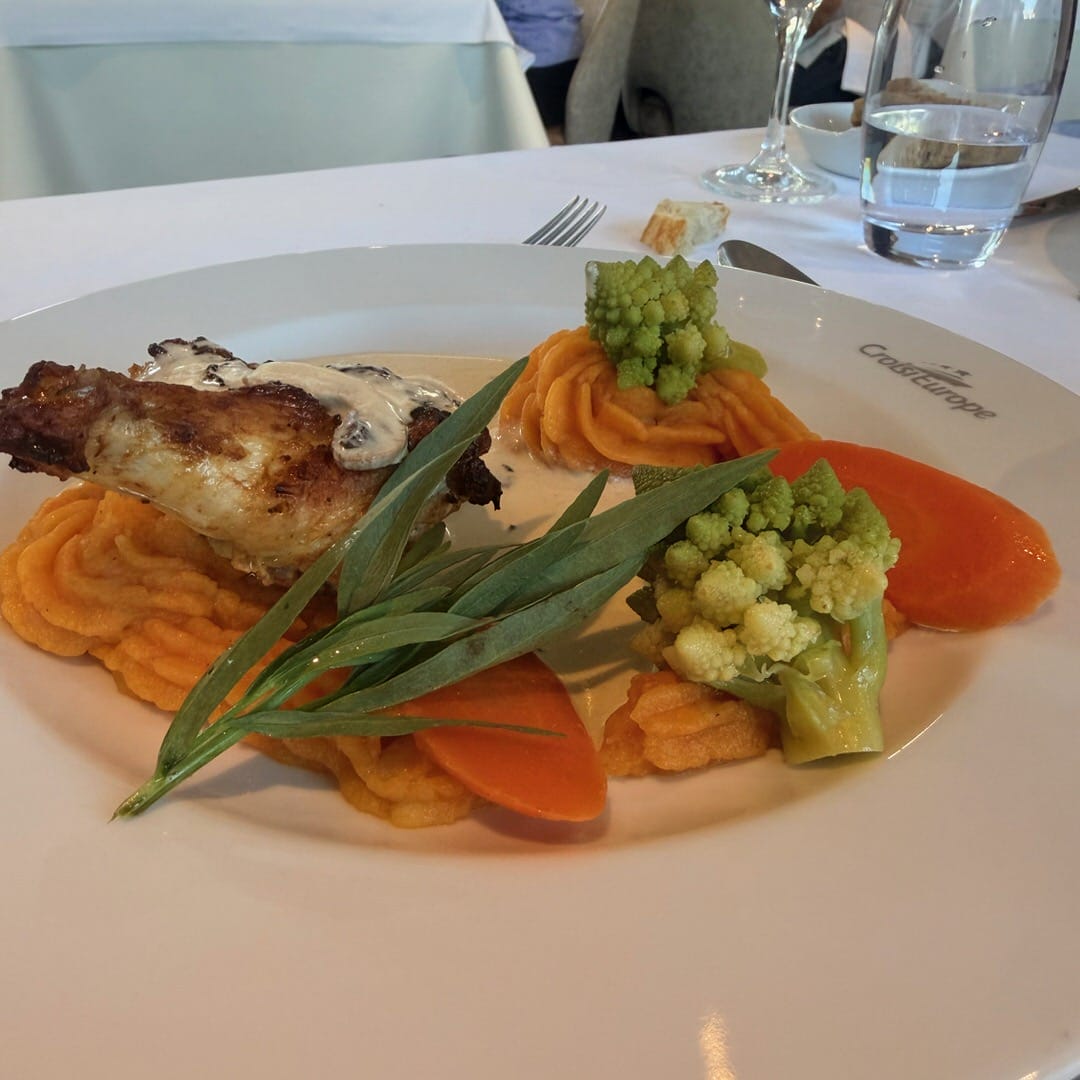
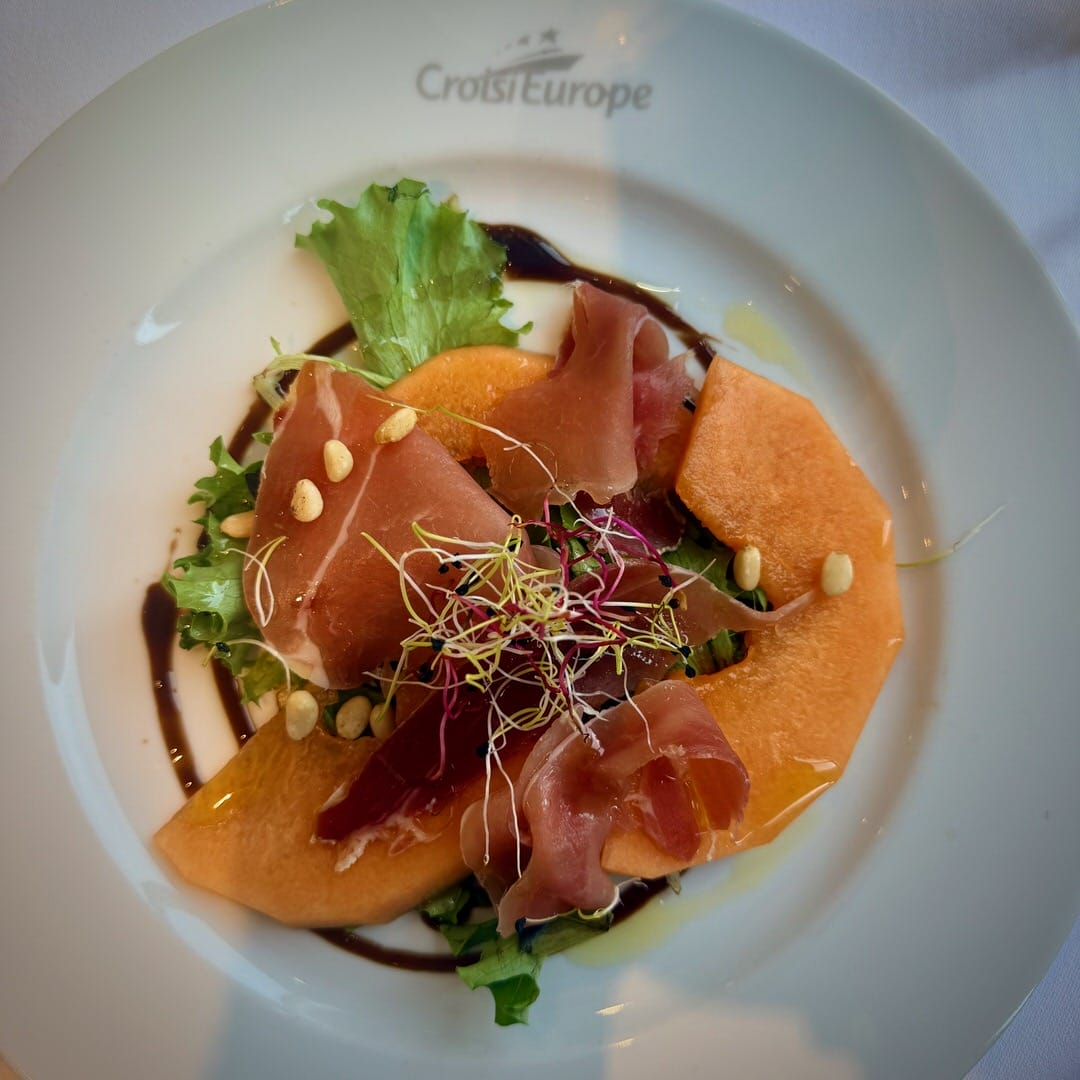
I will remember them all. I will also remember the quiet joy of barging: the water moving past the hull in the early morning, the lock gates swinging open onto the next reach of canal, dinners that ran long and conversations that ran longer, the crew bringing out one more course, the Jura giving way to Burgundy in the glass.
We had exceptional weather. We had a remarkable crew. We had a route that rewards exactly this pace: unhurried, close to the water, moving through the interior of France rather than skimming its surface.
Seven days on the Daniele. Not a long time. Long enough — and reason enough to do it again.
Learn more about upcoming trips: 2026 Alsace | 2027 Paris in the Middle: One Week Or Two, Plus Reims At The End
Other stories in this series:


2 Responses
We were on the Daniele the week before you, from Dijon to Besancon. We caught the rainy week, but it didn’t matter, the week was grand. I have to agree, the crew was absolutely amazing. I’d do that route with them again and again! Instead, actually we’re booked on the Sette to Arles route in August. Croisi did not disappoint.
I was on the Daniele a few weeks ago with a group of friends and it was fabulous from start to finish! The staff was exceptional, food amazing , awesome wines and a terrific experience!!!