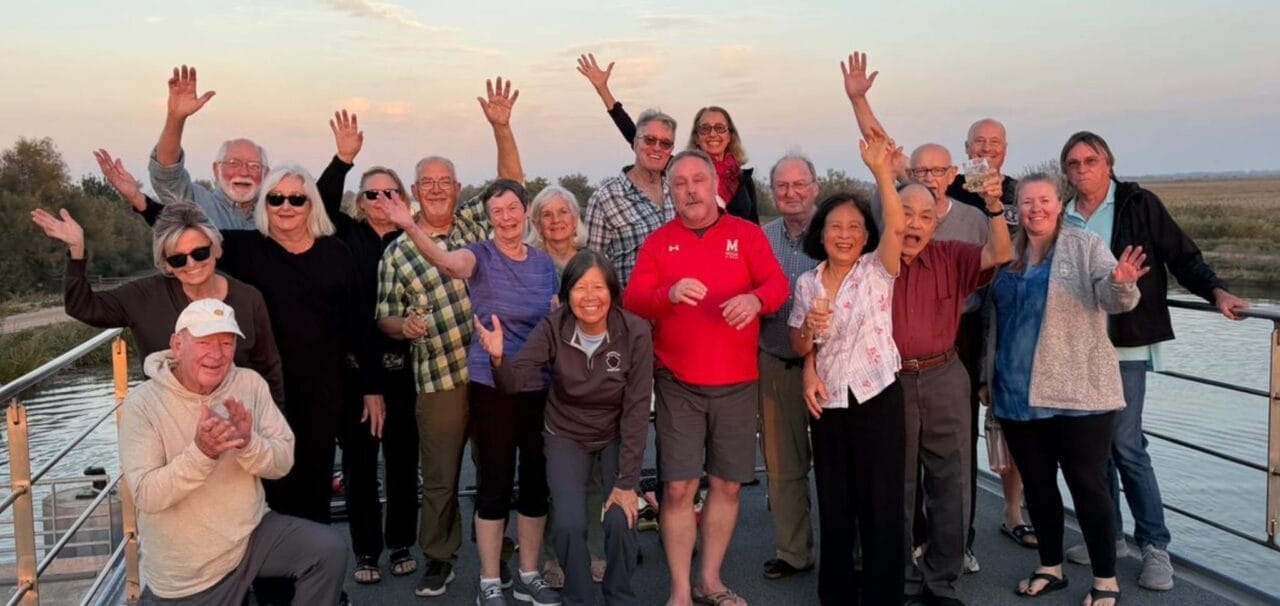
I spent nearly a month in France this October — starting with a few slow, sun-warmed days in Marseille, then a week drifting by barge through the Camargue, and finally, a river cruise up the Rhône aboard AmaKristina.
The trip reminded me that even after years of travel, there’s always something new to learn — or relearn — about how to move through the world well. Here are the takeaways I brought home.
1. Start early — and arrive early.
I’ve said this before, but this trip confirmed it again: always arrive at least a day before your cruise. Even though my luggage arrived on time this trip, I’ve learned the value of arriving a day or two before the cruise ever since a past journey when it didn’t (I recounted the luggage delay in this post:“12 Things I Did Right When Traveling to Europe… One Thing I Got Wrong”
This time, arriving early in Marseille gave us the perfect head start — time to settle in, wander the Vieux Port, hike the Calanques and adjust to the rhythm of France before heading north to the Cévennes for three quiet days in the mountains. By the time we boarded the barge a week later in Sète, we felt rested, grounded and ready to cruise the canal.
If you missed my Marseille prelude, you can read it here:
Maison Emperuer in Marseille, equal parts hardware store, museum, and curiosity cabinet. Founded in 1827, it’s the oldest hardware store in France, but calling it a hardware store hardly does it justice.
2. Pack less — even when you think you already have.
I did better this time, but not perfect. I still packed a few things I never wore — proof that the old rule still stands: lay it all out, then remove a third.
The upside of packing lighter (or at least lighter than before) was having room for a few treasures from the markets and from Maison Empereur, Marseille’s 200-year-old hardware store that feels more like a museum than a shop. I left with small, sturdy souvenirs — the kind that slip easily into your bag but carry a story home.
3. Move at two speeds.
A week on Anne-Marie and another on AmaKristina proved that France is best seen at two rhythms — the barge’s 4-mph drift and the river ship’s steady current. The barge brought intimacy and stillness; the river cruise offered scope and connection. Together they reminded me that the slower you go, the more you notice. Combining the two trips worked really well, and I’ll be doing it again next year when we combine Burgundy by barge and a river cruise on the Saone.
Want to see the difference in the two modes of travel? Check out these posts …
Whether in Aix, Arles or Dijon, we found that a few euros and a tote bag beat any reservation. Buy small things from several stalls — olives here, goat cheese there, a baguette somewhere in between — and you’ve got lunch with a view. We ate better and met more locals this way than at any white-tablecloth spot.
5. Shoulder seasons are gold.
October gave us 70-degree days, empty museums and locals who actually had time to chat. Spring and fall are France’s sweet spots — better light for photography, better sleep without air-conditioning and better experiences in general.
6. Technology can simplify, not distract.
An Orange eSIM kept me connected without juggling SIM cards. Apple Pay worked almost everywhere. I downloaded offline maps on Wi-Fi before leaving each hotel. The result: less stress, more knowing where I was and where I was going.
7. Trains are your friend — if you know the tricks.
For France, book on sncf.com; for Germany, bahn.de. First class is worth it when the price difference is modest. On the platform, check the car-position chart so you’re standing where your carriage will stop. It turns boarding from chaos into choreography. And on double-decker cars, book the lower level so that you don’t have to heft your luggage up the stairs. Another tip: Travel light. You’ll thank yourself when switching platforms and when trying to find space for your luggage.
8. Buy travel insurance before you need it.
I use GeoBlue for international medical coverage — it’s not “trip insurance” but health protection for travelers, covering things like doctor visits, hospital care and medical evacuation abroad.
For everything else — cancellations, interruptions, delays or lost bags — you’ll want a separate trip-protection plan.Companies such as Allianz, Travel Guard (AIG), Seven Corners, Generali Global Assistance, and IMG Global all offer solid options. Look for policies that:
Cover pre-paid, non-refundable travel costs like cruises or flights.
Include trip-interruption benefits if you must return home early.
Offer a “Cancel for Any Reason” upgrade for maximum flexibility.
Are purchased soon after your first deposit (for best coverage).
Buy both kinds of insurance hoping you’ll never need them — and be grateful when you don’t.
9. Add a purposefully slow day.
After two weeks of motion, we arrived in Dijon just as the weather turned — cold rain and wind. Instead of pushing on, we went to a movie, lingered over coffee and strolled the covered market. That “nothing day” ended up being fun. Not every day needs a highlight to be memorable.
10. Keep traveling curious.
Everywhere we went — from the prehistoric art in Marseille’s Cosquer Cave to the pink salt ponds of Aigues-Mortes — I was reminded that curiosity is a muscle. Exercise it daily. Ask questions, take side roads, order something you can’t pronounce. It’s the difference between going to France and letting France come to you.
Looking Ahead
Ready to travel slower next year?
In 2026, I’ll host a new series of barge and river cruises through France — including Burgundy, Alsace, Provence, and the Rhône. These are small-group journeys designed for people who value connection, good food, and time to truly see a place.
Greetings from Canada, we enjoyed our time with you and the rest of the group on the barge and on the river boat. Great advice in your article, most of which I have learned over the years to follow. Looking forward to seeing you again in the spring. Safe travels, Linda
Thanks for keeping Dave and I on your list. Our traveling days may be over, but it’s good to hear happy stories about what other people are doing.
Get the best river cruise news & deals delivered to your inbox.
To provide the best experiences, we use technologies like cookies to store and/or access device information. Consenting to these technologies will allow us to process data such as browsing behavior or unique IDs on this site. Not consenting or withdrawing consent, may adversely affect certain features and functions.
Functional
Always active
The technical storage or access is strictly necessary for the legitimate purpose of enabling the use of a specific service explicitly requested by the subscriber or user, or for the sole purpose of carrying out the transmission of a communication over an electronic communications network.
Preferences
The technical storage or access is necessary for the legitimate purpose of storing preferences that are not requested by the subscriber or user.
Statistics
The technical storage or access that is used exclusively for statistical purposes.The technical storage or access that is used exclusively for anonymous statistical purposes. Without a subpoena, voluntary compliance on the part of your Internet Service Provider, or additional records from a third party, information stored or retrieved for this purpose alone cannot usually be used to identify you.
Marketing
The technical storage or access is required to create user profiles to send advertising, or to track the user on a website or across several websites for similar marketing purposes.




2 Responses
Greetings from Canada, we enjoyed our time with you and the rest of the group on the barge and on the river boat. Great advice in your article, most of which I have learned over the years to follow. Looking forward to seeing you again in the spring. Safe travels, Linda
Thanks for keeping Dave and I on your list. Our traveling days may be over, but it’s good to hear happy stories about what other people are doing.